
Cebu, Philippines
Retire in Cebu at a Glance
Cebu combines strong healthcare, widespread English usage, reasonable retirement costs, and one of the Philippines’ largest expat communities.
Best For
- Balanced retirement
- Strong healthcare access
- Large expat community
- Long-term retirement living
Monthly Condo Rent
US$500-800
US$800-1300
US$1400-2300
Monthly Retirement Budget
US$1500-2100
US$2300-3400
US$3800-5800
Key Strengths
Healthcare: Strong
Expat Community: Large
Best For: Balanced retirement
Confidence: Medium
Executive Overview
Cebu is one of the Philippines’ most important retirement destinations for foreigners because it combines English accessibility, tropical coastal living, improving healthcare, expanding modern conveniences, and relatively manageable retirement costs within a culturally familiar environment for many Western retirees.
Unlike retirement destinations such as Kuala Lumpur or Penang, Cebu is not defined by polished infrastructure or operational precision. Its appeal comes from something more practical and emotional: communication ease, social adaptability, island-oriented lifestyle, and the ability to build a comfortable long-term retirement life without constantly feeling linguistically or culturally disconnected.
For many retirees, Cebu feels easier to adapt to psychologically than much of Southeast Asia. English is deeply integrated into education, business, healthcare, government interaction, and daily conversation. This dramatically reduces one of the largest retirement stressors many foreigners experience elsewhere in the region: communication fatigue.
At the same time, Cebu is still an emerging and imperfect urban environment. Traffic congestion, infrastructure inconsistency, uneven neighborhood quality, flooding, utility disruptions, and variable urban planning all remain part of the retirement equation.
Retirees who thrive in Cebu are usually those who prioritize:
- communication ease,
- tropical living,
- practical affordability,
- and long-term adaptability
over infrastructure perfection or highly organized city systems.
For retirees expecting Singapore-level efficiency or Kuala Lumpur-style infrastructure consistency, Cebu can eventually become frustrating. But for retirees who value flexibility, familiarity, warmth, coastal lifestyle, and social accessibility, Cebu often becomes deeply livable over time.
Quick Snapshot
Cost of Living: Affordable to moderate depending on lifestyle and housing expectations
Healthcare Quality: Strong regional private healthcare with improving specialist depth
Lifestyle: Tropical, practical, socially adaptable, and coastal-oriented
Climate: Warm tropical maritime climate with humidity and seasonal rainfall
Expat Community: Large, diverse, and well-established
Best For: English-speaking retirees, adaptable long-term retirees, and retirees prioritizing tropical livability over infrastructure refinement
Lifestyle and Environment
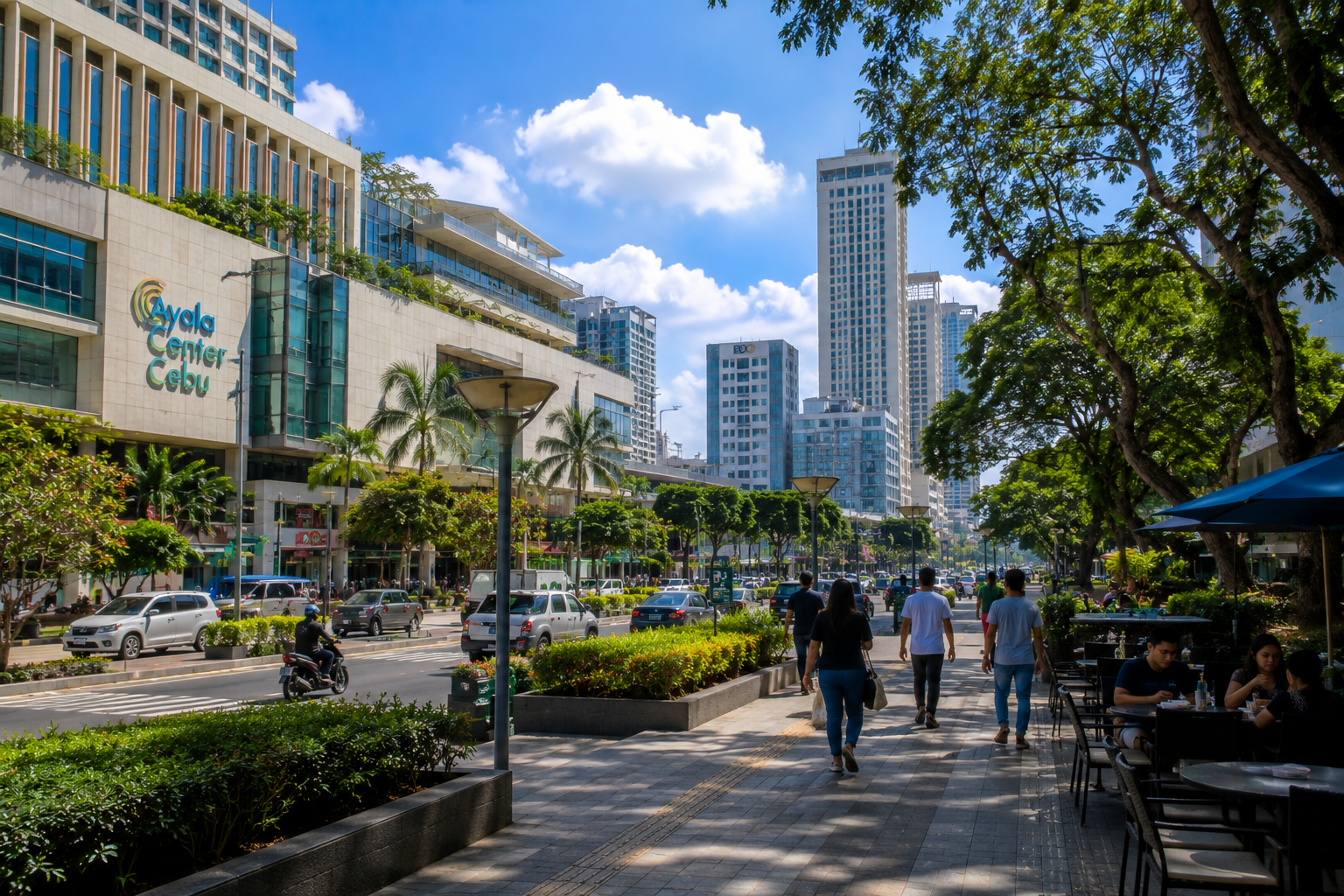
Cebu offers a retirement lifestyle centered around accessibility, familiarity, and practical tropical living rather than polished urban sophistication. The metropolitan area blends modern commercial districts, residential high-rises, coastal resort environments, shopping centers, local neighborhood life, and island-oriented culture within a rapidly developing regional hub.
One of Cebu’s strongest retirement advantages is that daily life often feels psychologically manageable for foreigners relatively quickly. The widespread use of English dramatically lowers the friction associated with healthcare visits, shopping, transportation, hiring services, government interaction, and social integration.
For many retirees, this creates a retirement environment that feels less emotionally exhausting than destinations where language barriers remain constant.
Cebu also benefits from an increasingly mature retail and lifestyle ecosystem. International grocery availability, imported foods, wine access, modern cafés, gyms, restaurants, shopping malls, and digital convenience systems have expanded considerably over the past decade, particularly in areas such as Cebu Business Park and IT Park.
At the same time, Cebu remains operationally inconsistent in many ways. Infrastructure quality can vary dramatically from one neighborhood to another. Traffic congestion is a major part of daily life. Flooding occurs in some districts during heavy rains, and utilities are not always as reliable as in more developed retirement hubs.
For some retirees, these issues become deeply frustrating over time. Others adapt relatively comfortably once routines are established and neighborhood selection is optimized.
Cebu works best for retirees who approach the city realistically rather than idealistically.
The city is not trying to compete with Singapore or Tokyo. It offers something different:
- tropical livability,
- social accessibility,
- coastal flexibility,
- and comparatively affordable long-term living.
Cost of Living
Cebu remains relatively affordable compared with many Western retirement destinations and several more developed Asian urban centers. For retirees with moderate retirement budgets, the city often provides a favorable balance between comfort, accessibility, and long-term sustainability.
Housing options range from modest condominiums and local subdivisions to premium expat-oriented developments in districts such as Cebu Business Park, IT Park, and parts of Mactan. Retirees can choose between urban condominium living, suburban-style residential communities, or coastal resort-oriented environments depending on lifestyle preference and budget.
Neighborhood selection matters enormously because Cebu’s living experience changes significantly between districts. Some areas feel highly modern and internationally integrated, while others remain more local, less organized, and operationally inconsistent.
Food costs remain one of Cebu’s strengths. Local dining is highly affordable, while international dining and imported grocery access continue improving steadily. Over long retirement timelines, many retirees place increasing value on reliable access to imported foods, familiar ingredients, wine, cheese, and broader restaurant variety. Cebu performs increasingly well in this area compared with where it stood a decade ago.
Electricity costs can rise substantially because of air-conditioning use in the tropical climate, and utility reliability still varies by location. Internet quality has improved significantly in major urban districts, though service consistency remains more variable outside core commercial areas.
For many retirees, Cebu’s affordability advantage is not that it is ultra-cheap. It is that the city still allows a relatively comfortable tropical retirement lifestyle without requiring the financial commitments associated with more developed Asian capitals.
Healthcare
Healthcare in Cebu is strong by Philippine regional standards and continues improving steadily.
Several respected private hospitals provide specialist access, modern facilities, diagnostics, and relatively affordable care compared with Western healthcare systems. Major hospitals include Chong Hua Hospital, Cebu Doctors’ University Hospital, UCMed, and Perpetual Succour Hospital.
For many retirees, one of Cebu’s greatest healthcare advantages is communication clarity. English-speaking medical staff are extremely common, which significantly reduces stress and misunderstanding during medical interaction.
This matters more over time than many retirees initially realize.
Healthcare systems that appear impressive technically can still become emotionally exhausting if communication remains difficult during periods of illness, specialist treatment, or emergency care.
Compared with Bangkok, Singapore, or Kuala Lumpur, Cebu’s healthcare system is less advanced overall and offers less specialist depth for highly complex medical conditions. Compared with smaller retirement destinations throughout Southeast Asia, however, Cebu performs relatively well because it functions as one of the Philippines’ primary regional medical centers.
Many retirees consider Cebu’s healthcare ecosystem sufficient for routine care, diagnostics, chronic condition management, and many specialized retirement healthcare needs. For highly advanced procedures, some retirees still travel internationally or to Manila.
Long-term retirement success in Cebu often depends less on whether the city has world-class healthcare and more on whether retirees are comfortable with a healthcare system that is practical, understandable, improving, and regionally strong without being globally elite.
Visa Options
The Philippines has historically been viewed as one of Southeast Asia’s more accessible retirement environments for foreigners, particularly English-speaking retirees.
Many retirees utilize the SRRV retirement program, long-term tourist visa extensions, marriage-based residency structures, or other pathways that allow relatively flexible long-term living arrangements.
Compared with some neighboring countries, the Philippines often feels administratively more approachable because communication barriers are lower and foreign retirees are already well integrated into many local communities.
At the same time, retirees should still expect bureaucratic inconsistency, procedural changes, and varying administrative experiences depending on agency, office, and timing.
For most retirees, however, the broader residency environment remains relatively workable compared with many alternative destinations in the region.
Infrastructure and Accessibility
Infrastructure in Cebu is improving rapidly but remains uneven.
Modern malls, commercial centers, condominium developments, and digital infrastructure continue expanding aggressively, particularly in major business districts. Areas such as Ayala Center Cebu, Cebu Business Park, and IT Park increasingly resemble modern urban environments found elsewhere in Southeast Asia.
At the same time, major infrastructure limitations remain:
- traffic congestion,
- inconsistent urban planning,
- flooding,
- uneven road quality,
- and limited large-scale mass transportation systems.
Compared with Kuala Lumpur or Bangkok, Cebu often feels less coordinated operationally. Daily movement through the city can require patience and strategic planning, especially during peak traffic periods.
This becomes one of Cebu’s most important long-term retirement realities:
successful retirement in Cebu depends heavily on lifestyle geography.
Retirees who structure life intelligently around proximity — minimizing unnecessary travel and choosing neighborhoods close to shopping, healthcare, restaurants, and social infrastructure — often experience Cebu far more positively over time.
Mactan-Cebu International Airport is one of the city’s strongest operational advantages. Direct international access, strong domestic connectivity, and expanding regional flight networks make Cebu increasingly practical for retirees maintaining international family connections or regional travel lifestyles.
Compared with Manila, Cebu generally feels more manageable, less psychologically overwhelming, and easier to navigate operationally once routines are established.
Neighborhoods and Housing
Cebu Business Park
One of Cebu’s most polished and internationally oriented districts. The area offers strong walkability, premium condominium developments, shopping access, restaurants, cafés, and close proximity to Ayala Center Cebu.
Many retirees view Cebu Business Park as one of the city’s strongest long-term retirement districts because daily convenience is concentrated within a relatively manageable area.
IT Park
IT Park has evolved into one of Cebu’s most dynamic mixed-use districts. Modern condominiums, cafés, restaurants, nightlife, coworking environments, and international retail infrastructure create a highly active urban environment with strong appeal for both retirees and younger expats.
The district feels more energetic and denser than Cebu Business Park but offers exceptional convenience.
Banilad
Banilad provides a more residential and suburban retirement environment while still maintaining good access to shopping, healthcare, schools, and expat-oriented infrastructure.
Many retirees prefer Banilad because it feels less compressed and less commercially intense than the core business districts.
Talamban
Talamban appeals to retirees seeking larger homes, quieter residential areas, and lower-density living farther from the city center. Commute times can become significant depending on traffic conditions.
Mactan
Mactan offers a more resort-oriented coastal lifestyle with beach access, hotels, and proximity to the international airport. Some retirees prefer Mactan because it feels more island-oriented and relaxed, though infrastructure quality varies considerably by area.
Transportation
Transportation remains one of Cebu’s most significant long-term retirement trade-offs.
The city relies heavily on:
- private vehicles,
- drivers,
- taxis,
- ride-hailing applications,
- motorcycles,
- and jeepneys.
Unlike Bangkok or Kuala Lumpur, Cebu does not yet have a mature rail-based transportation system capable of reducing urban congestion significantly.
Traffic congestion can meaningfully affect quality of life, particularly during peak periods and in heavily developed districts.
Over time, many retirees discover that minimizing unnecessary travel dramatically improves their retirement experience. Those who structure daily life around localized convenience — with nearby healthcare, shopping, dining, and social infrastructure — generally experience much lower long-term stress.
Transportation frustration is one of the primary reasons some retirees eventually leave Cebu, while others adapt successfully by designing routines around geography rather than attempting to move constantly across the metropolitan area.
Safety
Safety in Cebu varies significantly depending on neighborhood, lifestyle patterns, and personal awareness.
Many retirees live comfortably long term by choosing appropriate residential districts, exercising normal urban precautions, and adapting realistically to local conditions.
Violent crime affecting retirees is generally not the primary concern discussed by long-term foreign residents. More commonly, retirees mention:
- traffic safety,
- infrastructure inconsistency,
- flooding,
- and occasional petty crime or opportunistic theft.
Neighborhood selection plays a major role in long-term retirement comfort and emotional security.
Compared with some large metropolitan environments in Southeast Asia, Cebu often feels socially approachable and less emotionally aggressive. However, retirees expecting highly organized public environments or strong institutional predictability may eventually experience more operational stress than expected.
Climate and Environment
Cebu has a tropical maritime climate characterized by year-round warmth, humidity, coastal airflow, and seasonal rainfall variation.
Compared with inland retirement destinations such as Chiang Mai, Cebu feels significantly more humid and less seasonally varied. Compared with Bangkok or Manila, Cebu often feels somewhat more coastal and less intensely urban, particularly in districts closer to the sea.
For many retirees, Cebu’s island environment becomes one of its strongest emotional advantages. Access to beaches, islands, diving, coastal resorts, and tropical outdoor living contributes heavily to long-term lifestyle satisfaction.
At the same time, heat and humidity are constant realities. Storm systems, typhoons, and heavy rains occasionally affect infrastructure, transportation, and utilities.
Long-term comfort in Cebu often depends heavily on:
- housing quality,
- air-conditioning,
- neighborhood selection,
- and lifestyle pacing.
Retirees who expect perfect infrastructure resilience during major weather events may eventually become frustrated. Those who approach tropical island living more flexibly usually adapt more comfortably.
Expat Community
Cebu has a large and highly diverse expat community that includes retirees, entrepreneurs, long-term residents, business owners, digital workers, and mixed-nationality families.
English accessibility and relative cultural familiarity make long-term integration easier than in many regional alternatives.
Many retirees report that Cebu feels socially approachable and relatively easy to navigate emotionally compared with countries where language and cultural barriers remain much stronger.
At the same time, the expat community itself is highly varied. Some retirees build strong local social circles, while others remain socially isolated despite the city’s accessibility.
Cebu tends to reward retirees who actively engage socially rather than expecting community integration to occur automatically.
Advantages of Retiring in Cebu
English Accessibility
Communication is one of Cebu’s strongest retirement advantages. English integration dramatically reduces daily friction across healthcare, shopping, government interaction, and social life.
Tropical Coastal Lifestyle
Island access, beaches, coastal living, diving, and tropical outdoor culture contribute strongly to Cebu’s retirement appeal.
Improving Modern Convenience
International retail, imported groceries, shopping malls, healthcare systems, and modern condominium infrastructure continue expanding steadily.
Relative Affordability
Many retirees find Cebu offers a favorable balance between cost, comfort, accessibility, and long-term tropical livability.
Social Adaptability
Many foreigners find long-term adjustment psychologically easier than in destinations with stronger language and cultural barriers.
Challenges of Retiring in Cebu
Traffic Congestion
Transportation and traffic remain major practical frustrations for many residents and significantly influence daily quality of life.
Uneven Infrastructure
Infrastructure quality varies substantially between neighborhoods and districts.
Climate Humidity
The tropical maritime climate can feel persistently hot and humid for retirees unaccustomed to year-round tropical conditions.
Organizational Inconsistency
Retirees accustomed to highly structured urban systems may experience more friction, unpredictability, and operational inconsistency in daily life.
Who This City Is Best For
Strong Matches
- English-speaking retirees
- Tropical lifestyle retirees
- Adaptable long-term retirees
- Moderate-budget retirees
- Retirees comfortable with emerging-market environments
Less Suitable Matches
- Retirees prioritizing infrastructure precision
- Retirees highly sensitive to congestion and traffic
- Retirees expecting highly organized urban systems
- Retirees wanting cooler climates
Comparison With Other Cities
Cebu vs Penang
Cebu offers stronger English familiarity, island-oriented living, and a more emotionally relaxed tropical environment. Penang generally provides stronger infrastructure reliability, healthcare depth, transportation organization, and urban consistency.
Cebu vs Chiang Mai
Cebu offers coastal tropical living and stronger English accessibility, while Chiang Mai provides lower costs, calmer daily routines, and a more geographically compact retirement experience.
Cebu vs Bali
Cebu is generally more practical, communication-accessible, and operationally manageable. Bali offers a more internationally stylized, emotionally immersive, and lifestyle-oriented retirement atmosphere.
Cebu vs Manila
Cebu is generally less intense and more psychologically manageable than Manila while still offering many modern urban conveniences. Manila provides greater healthcare depth, broader infrastructure, and stronger metropolitan scale, but often at the cost of significantly higher congestion and stress levels.
Final Assessment
Cebu offers one of Southeast Asia’s most practical long-term retirement environments for foreigners seeking English accessibility, tropical living, affordability, and increasing modern convenience within an emerging and evolving urban environment.
Its defining strengths are not infrastructure perfection or urban efficiency. Instead, Cebu succeeds because it offers communication ease, adaptability, coastal lifestyle flexibility, and a retirement environment that many foreigners find psychologically manageable over very long periods.
For retirees who can comfortably adapt to traffic congestion, infrastructure inconsistency, and occasional operational unpredictability, Cebu can provide a highly livable and socially accessible retirement lifestyle at a comparatively reasonable cost.
The city rewards retirees who:
- choose neighborhoods carefully,
- structure routines intelligently,
- and approach tropical emerging-market living realistically rather than idealistically.
For many long-term foreign residents, that balance ultimately becomes Cebu’s greatest strength.
Find Your Best Retirement Destination
Use the retirement questionnaire to compare destinations based on your own retirement priorities, preferences, and long-term retirement goals.