
Da Nang, Vietnam
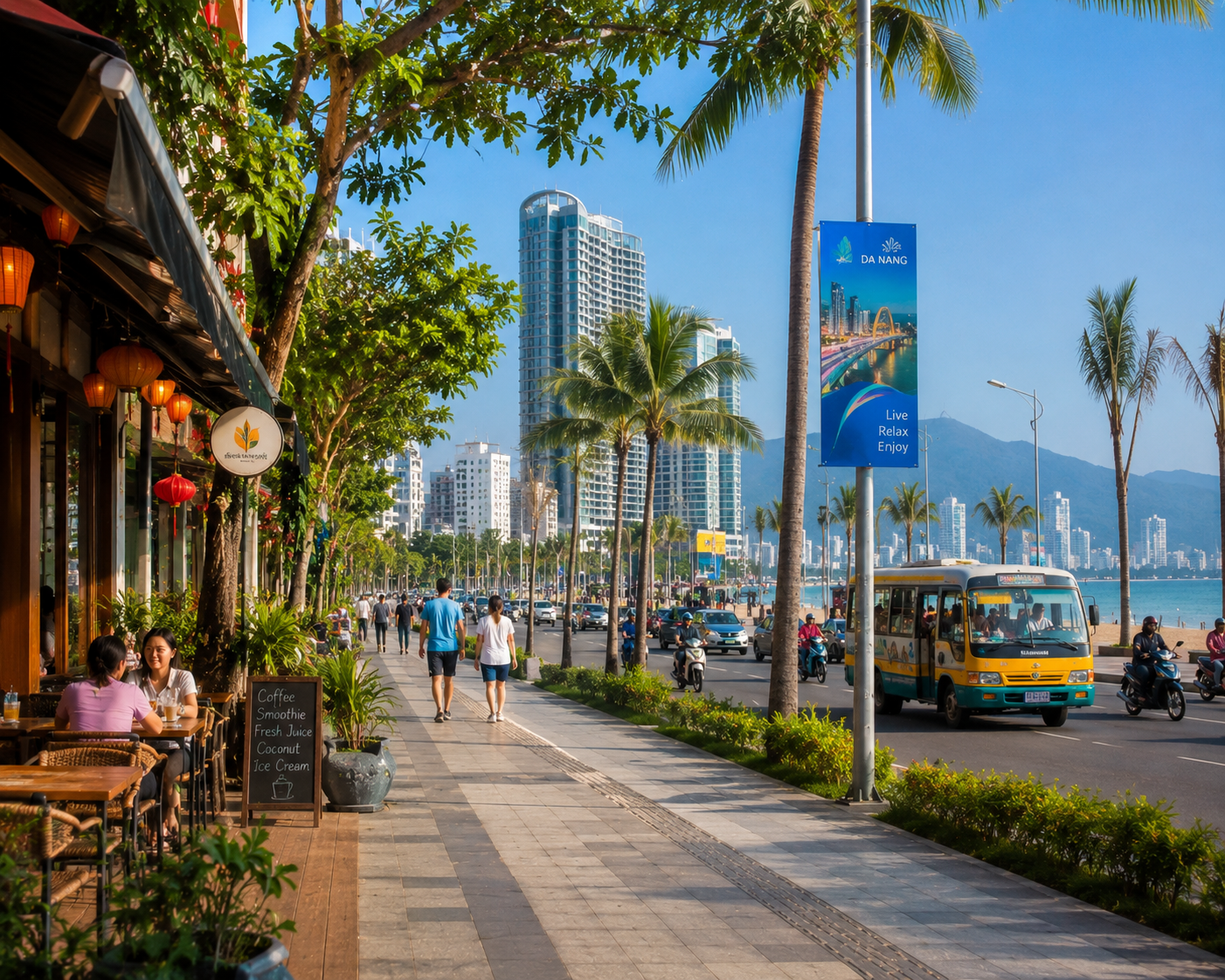
Retire in Da Nang at a Glance
Da Nang combines practical retirement costs, healthcare access, expat support, and a lifestyle profile suited to long-term retirement planning.
Best For
- Value, beach
- Good healthcare access
- Growing expat community
- Long-term retirement living
Monthly Condo Rent
US$350-500
US$500-800
US$900-1500
Monthly Retirement Budget
US$1100-1500
US$1700-2400
US$2800-4000
Key Strengths
Healthcare: Good
Expat Community: Growing
Best For: Value, beach
Confidence: Medium
Executive Overview
Da Nang has emerged as one of Southeast Asia’s most compelling retirement destinations for retirees seeking a balance between affordability, livability, modern development, and coastal lifestyle. Located in central Vietnam between Hanoi and Ho Chi Minh City, the city offers beaches, manageable urban scale, improving infrastructure, relatively low living costs, and a calmer atmosphere than Vietnam’s larger metropolitan centers.
Unlike Bangkok, Manila, or Ho Chi Minh City, Da Nang generally feels less chaotic and more spacious. Compared with highly tourism-oriented coastal destinations such as Phuket or Bali, Da Nang often feels more grounded, more residential, and less commercially overwhelming.
The city occupies a middle ground that appeals strongly to many long-term retirees. It is large enough to provide hospitals, shopping centers, cafés, international restaurants, modern condominiums, and airport access, but still small enough that daily life can remain manageable and relatively low stress.
For retirees seeking affordable coastal living, a slower pace than major Asian capitals, and a retirement environment that still feels active and developing, Da Nang has become increasingly compelling.
At the same time, Vietnam remains a country in transition, and retirees considering Da Nang should understand that the experience involves trade-offs. Infrastructure is improving rapidly but can still feel inconsistent compared with Malaysia or Thailand. Language barriers remain significant outside tourist and expat environments. Administrative systems may feel less predictable than in more mature retirement destinations.
Retirees who approach Da Nang with flexibility and realistic expectations often find one of Southeast Asia’s strongest value-oriented coastal retirement environments.
Da Nang’s greatest strength is balance. It is not the cheapest destination in Asia, not the most medically advanced, not the most internationally polished, and not the most culturally dramatic. But it combines enough of each important retirement quality to create a highly livable long-term environment for retirees who want coastal life without excessive stress.
Quick Snapshot
Cost of Living: Affordable relative to most major retirement destinations in Asia
Healthcare Quality: Improving private healthcare with limited specialist depth compared with Bangkok or Kuala Lumpur
Lifestyle: Relaxed coastal urban living with manageable scale and growing infrastructure
Climate: Tropical monsoon climate with warm temperatures and seasonal storms
Expat Community: Growing and increasingly established
Best For: Value-oriented retirees, beach-oriented retirees, and retirees seeking balanced coastal city living
Lifestyle and Environment
Da Nang offers a noticeably different atmosphere from many large Southeast Asian cities. The city generally feels cleaner, calmer, more open, and less emotionally exhausting than Hanoi or Ho Chi Minh City.
One of Da Nang’s defining strengths is balance. The city has enough infrastructure to support comfortable long-term retirement living, but it still maintains a relatively manageable pace. Retirees often appreciate that they can access beaches, cafés, restaurants, hospitals, shopping centers, and residential neighborhoods without spending hours navigating traffic or overwhelming urban density.
Compared with Bangkok or Manila, Da Nang feels dramatically less congested and less intense. Compared with smaller retirement towns, however, it still offers enough modern development to prevent retirees from feeling isolated or disconnected.
The city’s atmosphere is heavily influenced by its coastal geography. Beach access is integrated into everyday life in a way that feels more natural and less tourism-dominated than some resort destinations. Many retirees structure their routines around morning walks, cafés, exercise, beach activity, and outdoor social living.
This contributes to a lifestyle that many retirees find emotionally sustainable. Da Nang allows retirees to live actively without feeling constantly overstimulated. There is enough movement and development to feel alive, but not so much that daily life becomes exhausting.
At the same time, Da Nang is still developing rapidly. Construction activity is common, infrastructure standards vary by district, and the city sometimes feels unfinished compared with more mature retirement destinations such as Penang or Kuala Lumpur.
For some retirees, this creates a sense of energy and opportunity. Others may find the inconsistencies frustrating over long periods.
Da Nang tends to work best for retirees who value balance, affordability, and manageable living more than luxury or highly polished infrastructure.
The city is also a strong fit for retirees who want coastal living without the intensity of a major resort market. Phuket and Bali often feel more internationally developed, but also more commercialized. Da Nang still retains a more residential and functional character, which many retirees find easier to sustain emotionally over long retirement timelines.
Cost of Living
Da Nang remains one of Southeast Asia’s stronger retirement values relative to lifestyle quality. Housing, food, transportation, and local services are generally affordable compared with Thailand, Malaysia, Singapore, or Western retirement destinations.
The city works especially well for retirees who want coastal living, moderate comfort, and lifestyle flexibility without requiring very large retirement budgets.
Housing costs vary considerably depending on location and quality. Retirees can find modest apartments, modern condominiums, serviced residences, and larger villas at prices that often remain attractive by international standards.
Beachside areas near My Khe Beach and An Thuong have become especially popular among expats and retirees because they offer cafés, restaurants, beach access, and walkable convenience. These areas are not always the cheapest parts of the city, but they offer strong lifestyle value because daily routines can be organized around the beach, cafés, grocery access, and social activity.
Compared with Phuket or Bali, Da Nang often feels less inflated by tourism pricing and foreign speculation, though prices have risen steadily in recent years as the city’s popularity has increased.
Food is one of Da Nang’s major lifestyle strengths. Vietnamese cuisine is widely regarded as one of Asia’s healthiest and most balanced food cultures, and Da Nang offers excellent access to seafood, fresh produce, local cafés, noodle dishes, and street food.
The city’s international dining scene has also expanded significantly. Retirees can increasingly access Western restaurants, bakeries, cafés, Korean food, Japanese restaurants, and imported groceries.
This matters more over long retirement timelines than many retirees initially realize. During the early years abroad, adapting to local cuisine can feel exciting and immersive. Over time, however, many retirees begin valuing food familiarity, imported products, reliable Western dining, and broader grocery variety.
Da Nang does not yet match Kuala Lumpur or Bangkok in this category, but it performs increasingly well relative to its size and cost level.
Utilities are generally affordable, though internet reliability and infrastructure consistency can vary somewhat depending on building quality and neighborhood. Newer apartments and better-managed buildings usually provide a more comfortable long-term experience than lower-cost housing with weaker maintenance standards.
For many retirees, Da Nang’s financial appeal is not just that it is inexpensive. It is that a comfortable coastal lifestyle remains attainable without requiring constant budget pressure. That makes the city especially appealing for retirees seeking long-term sustainability rather than short-term lifestyle indulgence.
Healthcare
Healthcare is one of Da Nang’s most important long-term retirement considerations.
The city has improved substantially in recent years and now offers a growing network of private clinics, international medical facilities, and modern hospitals. Facilities such as Vinmec Da Nang International Hospital and Family Medical Practice provide stronger healthcare access than many retirees initially expect.
For routine care, diagnostics, and many common retirement healthcare needs, Da Nang is increasingly capable and practical. Retirees can generally access basic private healthcare, consultations, testing, and treatment for many common conditions without needing to leave the city.
However, Da Nang still lacks the specialist depth and advanced medical infrastructure available in Bangkok, Kuala Lumpur, or Singapore. Retirees with complex medical conditions, advanced specialist needs, or major long-term healthcare concerns sometimes travel to Ho Chi Minh City, Bangkok, or Singapore for more advanced treatment.
This does not necessarily make Da Nang unsuitable for retirement, but it does mean retirees should evaluate healthcare expectations realistically.
Many retirees find the healthcare situation acceptable because the city balances affordability, quality of life, and sufficient medical access better than many competing coastal destinations at similar cost levels.
Healthcare confidence in Da Nang depends heavily on personal circumstances. A relatively healthy retiree with moderate healthcare needs may find the city entirely workable. A retiree requiring frequent specialist care, complex monitoring, or advanced procedures may feel more comfortable in Penang, Bangkok, or Kuala Lumpur.
For many long-term retirees, Da Nang works best as a lifestyle base supported by a broader regional healthcare strategy. Routine care can be handled locally, while more complex care can be obtained in larger Vietnamese or regional medical hubs when necessary.
That trade-off is important, but it is not unusual among coastal retirement destinations. The key is to evaluate it honestly before committing long term.
Visa Options
Vietnam’s visa environment has historically been less retirement-focused than Thailand or Malaysia. Long-term residency systems are less mature, and visa regulations have changed periodically over time.
For some retirees, this uncertainty represents one of Vietnam’s biggest long-term retirement limitations. Compared with Thailand’s established retirement ecosystem or Malaysia’s more structured long-term programs, Vietnam can feel administratively less predictable.
At the same time, many retirees continue choosing Da Nang because affordability, lifestyle quality, and daily livability remain highly attractive.
Retirees considering Vietnam should understand that administrative flexibility and patience are important parts of the experience. Systems may change, procedures may evolve, and long-term retirement planning can require more adaptability than in countries with formal retirement visa infrastructure.
This does not mean Da Nang is impractical. It does mean retirees should avoid assuming that Vietnam will operate like Thailand, Malaysia, or the Philippines from a residency standpoint.
For retirees who require maximum predictability, Vietnam’s visa environment may feel uncomfortable. For retirees who are flexible, well-organized, and willing to adapt, the lifestyle benefits can still outweigh the administrative uncertainty.
The visa issue is one of the clearest examples of Da Nang’s broader retirement profile. The city offers strong lifestyle value, but it is not yet as institutionally mature as some competing retirement destinations.
Infrastructure and Accessibility
Da Nang’s infrastructure is one of its strongest comparative advantages within Vietnam.
The city offers modern roads, a manageable airport, shopping centers, beachside development, and improving commercial infrastructure. Compared with Hanoi or Ho Chi Minh City, Da Nang often feels more organized, less congested, and easier to navigate.
Transportation is relatively manageable because of the city’s scale. Many retirees use taxis, Grab ride-hailing, scooters, bicycles, or walking for daily transportation.
One of Da Nang’s strongest operational advantages is that the city still feels navigable and human-scaled. Retirees often appreciate that daily routines can be structured without spending excessive time dealing with congestion or transportation fatigue.
Da Nang International Airport adds significantly to the city’s practicality. It provides domestic connections and regional access, making it easier for retirees to travel within Vietnam or connect to larger international hubs. The airport is also much easier to use than the airports in larger and more congested cities.
The city’s infrastructure strengths are real, but they should not be overstated. Da Nang still faces infrastructure inconsistency, ongoing construction, limited specialist healthcare depth, and less mature systems compared with Thailand or Malaysia.
Some districts feel modern and well-planned, while others remain more uneven. Roads, drainage, construction quality, and utility reliability can vary meaningfully depending on location.
Still, compared with many emerging retirement destinations, Da Nang performs well. The city offers enough infrastructure to feel livable without the scale and congestion that make larger cities exhausting.
For many retirees, that trade-off is exactly what makes Da Nang appealing.
Neighborhoods and Housing
My Khe Beach Area
The My Khe Beach area is one of Da Nang’s most popular expat and retiree districts because of beach proximity, cafés, restaurants, and walkable coastal lifestyle.
Many retirees are drawn to this area because it allows daily life to revolve naturally around the beach. Morning walks, casual cafés, seafood restaurants, and access to modern apartments all contribute to the appeal.
This area works especially well for retirees who want convenience and outdoor living without being isolated from city services.
An Thuong
An Thuong is highly popular with foreigners, digital nomads, and long-term residents. It offers international dining, social activity, cafés, and growing expat infrastructure.
For some retirees, An Thuong provides the easiest adjustment point because it has a stronger international feel than many other parts of Da Nang. For others, it may feel somewhat more transient or foreigner-oriented than they prefer.
It is a strong fit for retirees who want easy access to cafés, restaurants, beach routines, and social opportunities.
Hai Chau
Hai Chau is more central and locally integrated. It appeals to retirees who want shopping access, local immersion, and practical city living away from the more beach-focused expat areas.
This district can be especially attractive for retirees who want to experience Da Nang as a functioning Vietnamese city rather than primarily as a coastal expat enclave.
Son Tra Peninsula Area
The Son Tra Peninsula area offers greener surroundings and quieter residential environments while still maintaining access to the city.
Retirees seeking lower-density living, views, and a more nature-oriented environment may find this area appealing, though transportation planning becomes more important.
Housing selection in Da Nang matters significantly. Building quality, drainage, noise exposure, neighborhood walkability, and proximity to daily services can strongly influence long-term satisfaction.
Retirees who spend time understanding neighborhoods before committing usually have a much better experience than those choosing based only on apartment photos or beach distance.
Transportation
Transportation in Da Nang typically includes Grab ride-hailing, taxis, scooters, bicycles, and walking.
Compared with Bangkok or Manila, transportation stress is dramatically lower because of the city’s smaller scale and lower congestion levels.
Many retirees organize their lives around beach proximity, walkability, and neighborhood convenience, which allows for relatively simple daily routines.
This is one of Da Nang’s strongest lifestyle advantages. Daily movement often feels less exhausting than in larger Asian cities. Retirees can build routines around cafés, shopping, healthcare, and outdoor activity without constantly planning around major traffic problems.
Road safety remains an important consideration, particularly regarding scooter traffic and local driving culture. Retirees who are uncomfortable riding scooters can still rely on taxis and ride-hailing, but housing location becomes more important.
Compared with Hanoi or Ho Chi Minh City, Da Nang’s traffic rhythm is significantly easier to adapt to. Compared with Penang or Kuala Lumpur, it remains less infrastructure-polished but still manageable.
The city’s transportation environment supports a lower-stress retirement lifestyle when retirees choose neighborhoods carefully and avoid unnecessary cross-city movement.
Safety
Da Nang is generally viewed as one of Vietnam’s safer and more comfortable cities for long-term foreign residents.
Violent crime rates are relatively low, and many retirees report feeling comfortable once they adapt to local traffic patterns, language barriers, and operational differences.
The city’s calmer atmosphere contributes significantly to perceived safety compared with larger Vietnamese cities. Streets often feel less overwhelming, traffic feels less intimidating, and daily routines become familiar relatively quickly.
Normal precautions still apply regarding petty theft, scams, and traffic awareness, but overall Da Nang tends to feel relatively manageable and low stress.
For many retirees, the main safety concerns are not violent crime but practical risks: road safety, weather events, construction zones, uneven sidewalks, and communication difficulties during unexpected situations.
The city’s smaller scale helps retirees feel more oriented and in control. Compared with larger cities where the environment can feel overwhelming, Da Nang often gives retirees a stronger sense of day-to-day manageability.
That emotional comfort is one of the reasons the city continues gaining attention among long-term foreign residents.
Climate and Environment
Da Nang has a tropical monsoon climate with warm temperatures, humidity, rainy seasons, and occasional storm activity.
Compared with Bangkok or Manila, the city often feels more open, less claustrophobic, and environmentally softer because of its coastal geography and lower urban density.
Beach access strongly shapes the city’s environmental identity. Many retirees enjoy the ability to integrate outdoor exercise, cafés, beach walks, and social coastal living into everyday routines.
However, retirees should also understand that central Vietnam experiences typhoon exposure, heavy rains, and occasional flooding risks during storm seasons.
Climate adaptation varies by individual preference. Many retirees find Da Nang highly comfortable compared with dense tropical megacities, while others eventually prefer destinations with cooler seasons, drier weather, or less humidity.
The city’s climate is one of its strongest lifestyle assets for retirees who enjoy warm coastal living. The beach, sea air, and open urban layout create a very different feeling from dense inland cities.
At the same time, long-term comfort depends heavily on housing quality, building maintenance, air-conditioning, drainage, and willingness to adapt routines during the rainy season.
Retirees who approach the climate realistically often adapt well. Those expecting perfect beach weather year-round may be disappointed by storm periods and seasonal humidity.
Expat Community
Da Nang’s expat community has grown steadily over the past decade. The city now supports cafés, social groups, fitness communities, hobby clubs, and increasing international integration.
Compared with Bangkok or Phuket, the expat ecosystem is smaller and less mature. However, many retirees appreciate that Da Nang still feels more authentic, less commercialized, and less tourism-saturated than some larger retirement destinations.
The city tends to attract retirees who value lifestyle balance, affordability, and lower daily stress rather than retirees seeking highly active nightlife or large-scale social scenes.
For many retirees, Da Nang’s expat community feels accessible without being overwhelming. There are enough foreigners to make social connection possible, but not so many that the city loses its local identity.
This can be an appealing middle ground for retirees who want support and familiarity without living in a fully internationalized retirement bubble.
Retirees who make the effort to engage socially often find cafés, walking routines, fitness groups, casual meetups, and neighborhood familiarity forming naturally over time.
The community is still developing, which means it may not provide the same depth of retiree-specific support as Chiang Mai, Penang, or Hua Hin. But for adaptable retirees, it is increasingly sufficient.
Advantages of Retiring in Da Nang
Affordability
Da Nang offers strong value relative to lifestyle quality and coastal living. Retirees can often access beach-oriented living, dining, housing, and daily convenience at costs far below many more established coastal retirement markets.
Manageable Scale
The city is large enough for comfort but small enough to remain low stress. This balance is one of Da Nang’s defining retirement advantages.
Coastal Lifestyle
Beach integration is a major part of daily life and emotional appeal. Retirees who enjoy walking, outdoor routines, cafés, and sea air often find Da Nang highly satisfying.
Balance
Da Nang balances affordability, infrastructure, and livability better than many competing retirement destinations.
Lower Daily Stress
Compared with Vietnam’s larger cities and many Southeast Asian capitals, Da Nang often feels calmer, more open, and easier to manage.
Challenges of Retiring in Da Nang
Healthcare Limitations
Advanced specialist depth remains limited compared with Bangkok, Kuala Lumpur, Penang, or Singapore.
Visa Uncertainty
Vietnam’s long-term retirement structures remain less mature and predictable than Thailand or Malaysia.
Infrastructure Inconsistency
The city is still developing rapidly and can feel uneven operationally depending on district, building, and infrastructure quality.
Climate
Humidity, storms, and monsoon seasons are important long-term considerations.
Language Barriers
English accessibility remains weaker than in Malaysia or the Philippines, especially outside tourism and expat-oriented environments.
Who This City Is Best For
Strong Matches
- Value-oriented retirees
- Coastal lifestyle retirees
- Lower-stress retirees
- Flexible retirees
- Lifestyle-balance retirees
- Retirees seeking manageable city living
Less Suitable Matches
- Retirees requiring advanced healthcare depth
- Highly luxury-oriented retirees
- Retirees uncomfortable with developing-country inconsistencies
- Retirees seeking highly structured retirement systems
- Retirees needing strong English accessibility in daily life
Comparison With Other Cities
Da Nang vs Bangkok
Bangkok offers deeper healthcare, infrastructure, and metropolitan convenience.
Da Nang offers lower stress, beach integration, and significantly calmer daily living.
Bangkok is the stronger choice for retirees prioritizing specialist healthcare and big-city infrastructure. Da Nang is often more appealing for retirees seeking a coastal lifestyle with less congestion and lower emotional intensity.
Da Nang vs Phuket
Phuket offers stronger tourism infrastructure, more international convenience, and more mature expat systems.
Da Nang generally feels less commercialized, more affordable, and more residential.
Retirees seeking highly developed tropical resort living may prefer Phuket. Retirees seeking calmer and more value-oriented coastal living may prefer Da Nang.
Da Nang vs Cebu
Both cities offer coastal retirement living with manageable scale.
Da Nang generally feels cleaner, calmer, and more infrastructure-organized, while Cebu offers stronger English accessibility and deeper Philippine familiarity.
This comparison often depends on whether a retiree prioritizes communication ease or urban calmness.
Da Nang vs Hoi An
Hoi An offers slower living, stronger atmosphere, and greater emotional calmness.
Da Nang offers stronger infrastructure, deeper healthcare access, and more practical urban convenience.
Many retirees view these two destinations as complementary rather than competitive because they are close enough to support very different lifestyle rhythms within the same region.
Da Nang vs Chiang Mai
Chiang Mai offers a more established expat ecosystem, lower-cost inland living, and a long history as a foreign retiree destination.
Da Nang offers coastal living, beach access, and a more open environmental feel.
Retirees seeking community depth and inland calm may prefer Chiang Mai. Retirees seeking beaches and coastal balance may prefer Da Nang.
Final Assessment
Da Nang has emerged as one of Southeast Asia’s strongest value-oriented coastal retirement destinations because it combines affordability, beach living, manageable scale, and improving infrastructure within a city that still feels relatively calm and livable.
The city is not yet as operationally mature as Bangkok, Kuala Lumpur, or Penang, and retirees should approach healthcare, visa systems, and infrastructure expectations realistically.
However, retirees who value balance, lower stress, coastal lifestyle, and long-term affordability often find Da Nang one of the most appealing retirement environments in Asia.
For retirees seeking a middle ground between large-city convenience and small-town simplicity, Da Nang remains one of the region’s most compelling retirement options.
Its greatest strength is not luxury or sophistication. Its greatest strength is that daily life can feel active, affordable, coastal, and emotionally manageable over long retirement timelines.
Da Nang rewards retirees who are flexible, realistic, and drawn to coastal living without needing the structure or polish of a fully mature retirement hub.
Find Your Best Retirement Destination
Use the retirement questionnaire to compare destinations based on your own retirement priorities, preferences, and long-term retirement goals.