
Retire in Vietnam
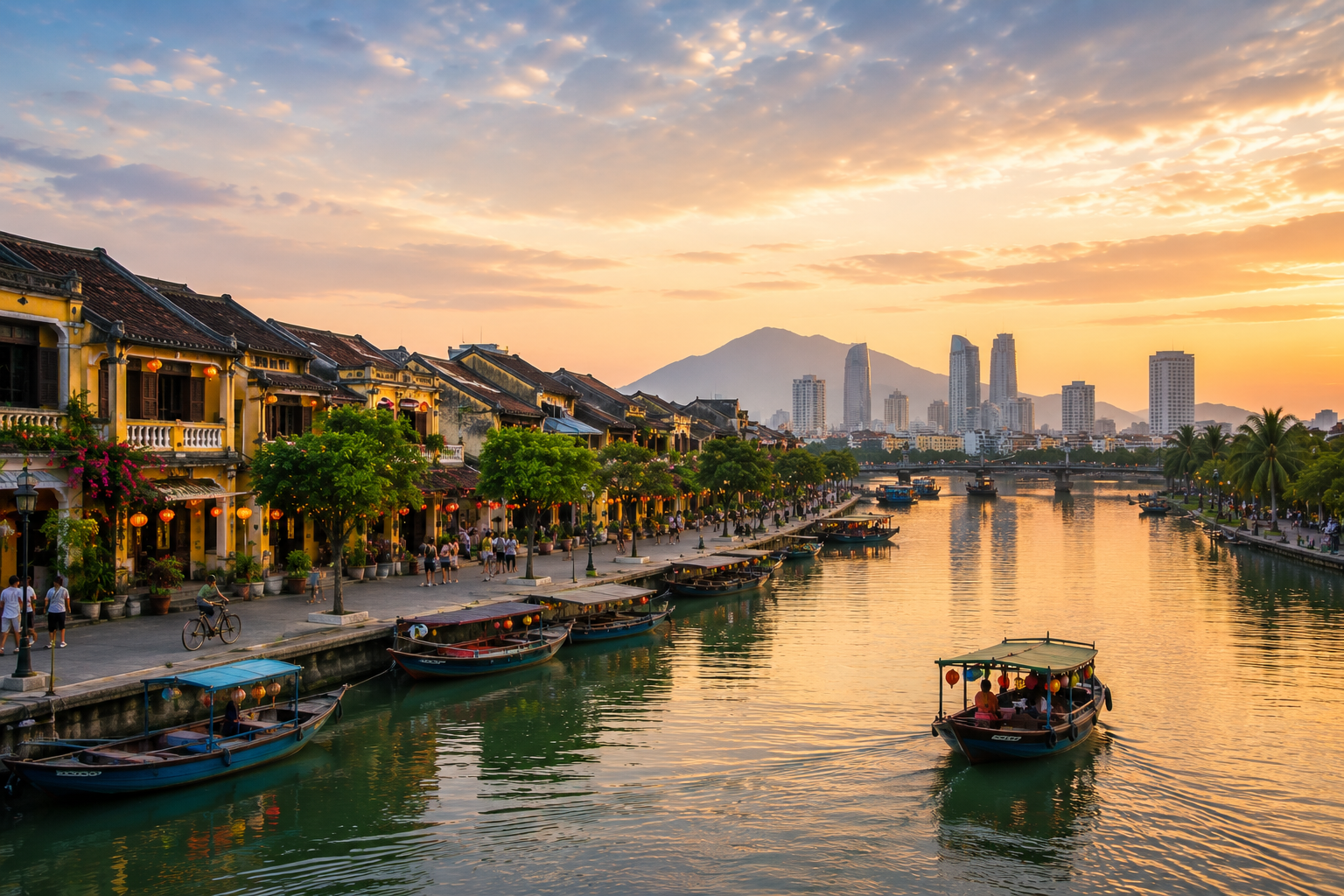
Executive Overview
Retirement Identity
Vietnam is emerging as one of Southeast Asia’s most compelling retirement destinations for retirees seeking affordability, cultural energy, and long-term lifestyle value inside a country that is still rapidly modernizing. Unlike more mature retirement ecosystems such as Thailand or Malaysia, Vietnam often feels less optimized for retirees and more like a country still actively evolving around them.
For some retirees, that creates friction. For others, it creates excitement, engagement, and a stronger sense of immersion in daily life.
Vietnam’s strongest appeal lies in the balance between low living costs, dynamic urban environments, strong food culture, improving infrastructure, and a sense that retirees can still build highly comfortable lives without requiring exceptionally large retirement budgets.
Core Strengths
Vietnam performs particularly well in affordability, food culture, housing value, and day-to-day cost sustainability. Major cities such as Ho Chi Minh City and Da Nang also continue improving healthcare access, infrastructure, transportation systems, and international accessibility.
The country’s energy level is one of its defining characteristics. Vietnam often feels youthful, active, entrepreneurial, and forward-moving in ways that some retirees find emotionally stimulating long after retirement begins.
Primary Tradeoffs
Vietnam requires more adaptation than Thailand or Malaysia. English accessibility is lower, retirement-oriented systems are less mature, infrastructure consistency varies more heavily by location, and healthcare confidence remains strongest primarily in major urban centers.
The country also feels faster and less operationally polished than more developed retirement destinations in the region. Retirees seeking highly structured or low-friction retirement environments may find Vietnam tiring over long timelines.
Best Retirement Fit
Vietnam tends to work best for retirees who are adaptable, culturally curious, affordability-conscious, and comfortable operating inside environments that are still developing rapidly.
It generally works less well for retirees seeking highly mature retirement systems, advanced healthcare certainty outside major cities, or highly predictable administrative structures.
Quick Retirement Snapshot
| Category | Vietnam Retirement Profile |
|---|---|
| Healthcare Quality | Strongest in major cities |
| Cost Structure | Extremely affordable relative to lifestyle quality |
| Infrastructure | Improving rapidly but uneven |
| Visa Stability | Moderate with evolving systems |
| English Accessibility | Lower outside international zones |
| Expat Ecosystem | Growing but less mature than Thailand |
| Climate | Tropical with major regional variation |
| Lifestyle Pace | Fast-moving and energetic |
Why Retire in Vietnam
Lifestyle Flexibility
Vietnam offers retirees a surprising range of retirement environments despite being less internationally marketed as a retirement destination than Thailand.
Ho Chi Minh City supports highly urban lifestyles with strong food culture, expanding infrastructure, and active international communities. Da Nang appeals to retirees seeking a calmer coastal environment with lower costs and growing expat presence. Hanoi offers a more traditional and culturally dense urban experience, while Hoi An attracts retirees seeking slower rhythm and historical atmosphere.
This variety allows retirees to shape very different lifestyles inside the same country while still benefiting from Vietnam’s broader affordability advantages.
Affordability and Daily Living
Affordability remains Vietnam’s strongest retirement advantage.
Housing, food, transportation, household services, and many daily expenses remain substantially lower than comparable costs in most Western countries. For retirees with moderate retirement income, Vietnam can provide access to lifestyles that would feel financially difficult elsewhere.
Importantly, Vietnam’s affordability does not necessarily require extreme simplicity. Many retirees are able to maintain comfortable apartments, frequent dining habits, domestic travel, and active social lives while still keeping spending relatively controlled.
Healthcare Confidence
Vietnam’s healthcare system continues improving rapidly, particularly in major urban centers.
Private hospitals and international clinics in Ho Chi Minh City and Hanoi have become increasingly capable, and many retirees find day-to-day healthcare more accessible and affordable than they expected. However, Vietnam should not be viewed at the same healthcare confidence level as Thailand or Malaysia.
Retirees with serious long-term medical concerns often structure retirement carefully around proximity to major urban healthcare systems.
International Accessibility
Vietnam’s international accessibility has improved dramatically over the past decade. Major airports in Ho Chi Minh City, Hanoi, and Da Nang continue expanding connectivity across Asia and beyond.
This increasing integration helps Vietnam feel less isolated than many retirees initially expect. The country’s growing international business presence, tourism infrastructure, and airline networks continue improving long-term retirement viability.
Long-Term Retirement Appeal
Vietnam’s long-term appeal comes from momentum.
The country often feels like it is moving forward economically, technologically, and socially. For retirees who enjoy energy, growth, and cultural engagement, this can create a more stimulating retirement environment than slower-moving destinations.
Vietnam tends to reward retirees who enjoy adaptation and engagement more than retirees seeking polished simplicity.
Long-Term Retirement Reality
Adaptation Requirements
Vietnam requires meaningful adaptation, especially during the early stages of retirement.
Traffic patterns, communication barriers, bureaucratic processes, urban density, and different social rhythms can initially feel overwhelming to retirees arriving from highly structured Western environments. Vietnam generally expects retirees to adapt to the country more than the country adapts to retirees.
This is not necessarily negative, but retirees should approach Vietnam realistically rather than romantically.
The retirees who succeed most comfortably in Vietnam are usually those who remain flexible, patient, curious, and socially engaged.
Bureaucratic Environment
Vietnam’s administrative systems are functional but still developing from a retirement perspective.
Long-term residency structures are less mature than Thailand’s, and procedural clarity can sometimes feel inconsistent depending on location or interpretation. Retirees should expect ongoing administrative involvement rather than fully streamlined retirement systems.
Many foreign residents eventually develop routines around visas, renewals, banking, and documentation, but Vietnam generally requires more adaptability than more established retirement destinations.
Aging and Long-Term Sustainability
Vietnam’s long-term sustainability depends heavily on location choice and healthcare expectations.
Major urban centers continue improving rapidly and can support comfortable long-term retirement for many retirees. However, retirees with advanced healthcare concerns or strong needs for institutional predictability may eventually encounter limitations outside major cities.
Vietnam often works best for relatively active retirees who value stimulation, affordability, and engagement more than institutional polish.
Daily Routine and Livability
Daily livability in Vietnam improves dramatically once retirees establish routines.
Neighborhood selection becomes extremely important. Living near reliable transportation, grocery options, cafés, healthcare facilities, and walkable services can significantly reduce stress and improve long-term comfort.
Retirees who approach Vietnam intentionally rather than improvisationally generally adapt much more successfully over time.
Emotional Sustainability
Vietnam can be emotionally rewarding for retirees who enjoy active environments and continuous engagement with daily life.
The country rarely feels emotionally static. Street activity, food culture, rapid development, entrepreneurial energy, and social movement create a sense of momentum that many retirees continue enjoying for years.
For others, however, this same intensity can eventually feel exhausting. Vietnam is usually strongest for retirees who want stimulation and involvement rather than quiet retreat-style retirement.
Cost of Living and Retirement Sustainability
Housing Costs
Housing affordability remains one of Vietnam’s greatest retirement strengths.
Modern apartments in Ho Chi Minh City, Da Nang, and other major centers often remain accessible at prices significantly below comparable housing in Western cities or even many other Southeast Asian retirement destinations. Retirees can frequently secure modern living environments with amenities at relatively moderate cost levels.
Location still matters heavily. Premium districts, coastal developments, and highly international neighborhoods can become substantially more expensive than local averages.
Food and Daily Expenses
Vietnam’s food culture strongly supports retirement affordability.
Street food, local restaurants, cafés, fresh produce, and domestic goods remain inexpensive relative to Western standards, allowing retirees to maintain active social and dining lifestyles without extreme spending pressure.
At the same time, imported products and highly international lifestyles can increase costs significantly. Vietnam remains affordable, but retirees seeking highly Westernized consumption patterns may spend more than expected.
Healthcare Affordability
Healthcare affordability is one of Vietnam’s strongest practical advantages.
Consultations, diagnostics, dental care, prescriptions, and many routine procedures remain highly affordable relative to Western systems. Retirees often find they can address smaller healthcare issues more proactively because costs feel manageable.
However, affordability should not automatically be confused with uniform healthcare depth across the country. Serious medical planning still requires careful location selection.
Lifestyle Scaling Across Budgets
Vietnam supports a wide range of retirement budgets.
Some retirees live very comfortably on relatively modest retirement income by relying heavily on local services and domestic pricing structures. Others choose higher-end condominiums, imported goods, private healthcare plans, and international social environments while still spending less than they would in major Western cities.
This flexibility allows Vietnam to remain attractive across different financial situations.
Long-Term Financial Sustainability
Vietnam performs extremely well from a long-term affordability perspective.
For retirees concerned about inflation, shrinking retirement purchasing power, or healthcare costs later in life, Vietnam can dramatically extend financial sustainability compared with remaining in higher-cost Western countries.
The key tradeoff is that retirees must generally accept higher adaptation requirements in exchange for that affordability advantage.
Healthcare and Aging Confidence
Quality of Private Healthcare
Vietnam’s private healthcare system has improved significantly over the past decade, particularly in major urban centers such as Ho Chi Minh City and Hanoi. International clinics and private hospitals continue expanding, and many retirees find the quality of routine care substantially better than they initially expected.
The strongest facilities increasingly serve both affluent Vietnamese residents and international patients, which has helped accelerate modernization and service quality improvements.
Still, Vietnam should not be positioned at the same healthcare confidence level as Thailand or Malaysia. The country’s healthcare ecosystem is improving rapidly, but it remains less mature overall from a retirement perspective.
Healthcare Access Outside Major Cities
Healthcare confidence declines more noticeably outside major urban centers.
Da Nang has developed a stronger healthcare environment than many smaller regional cities, but retirees living in secondary or rural locations may still need to travel for advanced diagnostics, specialist treatment, or more complex medical procedures.
This creates an important retirement planning consideration. Vietnam works best for retirees who intentionally structure location decisions around healthcare access rather than viewing healthcare as secondary to lifestyle preferences.
Specialist and Long-Term Care Access
Specialist access in Vietnam continues improving, especially in major cities with growing international medical infrastructure.
Retirees managing moderate health concerns often find that consultations, diagnostics, and routine treatment remain accessible and affordable. However, retirees requiring advanced long-term elder care, highly specialized procedures, or comprehensive assisted living environments may encounter more limitations than in Thailand or Malaysia.
Vietnam currently works best for relatively independent retirees rather than retirees already requiring advanced aging support systems.
Healthcare Costs Relative to the West
Healthcare affordability remains one of Vietnam’s strongest practical advantages.
Routine consultations, dental care, imaging, prescriptions, and outpatient procedures are often dramatically less expensive than equivalent services in North America or many Western healthcare systems. For retirees accustomed to high deductibles or expensive private insurance environments, this can significantly reduce retirement anxiety.
Many retirees find they are more willing to pursue preventative care because the financial barrier feels substantially lower.
Aging Confidence and Medical Security
Vietnam provides moderate aging confidence rather than maximum aging confidence.
Retirees living in Ho Chi Minh City, Hanoi, or increasingly Da Nang may feel reasonably secure managing long-term healthcare needs. Outside major urban systems, however, confidence can decline more quickly.
Vietnam is strongest for retirees who remain relatively active, adaptable, and independent while still wanting access to improving healthcare infrastructure at affordable cost levels.
Visa Stability and Bureaucratic Reality
Long-Term Residency Options
Vietnam’s long-term residency environment remains less mature than Thailand’s from a retirement perspective.
The country does not yet offer the same deeply established retirement-visa ecosystem that retirees find in some competing destinations. Long-term stay structures exist, but retirees should approach Vietnam understanding that residency systems continue evolving.
This does not make Vietnam unworkable. It simply means retirees should expect more adaptation and ongoing monitoring of policy changes.
Administrative Complexity
Vietnam’s bureaucracy can feel inconsistent, especially for retirees expecting highly transparent or streamlined systems.
Procedures sometimes vary by office, interpretation, or local implementation. Documentation requirements may evolve, and retirees often rely heavily on local assistance, agents, or experienced expat networks to navigate processes efficiently.
Retirees who remain patient and flexible generally adapt more successfully than retirees who become frustrated by procedural inconsistency.
Stability of Immigration Policies
Vietnam’s immigration policies continue evolving alongside the country’s broader economic and international development.
This creates both opportunity and uncertainty. The country is becoming more internationally integrated, but retirement-oriented systems are still developing rather than fully mature. Retirees should avoid assuming that current procedures will remain unchanged indefinitely.
Vietnam works best for retirees comfortable operating inside evolving systems rather than highly fixed institutional structures.
Reporting and Renewal Requirements
Retirees in Vietnam should expect recurring administrative involvement rather than permanent simplicity.
Renewals, compliance requirements, documentation updates, and changing procedures may require ongoing attention. Experienced expats often develop systems and local relationships that reduce friction over time, but the process still requires involvement.
Vietnam generally rewards retirees who approach administration calmly and pragmatically.
Retirement Confidence and Predictability
Vietnam provides moderate retirement confidence institutionally but strong retirement value financially.
Retirees prioritizing affordability, cultural engagement, and dynamic environments may find the administrative tradeoff acceptable. Retirees prioritizing highly stable residency systems may eventually prefer countries with more mature retirement structures.
Vietnam remains viable long term, but it should be approached realistically rather than assuming seamless institutional predictability.
Property Ownership and Financial Security
Foreign Ownership Rules
Vietnam’s property environment is somewhat more flexible than Thailand’s in certain structures, but foreign ownership rules still require careful review and conservative planning.
Foreigners can participate in some condominium ownership arrangements and leasehold structures, but retirees should avoid assuming that ownership functions identically to Western systems.
The legal environment remains workable, but retirees should proceed carefully and seek proper guidance before making major commitments.
Renting vs Ownership
For many retirees, renting remains the safest and most flexible approach during the early years of living in Vietnam.
The country’s rapid development means neighborhoods, infrastructure, traffic patterns, and lifestyle preferences can evolve quickly. Retirees often benefit from maintaining flexibility while learning how they actually want to structure daily life.
Renting also reduces exposure to legal complexity while still allowing retirees access to comfortable modern housing.
Long-Term Housing Security
Long-term housing security in Vietnam depends heavily on choosing reliable buildings, reputable developers, stable lease arrangements, and locations with strong infrastructure.
Modern apartment living in major cities can work very well for retirees who prioritize convenience, maintenance simplicity, and urban accessibility. However, retirees should remain cautious about assuming that low purchase prices automatically represent good long-term retirement decisions.
Operational comfort matters more than speculative investment logic for most retirees.
Legal Simplicity and Retirement Planning
Vietnam rewards conservative retirement planning rather than aggressive property speculation.
Retirees should prioritize legal clarity, flexibility, and manageable long-term structures rather than attempting to maximize ownership complexity. Retirement housing decisions should support stability and livability first.
Vietnam can work very well operationally for renters and cautious property buyers, but simplicity remains valuable.
Infrastructure and Daily Convenience
Transportation Infrastructure
Vietnam’s transportation systems continue improving rapidly, especially in major cities.
Ho Chi Minh City and Hanoi remain heavily motorbike-oriented and can initially feel chaotic to retirees unfamiliar with Southeast Asian urban traffic patterns. However, transportation infrastructure continues modernizing, and ride-hailing services have dramatically improved daily mobility for many foreign residents.
Da Nang offers a calmer transportation environment that many retirees find easier to navigate long term.
Internet and Utilities Reliability
Vietnam performs surprisingly well digitally.
Internet speeds, mobile connectivity, cafés, remote-work infrastructure, and digital service availability are often stronger than retirees initially expect. This has become one of the country’s underrated operational advantages.
Utilities are generally reliable in major urban areas, though occasional outages or inconsistencies still occur more frequently than in highly developed Western systems.
Banking and Financial Access
Banking access in Vietnam continues improving alongside broader economic modernization.
Foreign retirees can generally access ATMs, digital payments, international transfers, and modern banking services, though administrative requirements can still feel cumbersome at times. Cash usage remains more common than in some neighboring retirement destinations, although digital payment adoption is expanding rapidly.
Vietnam’s financial systems are increasingly functional for long-term foreign residents, but retirees should still expect occasional operational friction.
Airport Connectivity and Regional Travel
Vietnam’s international connectivity has improved substantially in recent years.
Ho Chi Minh City and Hanoi function as major regional gateways, while Da Nang continues expanding its role as an international tourism and business hub. Domestic travel within Vietnam is also relatively accessible and affordable.
This connectivity helps retirees remain mobile and reduces the sense of isolation that can occur in less connected retirement destinations.
Convenience of Daily Life
Vietnam’s convenience level depends heavily on location and expectations.
In highly developed districts of Ho Chi Minh City or Da Nang, retirees can access delivery services, cafés, restaurants, healthcare, gyms, shopping centers, and modern apartment living with relatively low friction. Outside these environments, daily life may require more adaptation and patience.
Vietnam is becoming increasingly convenient, but retirees should still expect more operational variability than in Thailand or Malaysia.
Climate and Environmental Considerations
Heat and Humidity
Vietnam’s climate is tropical and frequently humid, though conditions vary significantly by region.
Southern Vietnam remains consistently warm throughout the year, while Northern Vietnam experiences more seasonal variation, including cooler winter periods. Retirees attracted to tropical living often appreciate this diversity because it allows different environmental experiences within the same country.
Still, long-term exposure to heat and humidity affects retirees differently with age and should not be underestimated.
Seasonal Variation
Vietnam offers more seasonal diversity than many retirees initially expect.
Northern cities such as Hanoi experience cooler winters and changing seasons, while southern regions remain more consistently tropical. Central Vietnam also has distinct weather cycles influenced by coastal geography and storm seasons.
This regional variation allows retirees to choose climates better aligned with personal comfort preferences.
Air Quality and Pollution
Air quality is a meaningful consideration in major Vietnamese cities.
Traffic density, industrial growth, construction activity, and urban development can affect pollution levels, particularly in Hanoi and Ho Chi Minh City. Retirees with respiratory sensitivity should evaluate neighborhoods and environmental conditions carefully before committing long term.
Vietnam remains highly livable for many retirees, but environmental realism is important.
Coastal vs Inland Living
Vietnam’s coastal and inland retirement environments create very different experiences.
Da Nang and coastal central Vietnam offer beach access, calmer atmosphere, and growing expat ecosystems, while Ho Chi Minh City and Hanoi provide stronger urban infrastructure and cultural intensity. Smaller inland locations may offer lower costs but less healthcare depth and fewer international conveniences.
Retirees should think carefully about whether they prioritize stimulation, calmness, healthcare access, climate moderation, or social infrastructure.
Environmental Comfort Over Time
Environmental comfort becomes increasingly important over long retirement timelines.
Vietnam’s climate, traffic intensity, density, and urban movement can remain exciting for some retirees but exhausting for others. Long-term success often depends on selecting the right city and neighborhood rather than evaluating Vietnam as a single uniform experience.
Best Cities for Retirement in Vietnam
Ho Chi Minh City
Ho Chi Minh City is Vietnam’s strongest option for retirees seeking energy, infrastructure, international access, dining variety, and healthcare depth.
The city feels entrepreneurial, fast-moving, and internationally connected. It offers strong apartment infrastructure, extensive food culture, and growing healthcare capabilities. The tradeoff is intensity. Traffic, density, noise, and constant movement can become tiring over long periods.
Da Nang
Da Nang is increasingly viewed as Vietnam’s most balanced retirement city.
It combines coastal atmosphere, improving infrastructure, manageable scale, lower costs than Ho Chi Minh City, and growing expat presence. Many retirees find it calmer and easier operationally than Vietnam’s largest cities while still offering strong livability.
Da Nang’s retirement appeal continues growing rapidly.
Hanoi
Hanoi offers a more traditional, culturally dense, and historically layered experience than Ho Chi Minh City.
The city appeals to retirees who value intellectual atmosphere, local culture, seasonal climate variation, and deeper immersion into Vietnamese daily life. However, Hanoi can also feel crowded, polluted, and operationally intense.
It tends to suit retirees who actively enjoy urban energy and cultural immersion.
Hoi An
Hoi An appeals to retirees seeking slower rhythm, historical atmosphere, and smaller-scale coastal living.
The city’s charm, walkability, and tourism-driven international familiarity create an appealing lifestyle for some retirees, though it lacks the healthcare depth and infrastructure scale of larger cities.
Hoi An works best for retirees prioritizing lifestyle atmosphere over institutional depth.
Expat Community and Social Integration
Size of the Expat Ecosystem
Vietnam’s expat ecosystem continues growing but remains less mature and retirement-oriented than Thailand’s.
Large foreign communities exist in Ho Chi Minh City, Hanoi, and Da Nang, though many expats are younger professionals, entrepreneurs, remote workers, or educators rather than traditional retirees.
Retirees should expect a more mixed and evolving expat environment rather than deeply established retirement communities everywhere.
English Usage in Daily Life
English accessibility remains one of Vietnam’s more significant adaptation challenges.
English is increasingly common in international businesses, tourism areas, cafés, and younger urban populations, but retirees should still expect meaningful communication barriers outside highly international zones.
Retirees who remain patient and willing to adapt generally navigate Vietnam successfully, but the country rewards flexibility more than assumption of convenience.
Ease of Social Integration
Vietnam can be socially rewarding for retirees who remain active and engaged.
The country’s café culture, food culture, and street-level social energy naturally create opportunities for interaction. However, retirees still need initiative. Passive retirees may struggle more in Vietnam than in countries with larger retirement-oriented expat ecosystems.
Vietnam often rewards curiosity and participation.
Community Support and Services
Expat-oriented services continue expanding rapidly.
International clinics, lawyers, visa services, real estate professionals, social groups, gyms, and international restaurants are increasingly available in major cities. However, support systems remain less comprehensive than in Thailand.
Vietnam’s retirement ecosystem is growing, but still evolving.
Long-Term Belonging
Long-term belonging in Vietnam usually develops through immersion rather than convenience.
Retirees who build routines, relationships, neighborhood familiarity, and realistic expectations often form strong emotional connections to the country. Vietnam tends to reward engagement rather than passive consumption of retirement lifestyle.
Advantages of Retiring in Vietnam
Strongest Advantages
Vietnam’s strongest retirement advantages are affordability, cultural energy, food quality, and long-term financial sustainability.
The country allows many retirees to maintain active and highly livable lifestyles at cost levels that remain difficult to match elsewhere. Vietnam also offers a feeling of momentum and development that some retirees find emotionally stimulating long after retirement begins.
Its strongest appeal is often not polish, but vitality.
Challenges of Retiring in Vietnam
Most Significant Tradeoffs
Vietnam’s tradeoffs are primarily operational rather than financial.
Language barriers, administrative inconsistency, uneven healthcare outside major cities, traffic intensity, pollution, and lower retirement-system maturity all require adaptation. The country can feel demanding for retirees who prefer highly structured systems or low-friction daily life.
Vietnam works best when retirees understand that affordability comes paired with greater adaptation requirements.
Who Vietnam Is Best Suited For
Strong Matches
Vietnam is especially suitable for:
- affordability-focused retirees
- adaptable retirees
- culturally curious retirees
- retirees who enjoy urban energy
- retirees comfortable with change
- socially active retirees
- retirees seeking stimulation and engagement
- retirees comfortable operating in evolving systems
Less Suitable Matches
Vietnam may be less suitable for:
- retirees seeking highly polished retirement systems
- retirees requiring maximum healthcare certainty
- retirees uncomfortable with language barriers
- retirees seeking very quiet lifestyles
- retirees who dislike dense urban environments
- retirees requiring strong institutional predictability
- retirees highly sensitive to traffic, pollution, or operational inconsistency
Vietnam Compared With Other Asian Retirement Destinations
Vietnam vs Thailand
Vietnam is generally more affordable and more energetic than Thailand, but Thailand offers a more mature retirement ecosystem, stronger healthcare confidence, and easier long-term operational structure.
Vietnam appeals more strongly to retirees seeking dynamism and lower costs. Thailand appeals more strongly to retirees seeking balance and institutional maturity.
Vietnam vs Malaysia
Malaysia feels more polished, English-accessible, and operationally predictable than Vietnam. Vietnam feels more energetic, affordable, and culturally immersive.
Retirees prioritizing healthcare confidence, infrastructure, and low-friction retirement may prefer Malaysia. Retirees prioritizing stimulation, affordability, and rapid-growth atmosphere may prefer Vietnam.
Vietnam vs Philippines
The Philippines offers stronger English accessibility and often easier cultural communication for Western retirees. Vietnam generally offers lower living costs, stronger urban energy, and more rapid infrastructure development in major cities.
The choice often depends on whether retirees prioritize communication ease or affordability and urban dynamism.
Vietnam vs Indonesia
Indonesia, especially Bali, offers stronger island lifestyle and tourism-oriented retirement appeal. Vietnam generally feels more urban, structured, and economically dynamic.
Indonesia may suit retirees prioritizing lifestyle atmosphere and slower rhythm, while Vietnam often suits retirees seeking energy, affordability, and evolving urban environments.
Final Assessment
Overall Retirement Positioning
Vietnam is best understood as an emerging retirement destination rather than a fully mature retirement system.
Its greatest strengths are affordability, energy, food culture, rapid modernization, and the ability to support highly livable retirement lifestyles at relatively low cost levels. The country feels dynamic and forward-moving in ways many retirees continue finding engaging over long periods.
Long-Term Retirement Outlook
Vietnam’s long-term retirement outlook remains strong because the country continues modernizing rapidly while still maintaining meaningful affordability advantages.
Healthcare, infrastructure, airport connectivity, digital systems, and international integration are all improving. The primary uncertainty is not whether Vietnam is livable today, but how quickly its retirement ecosystem continues evolving over the next decade.
Final Retirement Fit Assessment
Vietnam works best for retirees who are adaptable, curious, socially engaged, and comfortable operating inside systems that are still evolving.
It is not the easiest retirement destination in Southeast Asia, but for the right retiree, it can be one of the most stimulating, affordable, and rewarding.
Vietnam rewards retirees who embrace movement, adaptation, and cultural engagement rather than retirees seeking maximum polish or predictability.
Compare Vietnam to Other Retirement Destinations in Asia
Vietnam is often compared with Thailand, Malaysia, Indonesia, and the Philippines for retirees seeking affordability, lower living costs, and evolving infrastructure.
Bangkok vs Da Nang
Compare highly developed Thai metropolitan retirement living with affordable coastal Vietnam pacing.
Da Nang vs Kuala Lumpur
Compare affordable Vietnam retirement living with highly developed Malaysian metropolitan convenience.
Ho Chi Minh City vs Kuala Lumpur
Compare fast-growing Vietnamese metropolitan living with highly developed Malaysian retirement infrastructure.
Da Nang vs Bali
Compare modern coastal Vietnam retirement living with immersive Indonesian tropical lifestyle.
Ho Chi Minh City vs Manila
Compare Vietnam’s rapidly growing metropolitan environment with major Philippine urban retirement living.
Find Your Best Retirement Destination in Asia
Use the retirement questionnaire to compare destinations based on your own priorities, retirement goals, healthcare needs, budget, and lifestyle preferences.