
Retire in Malaysia
Executive Overview
Retirement Identity
Malaysia has developed one of the most operationally comfortable retirement environments in Southeast Asia. While countries such as Thailand often attract retirees through lifestyle diversity and Vietnam through affordability and energy, Malaysia’s retirement appeal is built more quietly around stability, healthcare confidence, infrastructure reliability, and ease of daily living.
For many retirees, those advantages become increasingly important over time.
Malaysia generally feels calmer, more predictable, and easier to navigate than many neighboring retirement destinations. English is widely used, healthcare infrastructure is strong, modern housing is accessible, and daily systems often function with relatively low friction compared with much of the region.
The result is a retirement environment that prioritizes sustainability over intensity.
Core Strengths
Malaysia’s strongest retirement advantages include healthcare quality, English accessibility, infrastructure reliability, digital connectivity, and long-term operational comfort.
The country also performs well in banking access, transportation infrastructure, and daily livability. Retirees who value predictable systems and manageable adaptation often find Malaysia emotionally easier to settle into than more chaotic or rapidly changing environments elsewhere in Southeast Asia.
Its healthcare system in particular represents one of the strongest retirement assets in the region.
Primary Tradeoffs
Malaysia’s retirement experience is calmer and more stable than many alternatives, but some retirees may find it less emotionally dynamic than Thailand or Vietnam.
The country offers fewer radically different lifestyle environments, less cultural intensity, and less day-to-day stimulation than more energetic destinations. Retirees seeking highly immersive or adventure-oriented retirement experiences may eventually find Malaysia somewhat restrained.
Political systems are also stable enough operationally for retirement, though not entirely free from periodic uncertainty or policy shifts.
Best Retirement Fit
Malaysia works especially well for retirees seeking healthcare confidence, communication ease, moderate affordability, and low-friction daily living over very long timelines.
It is particularly well suited for retirees who want Southeast Asian retirement advantages without feeling constantly challenged by adaptation, language barriers, or operational inconsistency.
Quick Retirement Snapshot
| Category | Malaysia Retirement Profile |
|---|---|
| Healthcare Quality | One of the strongest in Southeast Asia |
| Cost Structure | Moderate affordability with strong value |
| Infrastructure | Reliable and highly developed |
| Visa Stability | Relatively mature and manageable |
| English Accessibility | Excellent |
| Expat Ecosystem | Mature and well established |
| Climate | Consistently tropical |
| Lifestyle Pace | Moderate and sustainable |
Why Retire in Malaysia
Lifestyle Flexibility
Malaysia offers a narrower but more stable retirement spectrum than Thailand.
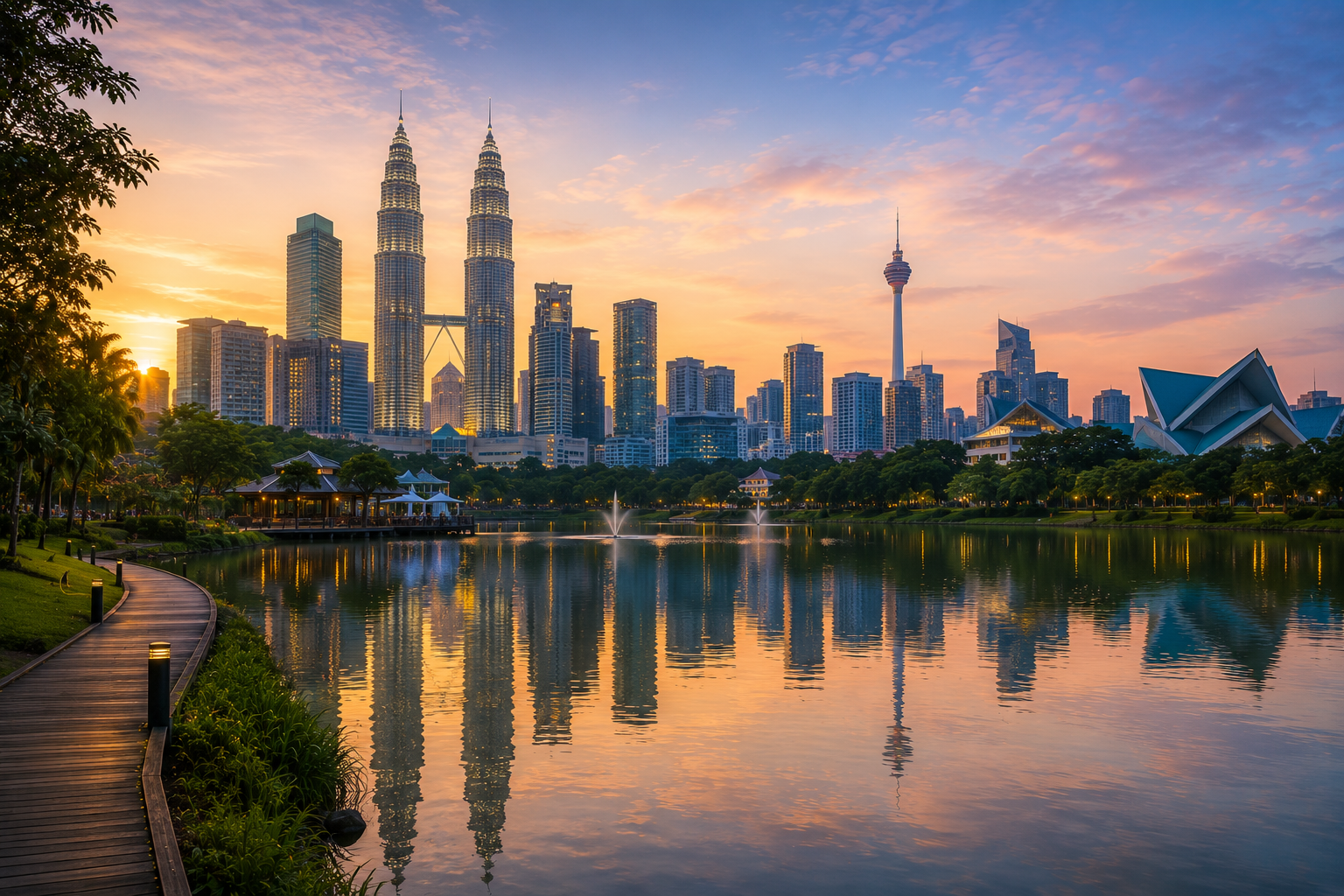
Rather than supporting highly fragmented retirement identities, Malaysia tends to provide a more consistently comfortable experience across its major retirement environments. Kuala Lumpur offers modern metropolitan infrastructure and healthcare depth, while Penang combines strong healthcare access with calmer coastal livability and a more relaxed daily rhythm.
This smaller but more refined lifestyle range often appeals to retirees seeking sustainability rather than constant reinvention.
Affordability and Daily Living
Malaysia remains affordable relative to Western retirement costs while generally offering higher operational standards than many similarly priced destinations.
Retirees can often access modern condominiums, reliable infrastructure, private healthcare, strong internet, international dining, and comfortable daily services at costs substantially below major Western cities. The country is not the cheapest destination in Southeast Asia, but the balance between cost and operational quality is one of its defining strengths.
Many retirees discover that Malaysia allows them to simplify life rather than constantly manage around infrastructure or administrative limitations.
Healthcare Confidence
Healthcare is one of Malaysia’s strongest retirement differentiators.
Private hospitals are modern, internationally respected, and widely used by both affluent locals and foreign residents. English-speaking medical staff, strong specialist access, modern diagnostics, and relatively affordable treatment create high levels of healthcare confidence for retirees planning long-term aging abroad.
This healthcare ecosystem significantly reduces retirement anxiety for many retirees, particularly those entering later retirement stages.
International Accessibility
Malaysia’s international accessibility contributes heavily to its retirement practicality.
Kuala Lumpur functions as a major regional transportation hub with strong international connectivity, while Penang also maintains meaningful regional access. This makes family travel, regional exploration, and medical travel relatively straightforward.
The country’s airport infrastructure, transportation systems, and digital reliability help Malaysia feel internationally connected rather than isolated.
Long-Term Retirement Appeal
Malaysia’s long-term appeal comes less from excitement and more from consistency.
The country often becomes more attractive over time because it reduces friction in daily life. Retirees frequently discover that healthcare reliability, communication ease, infrastructure stability, and manageable routines matter more after ten years of retirement than they did during the initial relocation phase.
Malaysia performs exceptionally well in that long-term sustainability category.
Long-Term Retirement Reality
Adaptation Requirements
Malaysia generally requires less adaptation than Thailand or Vietnam for English-speaking retirees.
English usage is widespread, modern infrastructure is common, and many institutional systems feel familiar enough that retirees can establish routines relatively quickly. This reduces the psychological fatigue that sometimes develops in more adaptation-heavy retirement destinations.
That does not mean Malaysia feels Western. It remains culturally distinct and regionally Southeast Asian. But operationally, many retirees find the transition smoother than expected.
Bureaucratic Environment
Malaysia’s bureaucracy is usually manageable, though retirees should not expect perfect efficiency or complete institutional simplicity.
Administrative systems generally feel more structured and predictable than in many neighboring countries, but visa renewals, banking procedures, and documentation requirements still require organization and attention. Most retirees adapt comfortably once routines are established.
Malaysia’s advantage is not the absence of bureaucracy. Its advantage is that the bureaucracy often feels more understandable and less chaotic.
Aging and Long-Term Sustainability
Malaysia performs extremely well as a long-term aging destination.
Healthcare access, infrastructure reliability, communication ease, transportation quality, and modern housing all contribute to retirement sustainability over long timelines. Many retirees who initially focused primarily on affordability eventually begin valuing these operational advantages more heavily as they age.
The country supports retirees who want to remain comfortable, independent, and medically secure for decades rather than simply minimizing costs.
Daily Routine and Livability
Malaysia’s daily livability is one of its strongest retirement assets.
Reliable internet, modern apartment infrastructure, delivery systems, shopping access, transportation networks, and healthcare convenience create highly manageable daily routines. Many retirees find that life in Malaysia requires less constant adaptation energy than elsewhere in Southeast Asia.
This becomes increasingly valuable later in retirement when simplicity and predictability often matter more than novelty.
Emotional Sustainability
Malaysia’s emotional sustainability comes from calmness rather than stimulation.
The country rarely feels overwhelming. Retirees who prefer balanced routines, manageable urban environments, and lower emotional intensity often settle comfortably into long-term life there.
Retirees seeking constant excitement or strong cultural immersion may eventually desire more intensity, but retirees prioritizing peace of mind frequently find Malaysia deeply sustainable over time.
Cost of Living and Retirement Sustainability
Housing Costs
Malaysia offers strong housing value relative to infrastructure quality and livability.
Modern condominiums in Kuala Lumpur and Penang often provide high-quality amenities, strong maintenance standards, reliable utilities, and good security at prices significantly below equivalent Western urban housing. Retirees can frequently access comfortable long-term living environments without requiring luxury-level retirement income.
Housing costs are higher than in Vietnam but often feel justified by operational quality and infrastructure reliability.
Food and Daily Expenses
Malaysia’s food ecosystem supports both affordability and comfort.
Local dining remains relatively inexpensive, while international restaurants, imported groceries, and modern supermarkets are also widely available. Retirees can maintain highly local lifestyles or more international consumption patterns depending on preference and budget.
This flexibility helps retirees naturally scale spending without sacrificing overall quality of life.
Healthcare Affordability
Malaysia’s healthcare system combines strong quality with relatively manageable costs.
Private healthcare remains dramatically less expensive than many Western systems while still offering strong facilities and specialist access. Retirees often find that consultations, diagnostics, and elective procedures remain financially accessible even without extreme wealth.
The healthcare system supports both day-to-day care and long-term retirement confidence.
Lifestyle Scaling Across Budgets
Malaysia accommodates multiple retirement tiers effectively.
Some retirees maintain relatively moderate middle-income lifestyles focused on practicality and sustainability, while others pursue highly comfortable urban living with premium healthcare, upscale housing, and extensive travel flexibility.
Malaysia’s strength is that even its higher-end retirement lifestyles often remain financially reasonable relative to Western metropolitan standards.
Long-Term Financial Sustainability
Malaysia performs strongly in long-term retirement sustainability because it balances affordability with operational quality.
The country may not offer the absolute lowest costs in Southeast Asia, but retirees often avoid the hidden costs of adaptation fatigue, infrastructure inconsistency, healthcare uncertainty, or administrative instability that sometimes emerge elsewhere.
Over long timelines, that balance can become financially and emotionally valuable.
Healthcare and Aging Confidence
Quality of Private Healthcare
Malaysia has one of the strongest private healthcare systems in Southeast Asia.
Private hospitals in Kuala Lumpur and Penang are modern, internationally respected, and heavily utilized by both locals and international patients. Many physicians are internationally trained, English communication is generally strong, and diagnostic capabilities continue improving.
Retirees frequently cite healthcare quality as one of the main reasons they remain in Malaysia long term.
Healthcare Access Outside Major Cities
Healthcare quality remains strongest in major urban centers, though broader healthcare infrastructure across Malaysia is generally stronger than in many neighboring countries.
Retirees living in Kuala Lumpur or Penang typically maintain strong specialist access and relatively high medical confidence. Smaller regional areas may still require travel for highly specialized procedures, but overall healthcare consistency remains relatively strong.
Malaysia’s healthcare reliability significantly strengthens long-term retirement confidence.
Specialist and Long-Term Care Access
Malaysia performs very well in specialist access and ongoing medical management.
Retirees managing chronic conditions often find that consultations, diagnostics, follow-up care, and treatment coordination are substantially easier than expected. English communication also reduces friction during complex medical discussions.
Long-term elder-care systems continue evolving, but Malaysia currently offers one of the region’s strongest foundations for aging retirees.
Healthcare Costs Relative to the West
Healthcare affordability remains one of Malaysia’s strongest practical advantages.
Retirees frequently gain access to high-quality private healthcare at costs dramatically below equivalent services in North America or many Western countries. This creates substantial emotional relief for retirees concerned about medical inflation or healthcare insecurity later in life.
Malaysia performs especially well for retirees seeking strong healthcare without needing extremely high retirement income.
Aging Confidence and Medical Security
Malaysia provides one of the highest levels of aging confidence in Southeast Asia.
Retirees often feel reassured by the combination of healthcare quality, English accessibility, modern hospitals, infrastructure reliability, and relatively predictable systems. The country supports retirees who want to age abroad without constantly worrying about medical access or institutional instability.
This long-term medical confidence is one of Malaysia’s deepest retirement strengths.
Visa Stability and Bureaucratic Reality
Long-Term Residency Options
Malaysia maintains relatively mature long-term residency structures compared with many neighboring retirement destinations.
Retirees generally perceive the system as more retirement-oriented and more administratively understandable than more fragmented regional alternatives. Requirements still evolve over time, but the overall framework tends to feel comparatively structured.
The country signals that foreign retirees are part of a recognized long-term demographic rather than an improvised category.
Administrative Complexity
Malaysia’s administrative systems are usually manageable and reasonably predictable.
Retirees still need organization, documentation discipline, and patience, but processes generally feel more structured and less improvisational than in some neighboring countries. This reduces the emotional exhaustion that repeated bureaucracy can create over long retirement periods.
Operational ease remains one of Malaysia’s strongest comparative advantages.
Stability of Immigration Policies
Malaysia’s immigration environment is relatively stable, though not entirely immune to policy changes or political influence.
Retirees should still remain aware that residency programs and requirements can evolve, especially during political transitions or economic policy shifts. However, the broader institutional tone generally feels calmer and more structured than in many competing destinations.
Reporting and Renewal Requirements
Malaysia still requires recurring compliance and administrative engagement, but retirees often find the process less stressful than in more fragmented systems.
English accessibility also reduces friction considerably during renewals, healthcare administration, banking, and government interaction. Retirees who remain organized usually adapt comfortably to the recurring requirements.
Retirement Confidence and Predictability
Malaysia offers relatively high retirement predictability by Southeast Asian standards.
Retirees prioritizing institutional stability, communication ease, and operational confidence often feel substantially more secure in Malaysia than in more chaotic or rapidly shifting environments.
The country’s retirement identity is strongly tied to that sense of manageability.
Property Ownership and Financial Security
Foreign Ownership Rules
Malaysia is relatively accessible for foreign property ownership compared with several neighboring countries.
Foreigners can participate more directly in certain property markets, particularly condominiums and higher-value developments, though regulations and thresholds still vary by state and property category.
This greater accessibility contributes to retirees’ sense of long-term housing security.
Renting vs Ownership
Many retirees still begin with renting before purchasing property.
This allows time to evaluate neighborhoods, healthcare proximity, lifestyle preferences, and long-term retirement priorities before committing financially. Malaysia’s relatively mature rental market supports this flexibility well.
Retirees often discover that operational convenience matters more than ownership status itself.
Long-Term Housing Security
Malaysia provides relatively strong long-term housing stability for retirees.
Modern condominiums, predictable infrastructure, strong building maintenance standards, and reliable urban services help create confidence in long-term livability. Retirees seeking calm, manageable urban retirement often find Malaysia especially reassuring from a housing standpoint.
Legal Simplicity and Retirement Planning
Malaysia generally rewards conservative and straightforward retirement planning.
Retirees who prioritize clarity, simplicity, and sustainability tend to adapt comfortably. The country’s stronger English accessibility also reduces misunderstanding risk during contracts, banking, healthcare, and legal interactions.
This operational clarity becomes increasingly valuable later in retirement.
Infrastructure and Daily Convenience
Transportation Infrastructure
Malaysia’s transportation infrastructure is among the strongest in Southeast Asia.
Kuala Lumpur offers extensive rail systems, modern highways, airports, and ride-hailing integration, while Penang provides relatively manageable mobility within a calmer urban environment. Transportation systems generally feel modern and dependable.
This infrastructure quality significantly improves long-term retirement comfort.
Internet and Utilities Reliability
Malaysia performs extremely well digitally and operationally.
Internet infrastructure is strong, utilities are generally reliable, and modern residential buildings often support highly comfortable digital lifestyles. Retirees working remotely part-time or managing international finances online usually encounter relatively little friction.
Operational reliability is one of Malaysia’s defining retirement strengths.
Banking and Financial Access
Malaysia’s banking environment is modern, accessible, and internationally functional.
Retirees can generally access reliable banking systems, international transfers, digital payments, ATMs, and financial services without excessive complication. English communication also simplifies banking interaction considerably.
This financial accessibility contributes heavily to Malaysia’s low-friction retirement feel.
Airport Connectivity and Regional Travel
Malaysia maintains strong regional and international connectivity.
Kuala Lumpur’s airport infrastructure is among the region’s strongest, supporting easy travel throughout Asia and beyond. Penang also maintains useful regional access for retirees seeking calmer living environments without complete disconnection.
The country remains highly practical for retirees maintaining international family or travel ties.
Convenience of Daily Life
Malaysia’s convenience level is exceptionally strong by regional standards.
Shopping access, pharmacies, healthcare, cafés, grocery delivery, transportation systems, modern housing, and digital services all contribute to highly manageable daily routines. Retirees often discover they spend less emotional energy solving everyday logistical problems than in many neighboring countries.
This operational simplicity becomes one of Malaysia’s most underestimated long-term strengths.
Climate and Environmental Considerations
Heat and Humidity
Malaysia’s climate is consistently tropical, warm, and humid.
Retirees escaping colder climates often appreciate the year-round warmth, though long-term humidity adaptation remains important. The climate generally feels stable rather than highly seasonal, which some retirees enjoy and others eventually find monotonous.
Climate comfort remains highly personal and should be evaluated realistically.
Seasonal Variation
Malaysia experiences relatively limited seasonal variation compared with Vietnam.
This consistency can support predictable routines and stable living patterns, though retirees seeking dramatic climate change or cooler seasonal relief may eventually desire more variation.
The country’s environmental rhythm is generally calm and steady.
Air Quality and Pollution
Air quality is generally manageable, though urban pollution and occasional regional haze events can affect certain periods.
Kuala Lumpur experiences typical metropolitan pollution pressures, while Penang generally feels somewhat calmer environmentally. Retirees with respiratory sensitivities should still evaluate neighborhoods and environmental conditions carefully.
Overall, environmental livability remains relatively strong.
Coastal vs Inland Living
Malaysia’s retirement environments remain relatively concentrated compared with Thailand.
Penang provides coastal atmosphere combined with strong healthcare and expat infrastructure, while Kuala Lumpur offers deeper urban infrastructure and international connectivity. The distinction is more about pace and density than radically different retirement identities.
This contributes to Malaysia’s overall sense of consistency.
Environmental Comfort Over Time
Malaysia’s environmental experience often feels sustainable over long retirement timelines because daily life remains relatively manageable and predictable.
The country does not usually overwhelm retirees environmentally or operationally. Instead, it tends to support stable routines, healthcare access, and comfortable long-term livability.
Best Cities for Retirement in Malaysia
Penang
Penang is Malaysia’s strongest retirement destination for many foreign retirees.
It combines strong healthcare infrastructure, coastal atmosphere, English accessibility, mature expat communities, manageable pace, and relatively comfortable urban density. Penang often feels highly livable without becoming overwhelming.
For retirees seeking balance, healthcare confidence, and sustainable daily life, Penang remains exceptionally strong.
Kuala Lumpur
Kuala Lumpur offers Malaysia’s deepest infrastructure, healthcare systems, transportation networks, and international connectivity.
The city suits retirees who prioritize metropolitan convenience, specialist healthcare access, modern housing, and strong operational infrastructure. Kuala Lumpur is busier and more urban than Penang, but it remains calmer operationally than many comparable Asian megacities.
It is particularly strong for retirees prioritizing infrastructure and healthcare depth.
Expat Community and Social Integration
Size of the Expat Ecosystem
Malaysia maintains one of Southeast Asia’s more mature expat ecosystems.
Foreign retirees, professionals, international students, and long-term residents are well integrated into many urban areas, especially in Penang and Kuala Lumpur. This reduces social friction and helps retirees establish routines more comfortably.
The expat ecosystem feels established without completely dominating local identity.
English Usage in Daily Life
English accessibility is one of Malaysia’s defining retirement strengths.
Retirees can generally navigate healthcare, banking, housing, transportation, shopping, and government interaction in English with relatively low stress. This dramatically reduces adaptation fatigue over long retirement timelines.
Communication ease consistently reinforces Malaysia’s reputation for operational comfort.
Ease of Social Integration
Malaysia tends to feel socially approachable for many Western retirees.
Retirees can participate in both expat-oriented and local environments without constantly struggling with communication barriers. Social integration still requires effort and initiative, but the operational barriers are lower than in many neighboring countries.
This makes Malaysia emotionally easier for many long-term retirees.
Community Support and Services
Malaysia’s mature expat ecosystem supports retirees effectively.
International clinics, social groups, legal services, housing professionals, financial services, and international businesses are widely available in major retirement centers. Retirees usually find support structures relatively quickly once routines are established.
Long-Term Belonging
Long-term belonging in Malaysia often develops quietly rather than dramatically.
Retirees who value comfort, routine, healthcare confidence, and communication ease frequently settle into stable long-term lifestyles without feeling constant pressure to adapt or reinvent themselves.
Malaysia rewards retirees seeking sustainable balance rather than emotional intensity.
Advantages of Retiring in Malaysia
Strongest Advantages
Malaysia’s strongest retirement advantages include healthcare confidence, English accessibility, infrastructure reliability, digital connectivity, operational ease, and long-term livability.
The country consistently reduces friction across major retirement categories. Communication, transportation, healthcare, banking, and daily logistics often feel substantially easier than elsewhere in Southeast Asia.
Its greatest strength is sustainable comfort over very long timelines.
Challenges of Retiring in Malaysia
Most Significant Tradeoffs
Malaysia’s retirement environment can feel less emotionally dynamic than Thailand or Vietnam.
Some retirees eventually desire more stimulation, stronger cultural immersion, or broader lifestyle variation. Costs are also higher than Vietnam, and the country lacks some of Thailand’s lifestyle diversity and retirement spectrum.
Political systems remain stable enough operationally but still experience occasional uncertainty.
Malaysia’s tradeoffs are generally moderate rather than severe.
Who Malaysia Is Best Suited For
Strong Matches
Malaysia is especially suitable for:
- healthcare-focused retirees
- retirees seeking operational ease
- retirees prioritizing English accessibility
- retirees wanting calm long-term sustainability
- retirees seeking infrastructure reliability
- retirees wanting manageable adaptation
- retirees prioritizing healthcare and aging confidence
- retirees seeking balanced retirement comfort
Less Suitable Matches
Malaysia may be less suitable for:
- retirees seeking highly energetic environments
- retirees prioritizing ultra-low-cost retirement
- retirees seeking highly immersive cultural challenge
- retirees wanting highly adventurous lifestyles
- retirees seeking extreme lifestyle diversity
- retirees who prefer highly rural retirement environments
Malaysia Compared With Other Asian Retirement Destinations
Malaysia vs Thailand
Malaysia generally feels calmer, more predictable, and more English-accessible than Thailand. Thailand offers greater lifestyle diversity, stronger tourism infrastructure, and more retirement variety.
Retirees prioritizing healthcare confidence and operational ease may prefer Malaysia. Retirees seeking broader lifestyle flexibility and stronger emotional energy may prefer Thailand.
Malaysia vs Vietnam
Malaysia is more polished, healthcare-confident, and operationally mature than Vietnam. Vietnam is more energetic, more affordable, and more culturally intense.
Malaysia appeals more strongly to retirees prioritizing comfort and predictability. Vietnam appeals more strongly to retirees seeking stimulation and lower-cost dynamism.
Malaysia vs Philippines
Both countries offer strong English accessibility, but Malaysia generally provides stronger infrastructure reliability, healthcare depth, and transportation systems.
The Philippines may feel emotionally warmer or culturally easier for some retirees, while Malaysia often feels more operationally stable and infrastructure-secure.
Malaysia vs Indonesia
Malaysia generally feels more structured, predictable, and infrastructure-reliable than Indonesia.
Indonesia may offer stronger lifestyle immersion and island-oriented appeal, while Malaysia provides stronger healthcare confidence, communication ease, and long-term operational stability.
Final Assessment
Overall Retirement Positioning
Malaysia stands out as one of Southeast Asia’s most sustainable long-term retirement environments.
Its appeal comes less from dramatic lifestyle intensity and more from the way it consistently reduces friction across healthcare, communication, infrastructure, transportation, banking, and daily life. For many retirees, those operational advantages become increasingly valuable with age.
Long-Term Retirement Outlook
Malaysia’s long-term retirement outlook remains strong because its core advantages are deeply structural.
Healthcare systems, infrastructure quality, English accessibility, digital reliability, and international integration all support stable long-term retirement living. While costs may gradually rise over time, the country’s overall balance between affordability and operational quality remains highly competitive.
Final Retirement Fit Assessment
Malaysia works best for retirees seeking calm sustainability, healthcare confidence, communication ease, and manageable daily living over very long retirement timelines.
It is not the most emotionally intense or adventurous retirement destination in Southeast Asia, but it may be one of the most operationally comfortable.
For retirees prioritizing long-term livability over constant stimulation, Malaysia remains one of Asia’s strongest retirement choices.
Compare Malaysia to Other Retirement Destinations in Asia
Malaysia is frequently compared with Thailand, Vietnam, Indonesia, and the Philippines for retirees seeking healthcare quality, infrastructure reliability, affordability, and long-term retirement stability.
Bangkok vs Kuala Lumpur
Compare Thailand’s largest metropolitan retirement environment with Malaysia’s modern capital infrastructure.
Chiang Mai vs Penang
Compare balanced northern Thailand retirement living with Malaysia’s operationally smooth retirement infrastructure.
Da Nang vs Kuala Lumpur
Compare affordable Vietnam retirement living with highly developed Malaysian metropolitan convenience.
Ho Chi Minh City vs Kuala Lumpur
Compare fast-growing Vietnamese metropolitan living with highly developed Malaysian retirement infrastructure.
Kuala Lumpur vs Bali
Compare highly developed Malaysian metropolitan systems with immersive Indonesian tropical retirement living.
Jakarta vs Kuala Lumpur
Compare Indonesia’s largest metropolitan retirement environment with Malaysia’s highly developed capital infrastructure.
Find Your Best Retirement Destination in Asia
Use the retirement questionnaire to compare destinations based on your own priorities, retirement goals, healthcare needs, budget, and lifestyle preferences.