
Kuala Lumpur, Malaysia
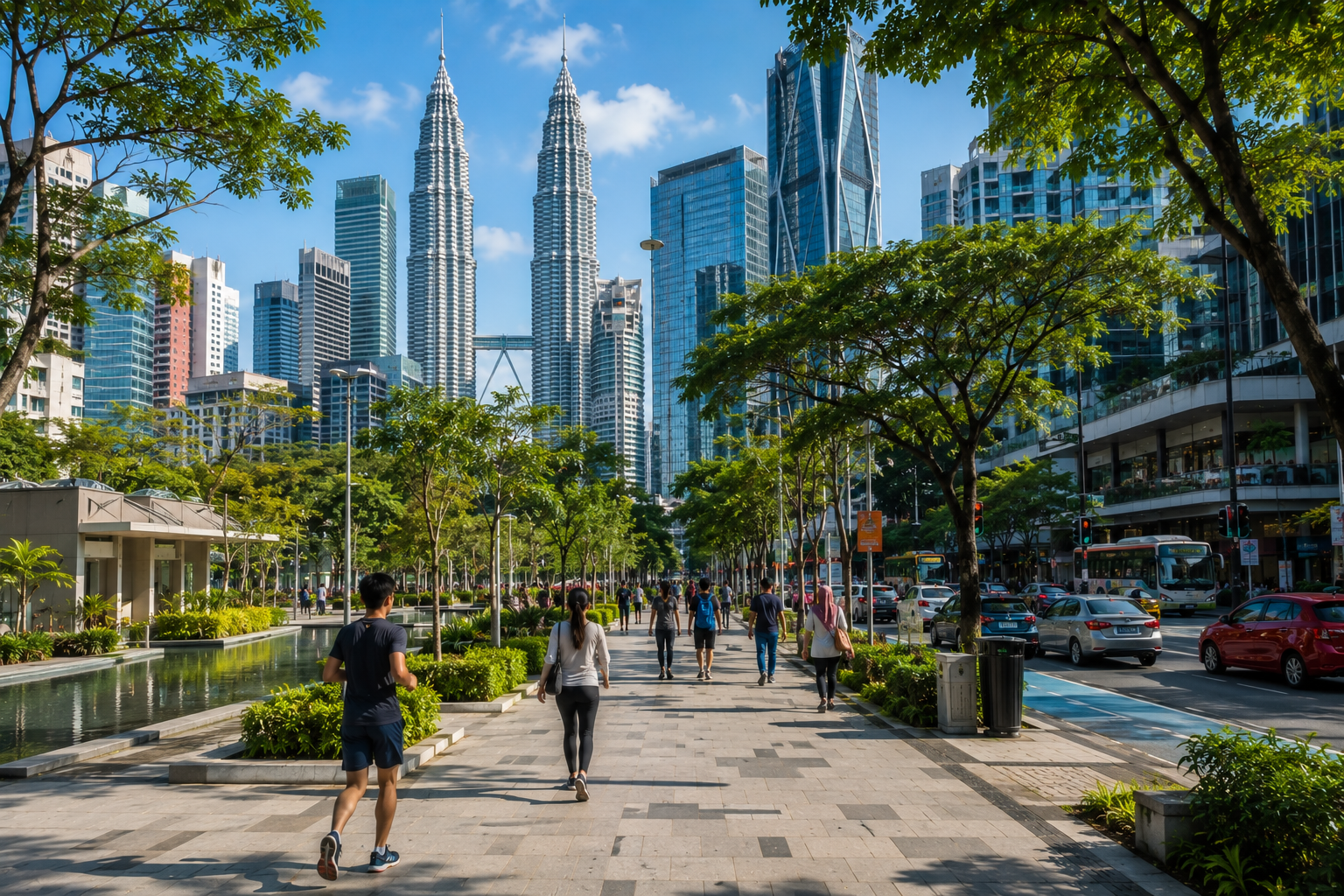
Retire in Kuala Lumpur at a Glance
Kuala Lumpur combines practical retirement costs, healthcare access, expat support, and a lifestyle profile suited to long-term retirement planning.
Best For
- Healthcare, English
- Excellent healthcare access
- Large expat community
- Long-term retirement living
Monthly Condo Rent
US$500-700
US$800-1200
US$1300-2200
Monthly Retirement Budget
US$1500-2000
US$2300-3200
US$3800-5500
Key Strengths
Healthcare: Excellent
Expat Community: Large
Best For: Healthcare, English
Confidence: Medium
Executive Overview
Kuala Lumpur has quietly become one of the strongest long-term retirement cities in Southeast Asia for retirees who prioritize comfort, healthcare, infrastructure, and practical daily living. Malaysia’s capital does not usually generate the same emotional reactions as places like Bali, Chiang Mai, or Hoi An. It is not especially romantic, slow-paced, or exotic in the traditional retirement-marketing sense. Instead, Kuala Lumpur succeeds because life there works remarkably well.
For many retirees, especially those planning for ten, fifteen, or twenty years abroad, that distinction becomes increasingly important over time. The city combines modern hospitals, excellent transportation systems, strong English accessibility, modern condominiums, international dining, reliable infrastructure, and broad regional connectivity into a retirement environment that feels stable and sustainable rather than improvised.
Compared with many other large cities in Southeast Asia, Kuala Lumpur often feels calmer and more manageable. It is still a busy tropical metropolis, but it generally lacks the exhausting intensity that retirees sometimes experience in places such as Manila, Jakarta, or even Bangkok. That operational ease becomes one of the city’s biggest long-term strengths. Many retirees eventually discover that Kuala Lumpur may not be the most exciting retirement destination in Asia, but it may be one of the easiest places in which to actually build a comfortable and predictable life.
Quick Snapshot
Cost of Living: Moderate by Southeast Asian standards, affordable relative to major global cities
Healthcare Quality: Excellent private healthcare system with internationally respected hospitals
Lifestyle: Modern metropolitan living with strong convenience and infrastructure
Climate: Tropical equatorial climate with year-round warmth and humidity
Expat Community: Large and highly internationalized
Best For: Healthcare-focused, infrastructure-oriented, and convenience-focused retirees
Lifestyle and Environment
Kuala Lumpur offers a retirement lifestyle centered less around adventure and more around livability. The city is highly metropolitan, and daily life is shaped by shopping centers, transportation systems, condominium living, cafés, restaurants, and modern commercial infrastructure. Retirees who thrive there are usually people who appreciate predictability, convenience, and structure rather than retirees looking for rustic simplicity or beach-town living.
One of Kuala Lumpur’s strongest qualities is how quickly daily routines become manageable. In many Southeast Asian cities, even simple errands can become tiring over time because of traffic, language barriers, infrastructure inconsistency, or climate discomfort. Kuala Lumpur tends to reduce that friction considerably. English is widely spoken in hospitals, malls, restaurants, and banking systems, and many daily tasks feel internationally familiar. That may sound like a small thing initially, but over long retirement timelines it has a major effect on stress levels and quality of life.
The city also offers a degree of flexibility that many retirement destinations struggle to provide. A retiree can live a relatively modest lifestyle in a smaller condominium and enjoy affordable local dining, or they can maintain a highly upscale metropolitan lifestyle with luxury housing, premium shopping, international schools for visiting grandchildren, and excellent private healthcare. Kuala Lumpur accommodates a wide range of retirement budgets more successfully than many competing cities in the region.
At the same time, Kuala Lumpur does not offer the emotional charm or slower rhythm of places like Penang or Chiang Mai. Some retirees eventually feel the city is too mall-oriented or too urban. Others find comfort precisely in that modernity. Much depends on personality and expectations. Kuala Lumpur tends to work best for retirees who genuinely enjoy city living and who value practical comfort over romanticized notions of tropical retirement.
Cost of Living
Kuala Lumpur occupies an interesting middle ground financially. It is more expensive than many secondary Southeast Asian retirement cities, but the level of infrastructure and convenience available for the cost is unusually strong. Compared with Singapore, Hong Kong, Sydney, London, or major American cities, Kuala Lumpur remains highly affordable. Compared with Chiang Mai, Da Nang, or Dumaguete, it is noticeably more expensive, though many retirees feel the additional cost is justified by the improvement in infrastructure and daily comfort.
Housing is one of the city’s strongest value categories. Modern condominiums are widely available, and even mid-range developments often include amenities such as pools, gyms, security, and covered parking. In many Western countries, equivalent urban housing would cost dramatically more. Neighborhood choice matters considerably because different districts create very different retirement experiences.
Mont Kiara has become one of Kuala Lumpur’s most internationally oriented districts. It is heavily populated by expats and offers easy access to imported groceries, international restaurants, cafés, and English-speaking environments. Bangsar feels more social and lifestyle-oriented, with restaurants, bars, and a more active urban atmosphere. Desa ParkCity appeals to retirees who want quieter and more residential surroundings without completely disconnecting from the city.
Food is another area where Kuala Lumpur performs exceptionally well. Malaysia’s multicultural population has created one of Southeast Asia’s strongest food ecosystems. Retirees have access not only to excellent Malaysian cuisine but also to Chinese, Indian, Middle Eastern, Japanese, Korean, and Western dining. Over time, access to imported products and familiar food becomes more important than many retirees initially expect. During the first year abroad, adapting to local cuisine often feels exciting and adventurous. But after many years overseas, access to familiar groceries, international products, wines, cheeses, and reliable Western dining can become psychologically important. Kuala Lumpur handles this better than most retirement destinations in Southeast Asia.
Utilities and infrastructure are generally reliable. Internet quality is strong, digital payment systems are mature, and basic services usually function consistently. That reliability contributes significantly to long-term retirement comfort because retirees spend less time managing operational frustrations.
Healthcare
Healthcare is one of Kuala Lumpur’s defining strengths and one of the main reasons many retirees remain there long term. Malaysia has developed one of Asia’s strongest private healthcare systems, and Kuala Lumpur sits at the center of that ecosystem.
Hospitals such as Prince Court Medical Centre, Gleneagles Kuala Lumpur, Pantai Hospital, and Sunway Medical Centre are widely respected both regionally and internationally. Many doctors have international training or Western medical experience, and English-speaking staff are common throughout the private healthcare system. For retirees coming from the United States, Australia, or Europe, the combination of quality and affordability can be surprising.
What often matters most to retirees is not simply the existence of hospitals but the confidence that the system will function reliably as they age. Many people initially focus on beaches, climate, or affordability when planning retirement abroad. Ten years later, their priorities often shift toward specialist access, diagnostics, long-term medical management, and emergency care. Kuala Lumpur performs exceptionally well during that transition.
Compared with Thailand, healthcare quality is similarly respected, though Malaysia often feels slightly more straightforward administratively and less driven by medical tourism. Compared with the Philippines or Vietnam, Kuala Lumpur generally feels substantially more advanced medically and more internationally standardized.
For retirees with existing medical concerns or those who simply want reassurance as they age, Kuala Lumpur’s healthcare ecosystem is one of its strongest arguments.
Visa Options
Malaysia has long been viewed as one of Southeast Asia’s more retirement-friendly countries, though visa policies have evolved over time. The Malaysia My Second Home program, commonly known as MM2H, remains one of the region’s best-known long-term residency pathways, even though the financial requirements have become more demanding in recent years.
Retirees are often attracted not only by the visa itself but by the broader sense of administrative maturity in Malaysia. Banking systems are modern, property transactions are relatively understandable, and the country generally feels internationally integrated. Compared with some neighboring countries, long-term retirement planning in Malaysia often feels more stable and predictable operationally.
Infrastructure and Accessibility
Infrastructure is where Kuala Lumpur separates itself from many competing retirement destinations. The city combines transportation systems, airports, healthcare, telecommunications, banking, and commercial infrastructure into one of Southeast Asia’s most complete urban ecosystems.
Public transportation is modern and generally effective. MRT and LRT rail systems connect large portions of the city, and ride-hailing through Grab is widely used and relatively inexpensive. Traffic congestion still exists, particularly during rush hour, but retirees who choose neighborhoods strategically can often reduce much of that stress.
Kuala Lumpur International Airport is another major advantage. It functions as one of Asia’s major aviation hubs and provides strong regional connectivity throughout Southeast Asia, East Asia, Australia, the Middle East, and Europe. Retirees who travel frequently or maintain close family relationships abroad often place increasing value on this kind of connectivity over time.
At the same time, Kuala Lumpur remains a large tropical city. Retirees seeking:
- beach life,
- nature immersion,
- or highly relaxed daily rhythms
may eventually find the city too urban or too commercially structured. Kuala Lumpur is fundamentally a city designed around efficiency and modern convenience rather than emotional escape.
Neighborhoods and Housing
Mont Kiara
Mont Kiara is Kuala Lumpur’s most internationally oriented residential district and is especially popular with expats. It offers strong English accessibility, imported grocery stores, international dining, and modern condominium developments. Many retirees who want the easiest possible transition into life abroad gravitate toward this area.
Bangsar
Bangsar is more social, lifestyle-oriented, and energetic. The area is known for restaurants, cafés, and nightlife and appeals strongly to retirees who enjoy active urban living and regular social interaction.
KLCC
The KLCC district is highly metropolitan and centered around luxury high-rise living, shopping, and business infrastructure. Retirees who enjoy dense urban convenience and modern city life often prefer this area.
Desa ParkCity
Desa ParkCity offers a calmer and more residential atmosphere. It appeals to retirees who want quieter routines, green space, and a less intense urban environment while still maintaining access to city infrastructure.
Safety
Kuala Lumpur is generally viewed as one of Southeast Asia’s more manageable major cities from a safety perspective. Normal urban precautions are still necessary, particularly regarding petty theft or scams, but the city generally feels orderly and predictable compared with many large metropolitan environments in the region.
For retirees, that sense of predictability matters. Daily life tends to feel understandable and navigable rather than chaotic. Many retirees report that they feel comfortable moving around the city independently after relatively little time adapting.
Climate and Environment
Kuala Lumpur has a tropical equatorial climate with year-round heat and humidity. There are no meaningful cool seasons, and retirees sensitive to constant warmth may eventually find the climate monotonous.
However, Kuala Lumpur’s infrastructure changes the practical experience of the climate considerably. Daily life is heavily built around:
- air-conditioned malls,
- covered walkways,
- transportation systems,
- and indoor commercial environments.
As a result, many retirees find Kuala Lumpur easier physically than cities such as Manila or Bangkok despite the similar climate patterns. The city has effectively adapted itself to tropical living through infrastructure design.
Still, retirees seeking:
- seasonal variation,
- cooler weather,
- or nature-focused lifestyles
may eventually prefer destinations such as Chiang Mai or parts of Vietnam.
Expat Community
Kuala Lumpur has one of Southeast Asia’s largest and most internationally integrated expat communities. Retirees can easily find:
- social groups,
- churches,
- hobby communities,
- fitness groups,
- and international social circles.
At the same time, Kuala Lumpur can feel emotionally anonymous compared with smaller retirement destinations. People who thrive there are usually retirees who are comfortable with independence and urban lifestyles. Those seeking a deeply intimate retirement community sometimes prefer smaller cities where relationships form more naturally and daily life feels more personal.
Advantages of Retiring in Kuala Lumpur
Healthcare Quality
Kuala Lumpur offers one of Asia’s strongest private healthcare systems outside Singapore.
Infrastructure
Transportation, airports, telecommunications, and commercial systems are highly developed and reliable.
English Accessibility
The city is unusually easy operationally for English-speaking retirees.
International Convenience
Imported groceries, global dining, and international services are widely available.
Challenges of Retiring in Kuala Lumpur
Climate
Heat and humidity are constant throughout the year.
Traffic
Congestion can still be frustrating during peak periods.
Metropolitan Lifestyle
Retirees seeking slower, quieter, or more emotionally intimate environments may eventually find Kuala Lumpur too urban.
Who This City Is Best For
Strong Matches
- Healthcare-focused retirees
- Urban retirees
- Infrastructure-oriented retirees
- Internationally mobile retirees
- Convenience-focused retirees
Less Suitable Matches
- Beach-focused retirees
- Nature-oriented retirees
- Slow-lifestyle retirees
- Retirees seeking highly immersive local culture
Comparison With Other Cities
Kuala Lumpur vs Bangkok
Kuala Lumpur generally feels calmer, cleaner, and easier operationally, while Bangkok offers more energy, intensity, and urban stimulation.
Kuala Lumpur vs Penang
Penang provides a slower pace and more traditional retirement atmosphere, while Kuala Lumpur offers deeper infrastructure and metropolitan convenience.
Kuala Lumpur vs Manila
Kuala Lumpur generally feels more organized, more infrastructure-refined, and less stressful operationally than Manila.
Final Assessment
Kuala Lumpur is one of Southeast Asia’s strongest long-term metropolitan retirement destinations because it combines:
- healthcare confidence,
- infrastructure reliability,
- English accessibility,
- and practical livability
into a highly sustainable retirement environment.
It is not the most romantic retirement destination in Asia, nor the cheapest, nor the most culturally immersive. Its greatest strength is something more practical:
life there works well.
For retirees seeking modern comfort, predictability, strong healthcare, and manageable metropolitan living, Kuala Lumpur remains one of Asia’s most complete retirement environments.
Find Your Best Retirement Destination
Use the retirement questionnaire to compare destinations based on your own retirement priorities, preferences, and long-term retirement goals.