
Chiang Mai, Thailand
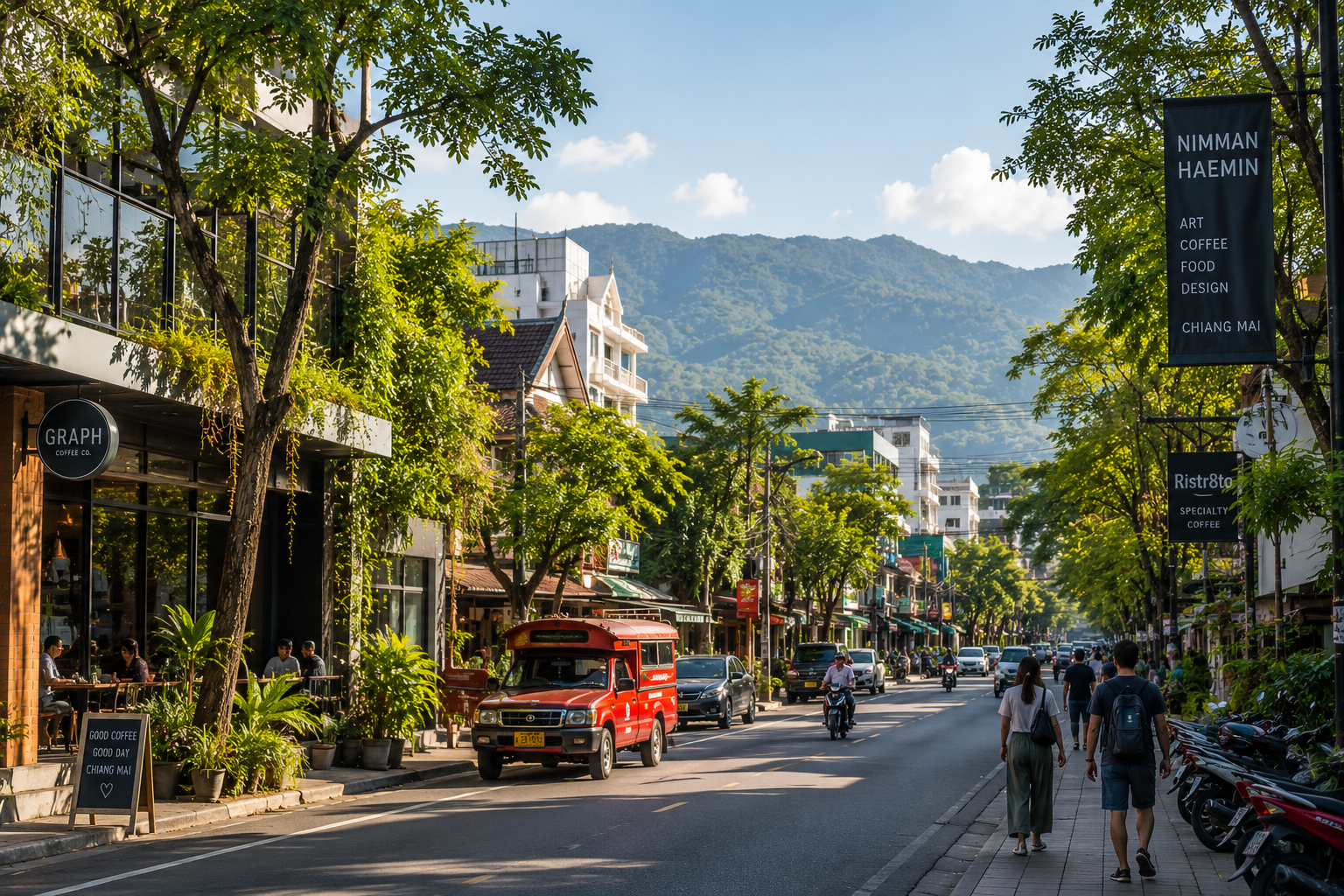
Retire in Chiang Mai at a Glance
Chiang Mai combines practical retirement costs, healthcare access, expat support, and a lifestyle profile suited to long-term retirement planning.
Best For
- Affordability
- Strong healthcare access
- Large expat community
- Long-term retirement living
Monthly Condo Rent
US$350-500
US$500-800
US$900-1300
Monthly Retirement Budget
US$1200-1700
US$1800-2500
US$2800-4000
Key Strengths
Healthcare: Strong
Expat Community: Large
Best For: Affordability
Confidence:
Executive Overview
Chiang Mai is one of Southeast Asia’s most established retirement destinations, known for its affordability, relaxed pace of life, strong expat community, accessible healthcare, and unusually manageable daily rhythm. Located in northern Thailand, the city attracts retirees who want comfort, community, and long-term livability rather than the intensity of a major Asian capital or the volatility of a tourism-heavy island destination.
Compared with Bangkok, Kuala Lumpur, or Manila, Chiang Mai is quieter, more compact, and less physically overwhelming. It does not offer the same level of infrastructure depth, international connectivity, specialist healthcare concentration, or high-rise metropolitan convenience. Its appeal is different. Chiang Mai works because daily life can feel more human-scaled, less expensive, more socially accessible, and easier to organize around simple routines.
For many retirees, Chiang Mai offers a rare combination: a relatively low cost of living, a mature foreign resident community, good private healthcare for routine and many specialist needs, a strong café and dining culture, and a slower pace that supports long-term emotional sustainability.
At the same time, Chiang Mai is not perfect. Seasonal air quality is a major retirement consideration. The city’s infrastructure is functional but not highly sophisticated. International flight access is more limited than in Bangkok or Kuala Lumpur. Retirees who require advanced medical systems, major-city energy, coastal scenery, or highly polished infrastructure may eventually find Chiang Mai too limited.
Chiang Mai works best for retirees who value affordability, community, manageable routines, cultural atmosphere, and a slower lifestyle more than beach access, urban intensity, or international-city infrastructure.
Its strength is not luxury. Its strength is sustainability.
Quick Snapshot
Cost of Living: Affordable by regional retirement standards
Healthcare Quality: Good private healthcare value, especially for routine and mid-level care
Lifestyle: Relaxed, community-oriented, culturally rich, and human-scaled
Climate: Seasonal inland tropical climate with cooler periods and serious burning-season concerns
Expat Community: Large, mature, and long-established
Best For: Budget-conscious retirees, slower-paced retirees, community-focused retirees, and retirees seeking simplicity with comfort
Lifestyle and Environment
Chiang Mai offers a noticeably different retirement experience from many tropical coastal destinations in Southeast Asia. Rather than beachfront living, resort culture, or fast-paced urban convenience, the city provides a calmer inland lifestyle built around cafés, local markets, temples, residential neighborhoods, mountain views, and a long-established foreign resident ecosystem.
Daily life in Chiang Mai tends to feel more manageable than in larger Asian cities. The city has traffic, development pressure, and growing congestion in some areas, but it rarely feels as overwhelming as Bangkok, Manila, or Jakarta. For many retirees, this lower daily intensity becomes one of the city’s strongest long-term advantages.
Chiang Mai’s appeal is not based on dramatic scenery alone, although the surrounding mountains and northern Thai cultural atmosphere contribute strongly to its identity. Its deeper appeal comes from the way retirees can build sustainable routines without needing very large budgets. A retiree can live near cafés, restaurants, clinics, markets, gyms, massage shops, and social groups without feeling trapped in a high-cost urban environment.
The city also has one of Southeast Asia’s most mature retiree and expat communities. This matters more than many people initially realize. Long-term retirement abroad is not only about cost or climate. It is also about whether a retiree can build social rhythm, find familiar support structures, access practical information, and avoid the emotional isolation that sometimes develops in less established destinations.
Chiang Mai performs strongly in this area. Foreign retirees can usually find social groups, hobby communities, faith communities, fitness circles, language exchanges, volunteer opportunities, and informal expat networks with relative ease.
At the same time, Chiang Mai’s slower pace is not ideal for everyone. Retirees who want nightlife, constant stimulation, major international events, deep luxury infrastructure, or strong global connectivity may eventually feel constrained. The city is comfortable and livable, but it is not highly dynamic in the way Bangkok or Kuala Lumpur can be.
Chiang Mai is best understood as a lifestyle stability destination. It works especially well for retirees who want daily life to feel lighter, cheaper, friendlier, and easier to maintain over time.
Cost of Living
Chiang Mai remains one of the more affordable retirement destinations in Southeast Asia relative to the quality of life it provides. Although prices have increased over time, the city still offers a compelling cost-to-comfort ratio for retirees seeking long-term financial sustainability.
Housing is one of Chiang Mai’s strongest affordability advantages. Condominiums, serviced apartments, townhouses, and detached homes are available across a wide range of budgets. Retirees who want walkable access to cafés, restaurants, and social activity often choose areas such as Nimman, Santitham, or the Old City. Those who prefer more space, quieter surroundings, or suburban-style living often consider Hang Dong or areas outside the dense urban core.
Compared with Bangkok, Kuala Lumpur, or Penang, Chiang Mai generally allows retirees to access more space or lower monthly housing costs for the same budget. This can make a meaningful difference for retirees living primarily on fixed income, pension income, Social Security, or retirement portfolio withdrawals.
Food costs are also a major strength. Local Thai food is widely available and inexpensive, while international dining options remain accessible at moderate prices. Chiang Mai has a strong café culture, a large number of casual restaurants, and enough foreign-oriented food options to make long-term living comfortable for many retirees.
Over time, access to familiar food becomes more important than many retirees initially expect. Chiang Mai does not match Bangkok’s extraordinary dining variety or imported grocery depth, but it performs well enough for most retirees who want a mixture of local affordability and occasional international comfort.
Utilities are generally manageable, though air-conditioning use during hotter periods can raise electricity bills. Internet quality is usually good in central areas and modern housing developments, supporting retirees who rely on video calls, online banking, streaming, remote work, or regular communication with family overseas.
Chiang Mai’s cost advantage is not simply that it is cheap. Its real strength is that a retiree can build a comfortable lifestyle without constantly feeling financially pressured. That sense of financial breathing room is one of the reasons the city remains attractive despite its limitations.
Healthcare
Healthcare is one of Chiang Mai’s strongest practical advantages relative to its cost structure.
The city has several respected private hospitals serving both Thai residents and international retirees. Facilities such as Bangkok Hospital Chiang Mai, Chiang Mai Ram Hospital, and other private medical providers offer good access to routine care, diagnostics, consultations, and many specialist services.
For many retirees, Chiang Mai’s healthcare value is highly attractive. Medical care is generally much less expensive than in Western systems while still offering private hospital access, English-speaking support in many settings, and a relatively comfortable patient experience.
This makes Chiang Mai especially appealing to retirees who want reasonable healthcare quality without the higher costs and urban intensity associated with Bangkok.
However, Chiang Mai is not Bangkok. Retirees with complex medical histories, advanced specialist needs, major cardiac concerns, cancer treatment requirements, or highly specialized medical conditions may still prefer Bangkok, Kuala Lumpur, Singapore, or another larger regional healthcare hub.
This distinction matters over long retirement timelines. Chiang Mai can work very well for healthy retirees, retirees with manageable chronic conditions, and retirees who value accessible day-to-day medical care. It may be less ideal for retirees who want the deepest possible specialist ecosystem nearby at all times.
For many long-term retirees, the practical solution is to use Chiang Mai as a comfortable base while maintaining Bangkok or another regional hub as a fallback for complex care. That approach reflects Chiang Mai’s real healthcare position: strong value, good daily practicality, but not the highest level of regional medical depth.
Visa Options
Thailand has long been one of the world’s best-known retirement destinations, and Chiang Mai has benefited from that mature foreign retiree ecosystem for decades.
Many retirees use Thailand’s retirement visa pathways, long-stay options, or related residency structures. These systems are widely used and well understood by service providers, visa agents, and foreign residents in Chiang Mai.
However, Thailand’s visa environment can still feel bureaucratic. Retirees should expect documentation requirements, financial thresholds, periodic renewals, reporting obligations, and occasional procedural changes. For many foreigners, the process is manageable but not effortless.
The advantage of Chiang Mai is that the city has a mature ecosystem of people and services accustomed to helping retirees navigate these requirements. Visa support, document preparation, banking guidance, translation help, and expat knowledge networks are widely available.
Compared with Vietnam, Chiang Mai benefits from a more established retirement pathway. Compared with Malaysia, the process may feel less polished or predictable in some respects. Compared with the Philippines, Thailand can feel more administratively formal, but the overall retirement infrastructure is much more developed than in many emerging destinations.
Retirees considering Chiang Mai should treat visa management as part of the ongoing operating cost of life in Thailand, not as a one-time task. Those who are organized and willing to comply with procedures usually manage well. Those who dislike paperwork or uncertainty may find the process more irritating over time.
Infrastructure and Accessibility
Chiang Mai offers generally comfortable infrastructure for long-term retirement living, but it is not an infrastructure-intensive city in the same category as Bangkok, Kuala Lumpur, or Singapore.
The city has modern shopping centers, private hospitals, reliable internet in many areas, international restaurants, cafés, gyms, residential developments, and enough commercial infrastructure to support a comfortable foreign retiree lifestyle. For daily living, this is often sufficient.
Where Chiang Mai is weaker is in infrastructure depth and scale. Public transportation is limited. Traffic congestion has increased in some areas. Airport connectivity is useful but far less extensive than Bangkok or Kuala Lumpur. Large-scale urban systems are less developed, and retirees may need to rely on ride-hailing, private cars, motorbikes, or localized living patterns.
For many retirees, this trade-off is acceptable because the city’s smaller scale makes it easier to manage. Chiang Mai does not have Bangkok’s massive rail network, but it also does not have Bangkok’s overwhelming scale and density.
Airport access remains a practical advantage. Chiang Mai International Airport provides domestic and regional connectivity, though retirees who travel internationally often connect through Bangkok or another major hub. For retirees who frequently visit family overseas or expect regular long-haul travel, this limitation matters.
Daily infrastructure in Chiang Mai is best understood as comfortable but not elite. The city supports a pleasant retirement lifestyle, but it does not provide the same level of redundancy, polish, and systems depth found in larger Asian metropolitan hubs.
Neighborhoods and Housing
Nimman
Nimman is one of Chiang Mai’s most popular areas for foreign residents. It offers cafés, restaurants, shopping, condominium living, walkability, and a more international atmosphere than many other parts of the city.
For retirees who want social access, café culture, and proximity to services, Nimman can be highly convenient. However, it is also busier, more commercial, and more expensive than quieter districts.
Old City
The Old City provides a more traditional and cultural environment with temples, historic streets, local restaurants, guesthouses, cafés, and central access.
Retirees who enjoy atmosphere, walkability, and cultural texture may find the Old City appealing. Others may prefer more modern housing and easier parking outside the moat area.
Santitham
Santitham offers a more local and affordable atmosphere while remaining close to Nimman and other expat-oriented areas.
It can be a strong fit for retirees who want lower costs and a more neighborhood-based lifestyle without being too far from international amenities.
Hang Dong
Hang Dong appeals to retirees seeking more space, quieter living, larger homes, and suburban-style residential environments outside the city center.
This area can work well for retirees who prefer gardens, houses, and lower-density living, though transportation planning becomes more important.
Riverside and Surrounding Areas
The riverside and nearby residential areas appeal to retirees seeking a calmer atmosphere with access to restaurants, markets, and more traditional city character.
These areas can feel less trendy than Nimman but more grounded and livable for retirees seeking a quieter rhythm.
Transportation
Transportation in Chiang Mai is functional but relatively simple compared with major Asian cities.
There is no large-scale rail system comparable to Bangkok’s BTS or MRT. Retirees typically rely on ride-hailing apps, songthaews, taxis, private cars, bicycles, walking in selected areas, or motorbikes.
For many retirees, the lack of a sophisticated public transportation system is not a major issue because the city is relatively compact. Daily life can often be organized around a few familiar neighborhoods, clinics, cafés, markets, and shopping centers.
However, transportation still requires realistic planning. Traffic has increased, parking can be difficult in some areas, and motorbike safety is a serious consideration. Retirees who do not wish to drive or ride motorbikes should choose housing carefully to ensure access to daily needs.
Compared with Bangkok, Chiang Mai is less infrastructure-developed but also less intimidating. Compared with Cebu or Bali, it often feels more manageable and less chaotic. Compared with Kuala Lumpur, it offers far less public transportation sophistication.
Long-term comfort in Chiang Mai often depends on matching location to lifestyle. A retiree who chooses the wrong area may feel isolated or dependent on transport. A retiree who chooses carefully may find daily life surprisingly easy.
Safety
Chiang Mai is generally viewed as a comfortable and relatively safe retirement destination.
Violent crime affecting foreign retirees is relatively uncommon, and many long-term residents describe the city as low-stress compared with larger metropolitan environments.
The more relevant risks are usually practical rather than severe. Road safety, motorbike accidents, uneven sidewalks, seasonal air quality, and occasional petty theft matter more to most retirees than serious crime.
Many retirees experience Chiang Mai as emotionally softer and less aggressive than Bangkok, Manila, or Jakarta. The city’s smaller scale, slower rhythm, and established foreign community all contribute to a sense of relative comfort.
That does not mean retirees should be careless. Normal urban awareness still applies, particularly in nightlife areas, tourist zones, and transportation settings. But for many retirees, Chiang Mai’s overall safety profile supports a relaxed day-to-day lifestyle.
Climate and Environment
Chiang Mai has a more seasonal climate than many coastal tropical retirement destinations in Southeast Asia.
The city experiences hot periods, rainy periods, and cooler months that many retirees find pleasant. Compared with coastal cities such as Cebu, Penang, or Da Nang, Chiang Mai has less constant maritime humidity and more noticeable annual variation.
The cooler season is one of the city’s strongest lifestyle advantages. Many retirees find Chiang Mai especially comfortable during this period, when outdoor dining, walking, café culture, and social activity become more enjoyable.
The major environmental drawback is burning season.
Seasonal agricultural burning and regional pollution can create periods of poor air quality, often affecting daily comfort, health, and outdoor activity. For retirees with respiratory conditions, asthma, heart disease, or strong sensitivity to pollution, this is not a minor issue.
Burning season is one of the most important factors in evaluating Chiang Mai as a retirement destination. Some retirees leave temporarily during the worst months. Others use air purifiers, limit outdoor exposure, and adapt their routines. Some eventually decide that the air quality trade-off is too significant.
This is one of Chiang Mai’s clearest long-term contradictions. Much of the year, the city can feel calm, pleasant, and highly livable. During poor air quality periods, the same city may feel restrictive, unhealthy, or emotionally frustrating.
Retirees considering Chiang Mai should not ignore this issue. It belongs at the center of the decision, especially for anyone with health vulnerabilities.
Expat Community
Chiang Mai has one of the largest and most established retiree communities in Southeast Asia.
This community is one of the city’s defining strengths. Retirees can find social groups, clubs, meetups, language exchanges, volunteer opportunities, fitness communities, faith communities, hobby circles, and informal networks built around long-term foreign residence.
The city is particularly attractive to retirees who want a balance between local Thai culture and foreigner-friendly social access. It is not as anonymous as Bangkok, and it is not as transient as some island destinations. Many retirees find it easier to build routines and social familiarity in Chiang Mai than in larger, faster-moving cities.
At the same time, community does not happen automatically. Retirees who remain passive may still experience loneliness. Chiang Mai offers social infrastructure, but individuals still need to participate.
For retirees who make the effort, the city can provide one of the most supportive and comfortable foreign resident ecosystems in Asia.
Advantages of Retiring in Chiang Mai
Strong Affordability
Chiang Mai offers one of the best balances between affordability and livability in the region. Retirees can often maintain a comfortable lifestyle at lower monthly cost than in Bangkok, Kuala Lumpur, Penang, or many coastal retirement cities.
Established Expat Community
A mature retiree ecosystem makes long-term integration easier than in many emerging retirement destinations. Practical knowledge, social networks, and support structures are widely available.
Relaxed Lifestyle
The city appeals strongly to retirees seeking a calmer and more manageable daily pace of life.
Good Healthcare Value
Healthcare quality relative to cost is one of Chiang Mai’s strongest practical advantages.
Comfortable Daily Living
Many retirees find Chiang Mai relatively easy and low-stress to navigate and live in long term.
Challenges of Retiring in Chiang Mai
Seasonal Air Quality
Burning season remains the city’s most serious retirement trade-off and should be considered carefully by anyone with respiratory or cardiovascular concerns.
Less Infrastructure Depth
Chiang Mai does not offer the same level of infrastructure sophistication as larger metropolitan hubs.
Limited International Connectivity
Regional and global flight access is more limited than in Bangkok or Kuala Lumpur.
Less Coastal Lifestyle Appeal
Retirees seeking beachfront or island living may find Chiang Mai less emotionally appealing over time.
Smaller-City Limitations
The slower pace that attracts many retirees may feel limiting to those who want major-city energy, luxury infrastructure, or constant stimulation.
Who This City Is Best For
Strong Matches
- Budget-conscious retirees
- Slower-paced retirees
- Community-oriented retirees
- Long-term expats seeking simplicity
- Retirees prioritizing affordability and healthcare value
Less Suitable Matches
- Retirees highly sensitive to air quality issues
- Retirees seeking major international-city infrastructure
- Retirees wanting highly urbanized lifestyles
- Retirees prioritizing coastal living
Comparison With Other Cities
Chiang Mai vs Penang
Chiang Mai offers lower costs, a slower lifestyle, and a more relaxed inland retirement environment. Penang provides stronger infrastructure reliability, deeper healthcare access, better coastal identity, and more polished urban systems.
For retirees prioritizing affordability and community, Chiang Mai may feel more comfortable. For retirees seeking a stronger balance of healthcare, infrastructure, and international livability, Penang may be the safer long-term choice.
Chiang Mai vs Bangkok
Chiang Mai is calmer, less congested, less expensive, and more retirement-oriented. Bangkok offers much deeper healthcare, stronger infrastructure, greater international connectivity, and far more lifestyle variety.
This is a choice between manageability and metropolitan depth. Chiang Mai is easier emotionally. Bangkok is stronger operationally.
Chiang Mai vs Bali
Chiang Mai is generally more affordable, more practical, and easier to sustain financially over time. Bali offers a more visually immersive, tropical, creative, and coastal lifestyle environment.
Retirees who want simplicity and cost control may prefer Chiang Mai. Retirees who prioritize atmosphere, island lifestyle, and emotional intensity may prefer Bali.
Chiang Mai vs Da Nang
Chiang Mai provides a more established expat ecosystem, lower-cost inland living, and a long history as a foreign retiree destination. Da Nang offers coastal living, cleaner urban design in some areas, and a different climate and lifestyle profile.
Da Nang may appeal more to retirees seeking beaches and newer urban infrastructure, while Chiang Mai remains stronger for community depth and proven long-term retiree familiarity.
Final Assessment
Chiang Mai remains one of Southeast Asia’s strongest retirement destinations for retirees seeking affordability, comfort, community, and manageable day-to-day living.
Its appeal is rooted less in luxury or infrastructure intensity and more in long-term lifestyle sustainability. The city allows many retirees to live comfortably, socially, and relatively affordably without the stress levels associated with larger Asian metropolitan centers.
The major caution is seasonal air quality. For some retirees, burning season is manageable through planning, air filtration, and temporary travel. For others, it may be a decisive reason to choose another destination.
Chiang Mai works best for retirees who want a slower, more community-oriented retirement environment and who are comfortable accepting some infrastructure and connectivity limitations in exchange for affordability, comfort, and social accessibility.
For retirees seeking a proven, affordable, and highly livable inland retirement hub in Southeast Asia, Chiang Mai remains one of the region’s most enduring options.
Find Your Best Retirement Destination
Use the retirement questionnaire to compare destinations based on your own retirement priorities, preferences, and long-term retirement goals.