
Phuket, Thailand
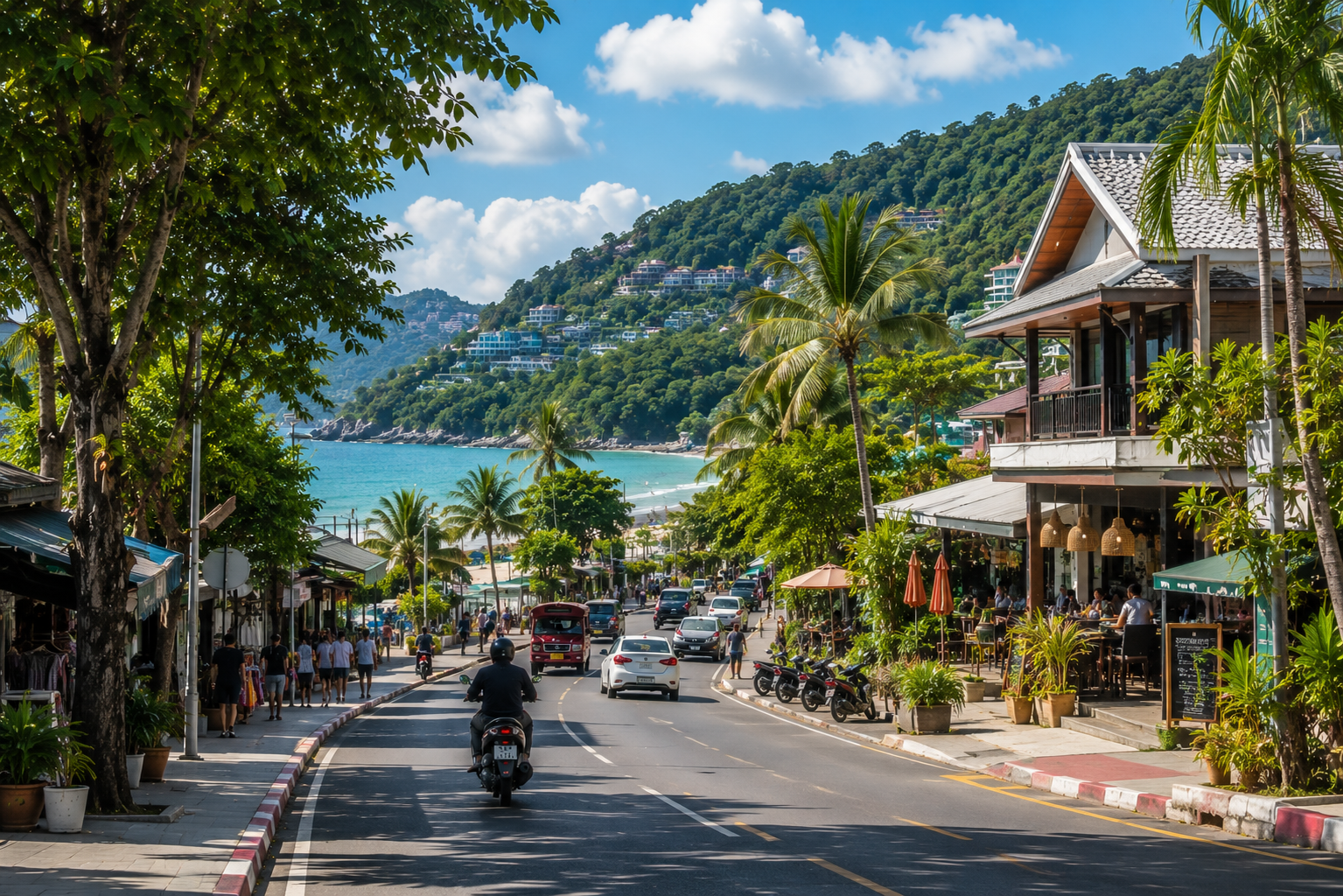
Retire in Phuket at a Glance
Phuket combines practical retirement costs, healthcare access, expat support, and a lifestyle profile suited to long-term retirement planning.
Best For
- Island lifestyle
- Excellent healthcare access
- International expat community
- Long-term retirement living
Monthly Condo Rent
US$700-900
US$900-1400
US$1500-2500
Monthly Retirement Budget
US$2000-2800
US$2800-4000
US$4500-6500
Key Strengths
Healthcare: Excellent
Expat Community: International
Best For: Island lifestyle
Confidence:
Phuket is one of Southeast Asia’s most internationally recognized tropical retirement destinations, but long-term retirement reality in Phuket is considerably more nuanced than the glossy beach imagery often associated with the island. Beneath the tourism branding is a retirement environment that combines coastal living, international convenience, private healthcare access, established expat communities, and highly livable day-to-day infrastructure within one of Thailand’s most globally connected resort regions.
For retirees seeking beach-oriented living, warm climate, international dining, and a more leisure-focused lifestyle, Phuket can be deeply appealing. The island offers a version of tropical retirement that feels more internationally accessible and infrastructure-supported than many competing coastal destinations in Southeast Asia.
At the same time, Phuket is not a quiet island paradise insulated from modern pressures. Tourism shapes much of the island’s economy and daily rhythm. Traffic congestion has increased substantially over the years, certain districts become crowded during peak seasons, and the island’s infrastructure can feel stretched at times relative to the volume of development and visitor activity.
Long-term satisfaction in Phuket often depends heavily on neighborhood selection, lifestyle expectations, and personality fit.
Retirees who arrive expecting permanent vacation energy sometimes become frustrated by tourism cycles, transportation dependence, and increasing commercialization.
Retirees who approach Phuket more realistically often find one of Southeast Asia’s strongest long-term tropical lifestyle retirement environments.
Compared with Hua Hin, Phuket feels more internationally connected, more tourism-driven, and more socially active. Compared with Bali, Phuket generally feels more infrastructure-developed and operationally reliable. Compared with Bangkok, Phuket sacrifices metropolitan sophistication in exchange for coastal lifestyle quality and outdoor living.
Phuket’s greatest strength is not tranquility or low cost. Its greatest strength is that retirees can realistically build a highly comfortable tropical lifestyle with strong healthcare access, broad international convenience, and extensive leisure infrastructure inside one of Asia’s most globally connected coastal environments.
Quick Snapshot
Cost of Living: Moderate to moderately high by Southeast Asian standards
Healthcare Quality: Strong private healthcare with good international-standard options
Lifestyle: Tropical coastal living with strong leisure and lifestyle orientation
Climate: Tropical maritime climate with year-round warmth and humidity
Expat Community: Large and internationally diverse
Best For: Beach-oriented retirees, lifestyle-focused retirees, and retirees seeking tropical living with international convenience
Lifestyle and Environment
Phuket’s retirement lifestyle is heavily shaped by the island’s geography and tourism infrastructure. Daily life tends to revolve around beaches, cafés, restaurants, fitness, outdoor living, and social leisure activity.
Compared with Bangkok or Kuala Lumpur, Phuket feels slower, more lifestyle-oriented, and less professionally driven.
Compared with quieter retirement destinations such as Hua Hin or Dumaguete, however, Phuket often feels more commercialized, more internationally tourism-oriented, and more socially active.
Many retirees are initially drawn to Phuket because the island offers a version of tropical living that remains highly comfortable for foreigners. International grocery stores, Western restaurants, cafés, imported products, and English-speaking service environments are all relatively accessible in major districts. This significantly lowers adaptation friction for many retirees.
At the same time, Phuket’s lifestyle is deeply connected to tourism cycles. During high season, some areas become noticeably busier and more crowded. Restaurants, roads, beaches, and commercial districts can feel very different depending on the time of year.
That changing rhythm affects retirees differently. Some enjoy the energy and activity. Others eventually become fatigued by the constant tourism environment and begin preferring quieter districts farther from major visitor concentrations.
One of Phuket’s defining retirement characteristics is that daily life often feels more recreational than operational. Compared with major metropolitan retirement cities, Phuket places greater emphasis on lifestyle quality, climate, leisure, and outdoor living.
For many retirees, that becomes highly attractive emotionally over long periods of time.
At the same time, Phuket’s long-term livability depends heavily on realism. Retirees who structure life around beaches, cafés, fitness, social interaction, and manageable neighborhood routines often adapt extremely well. Retirees expecting a permanently peaceful tropical paradise sometimes struggle emotionally once tourism realities, congestion, and commercialization become more visible.
Phuket is therefore best understood not as an isolated island escape, but as a highly developed international tropical lifestyle environment. That distinction matters because retirees who approach the island realistically often remain satisfied far longer.
The island works especially well for retirees who genuinely enjoy active living, warm climate, dining culture, and socially engaged outdoor lifestyles. It is less suitable for retirees seeking deep tranquility, low stimulation, or highly traditional local immersion.
Cost of Living
Phuket is more expensive than many retirement destinations in Southeast Asia, particularly compared with inland Thailand or secondary cities in Vietnam and the Philippines. However, it remains affordable relative to most Western coastal retirement environments and still offers strong value considering the lifestyle quality available.
Retirees who attempt to live directly in premium beachfront districts, inside luxury villa developments, or within highly tourism-oriented areas can see costs rise quickly.
However, retirees who structure their lifestyles more strategically often find Phuket reasonably manageable financially, especially compared with coastal retirement markets in Australia, Europe, or North America.
Housing varies dramatically depending on location and lifestyle preference. Condominium living is common among retirees seeking simplicity and lower maintenance obligations, while long-term villa rentals remain popular among retirees prioritizing privacy, outdoor space, and tropical residential living.
Areas such as Rawai, Kamala, Chalong, and parts of Laguna have become particularly popular for long-term retirees because they balance livability, convenience, and relative calmness better than heavily tourism-driven districts.
Food and dining are major strengths of retirement life in Phuket. The island offers strong access to Thai cuisine, seafood, Western restaurants, cafés, bakeries, and international dining.
Compared with many smaller retirement destinations, Phuket performs exceptionally well in imported grocery access and international food availability. Over long retirement timelines, this becomes increasingly important. Many retirees initially underestimate how psychologically valuable it is to maintain access to familiar products, reliable international dining, wines, cheeses, and broader food variety.
Phuket handles this category better than most coastal retirement destinations in Southeast Asia outside Singapore.
Utilities and services are generally manageable, though electricity costs can rise significantly because of heavy air-conditioning usage. Internet quality is generally reliable in developed areas, though infrastructure consistency can vary somewhat depending on location.
One of Phuket’s strongest financial advantages is that retirees can choose very different lifestyle structures depending on budget priorities. Some retirees maintain relatively moderate lifestyles focused on local dining, condominium living, and localized routines. Others choose luxury villas, marina lifestyles, golf communities, and high-end international consumption patterns.
The island supports both ends of the spectrum more effectively than many competing retirement destinations.
For retirees prioritizing lifestyle quality over ultra-low costs, Phuket often represents a compelling middle ground between affordability and highly developed tropical living.
Healthcare
Healthcare is one of Phuket’s major retirement strengths relative to many coastal and island retirement destinations.
The island has developed a relatively strong private healthcare ecosystem anchored by hospitals such as Bangkok Hospital Phuket, Siriroj International Hospital, and Dibuk Hospital.
For many retirees, Phuket’s healthcare system is more than sufficient for routine care, diagnostics, specialist consultations, and many standard retirement healthcare needs.
However, retirees requiring highly advanced procedures, complex specialist care, or extensive long-term medical management sometimes travel to Bangkok for deeper medical infrastructure.
Compared with many island or coastal retirement destinations globally, Phuket performs surprisingly well medically. This is one of the reasons the island has maintained long-term retirement appeal despite rising costs and tourism pressures.
Healthcare access also contributes significantly to retirees’ emotional confidence. Tropical lifestyle destinations often feel attractive during healthy and active retirement years, but long-term retirement sustainability eventually depends heavily on healthcare reliability. Phuket performs considerably better in this area than many retirees initially expect.
Compared with Bali, Phuket generally feels more healthcare-secure operationally. Compared with Bangkok, the medical ecosystem is naturally smaller, but many retirees still feel comfortable because strong private healthcare remains locally available while Bangkok can be reached relatively easily when necessary.
For retirees focused on balancing lifestyle quality with reasonable medical reassurance, Phuket often performs much better than purely resort-oriented destinations.
Healthcare quality also contributes psychologically to long-term retirement sustainability. Many retirees discover that confidence in local healthcare systems substantially reduces anxiety associated with aging abroad. Phuket’s ability to provide both tropical lifestyle appeal and relatively strong private healthcare is one of the island’s major competitive advantages regionally.
Visa Options
Thailand’s retirement visa ecosystem is relatively mature, and Phuket benefits from Thailand’s long-established foreign retiree infrastructure.
The visa process can still feel bureaucratic at times, particularly regarding reporting requirements, renewals, and financial documentation.
However, Phuket’s large expat population means legal assistance, visa services, and retirement-oriented administrative support are widely available.
Compared with many neighboring countries, Thailand generally feels well adapted to long-term foreign retirement living, even if the bureaucracy occasionally requires patience.
One of Phuket’s practical advantages is that foreign retirement is already normalized on the island. Many businesses, legal offices, healthcare providers, banks, and service companies are accustomed to working with long-term foreign residents.
This significantly reduces operational friction compared with destinations where retirees constantly feel like outsiders navigating unfamiliar systems.
For many retirees, the island feels relatively easy to adapt to administratively because support structures already exist for long-term foreign living.
Infrastructure and Accessibility
Infrastructure in Phuket is better than many retirees initially expect, though it is not at the level of Bangkok or Kuala Lumpur.
The island has an international airport, modern shopping centers, private hospitals, international schools, and broad commercial infrastructure.
At the same time, rapid development and tourism growth have placed increasing pressure on roads and transportation systems.
Traffic congestion has become one of Phuket’s most discussed long-term livability challenges. Unlike Bangkok, Phuket lacks extensive rail infrastructure, which means daily transportation remains heavily dependent on private vehicles, taxis, ride-hailing, or motorbikes.
Retirees who choose neighborhoods carefully can reduce much of this friction by living closer to shopping, healthcare, beaches, and daily amenities.
Phuket’s strongest infrastructure advantages include airport connectivity, healthcare quality, international convenience, and strong tourism-supported commercial systems.
The island’s biggest infrastructure limitations include traffic congestion, transportation dependence, and uneven development pressure in certain districts.
Despite these limitations, Phuket still performs strongly compared with many global coastal retirement destinations. Modern conveniences are broadly accessible, internet infrastructure is generally reliable, and the island supports highly comfortable daily living for retirees who structure life intelligently.
Many long-term residents eventually realize that neighborhood selection matters far more than trying to access every part of the island regularly. Retirees who build localized routines around healthcare, cafés, beaches, shopping, and social environments often experience dramatically lower stress than retirees constantly navigating the island’s busiest traffic corridors.
Phuket rewards retirees who simplify movement patterns and embrace localized coastal living rather than attempting to operate across the entire island daily.
Neighborhoods and Housing
Rawai
One of Phuket’s strongest long-term retirement areas. Rawai offers a more residential atmosphere while still maintaining strong access to restaurants, beaches, shopping, and expat infrastructure.
Many retirees prefer Rawai because daily life feels manageable without losing access to conveniences.
Kamala
Popular among retirees seeking quieter coastal living, lower daily intensity, and a more relaxed residential environment.
Kamala often appeals to retirees who want beach proximity without the heavier tourism intensity associated with Patong.
Laguna
Higher-end lifestyle district known for golf communities, villas, and resort-oriented residential development.
The area appeals strongly to retirees prioritizing comfort, security, and upscale tropical living.
Chalong
More practical and locally integrated than some heavily tourism-focused districts.
Many retirees choose Chalong because it balances affordability, convenience, marina access, and manageable daily infrastructure.
Patong
Phuket’s busiest tourism district. While some retirees enjoy the energy and convenience, many long-term retirees eventually prefer calmer areas outside Patong because of crowds, nightlife intensity, and tourism density.
Housing quality in Phuket varies significantly depending on location, flood exposure, hillside construction, management standards, and tourism pressure. Retirees who spend time evaluating districts carefully usually experience much higher long-term satisfaction.
Transportation
Transportation in Phuket relies heavily on private cars, taxis, Grab ride-hailing, and motorbikes.
Unlike Bangkok, Phuket does not have extensive rail systems, which means location selection becomes critically important for long-term retirement comfort.
Many retirees eventually structure their lives around minimizing long drives, traffic exposure, and transportation unpredictability.
This often means choosing neighborhoods with strong local convenience rather than prioritizing tourism proximity alone.
For many retirees, transportation becomes the island’s largest practical adjustment factor. Retirees who adapt successfully usually do so by building highly localized routines around healthcare, cafés, beaches, and shopping rather than attempting constant movement across Phuket.
Compared with Bangkok, transportation infrastructure is clearly weaker. Compared with many tropical island destinations globally, however, Phuket still functions relatively well operationally because tourism development has created broad commercial and transportation support systems.
The island rewards retirees who organize life geographically and simplify daily movement patterns.
Safety
Phuket is generally viewed as relatively manageable and comfortable for long-term retirees using normal precautions.
The island’s strong tourism economy means international services, security presence, and commercial infrastructure are generally well developed in major districts.
Retirees should still remain aware of road safety risks, petty theft, and occasional tourism-related scams.
For most long-term retirees, Phuket feels operationally comfortable and socially accessible.
Compared with Pattaya, Phuket often feels more geographically dispersed and somewhat less nightlife-centered overall, though heavily tourism-oriented areas can still feel intense during peak seasons.
One of Phuket’s strongest emotional advantages is that retirees can often create highly comfortable and socially enjoyable daily routines while still feeling internationally connected and operationally supported.
For many retirees, that balance between tropical lifestyle and practical comfort contributes strongly to feelings of safety and long-term emotional stability.
Climate and Environment
Phuket’s tropical maritime climate is one of the island’s strongest emotional attractions.
The island offers year-round warmth, beach-oriented living, sea breezes, and strong outdoor lifestyle potential.
Compared with inland tropical cities such as Bangkok or Manila, Phuket often feels more open, less claustrophobic, and environmentally softer.
At the same time, retirees should understand that tropical coastal living involves humidity, heavy rains during monsoon periods, and occasional storm disruption.
Climate adaptation varies significantly by individual tolerance. Some retirees thrive in the warmth and outdoor lifestyle. Others eventually find the humidity and lack of seasonal variation tiring over long periods.
One important distinction is that Phuket’s climate experience is closely tied to lifestyle structure. Retirees who exercise outdoors, socialize actively, and embrace beach-oriented living often experience the climate very differently from retirees who remain isolated indoors.
Compared with destinations such as Chiang Mai, Phuket offers less seasonal variation but stronger beach integration and outdoor tropical identity.
For many retirees, environmental quality becomes one of Phuket’s strongest long-term advantages. Ocean access, tropical scenery, outdoor cafés, marina environments, beach walks, and open-air social living all contribute strongly to emotional quality of life.
Expat Community
Phuket has one of Thailand’s largest and most internationally diverse expat communities.
Retirees can relatively easily find social groups, sports communities, hobby clubs, cafés, churches, and international social networks.
Compared with smaller retirement destinations, Phuket generally offers stronger opportunities for social integration, lifestyle activity, and international interaction.
At the same time, Phuket’s expat environment can feel somewhat transient because of the island’s tourism orientation. Some retirees eventually seek deeper local integration or quieter social environments than Phuket naturally provides.
The island tends to attract retirees who enjoy active social environments, outdoor recreation, fitness culture, boating, diving, dining, and beach-oriented lifestyles.
Compared with quieter destinations such as Hua Hin, Phuket often feels more energetic and internationally mixed. For some retirees this creates highly stimulating social opportunities. Others eventually seek calmer and more relationship-oriented environments elsewhere.
Phuket’s social ecosystem rewards participation. Retirees who engage socially, explore neighborhoods, and build recurring routines often experience significantly higher long-term satisfaction than retirees who remain isolated within purely tourism-oriented environments.
Advantages of Retiring in Phuket
Tropical Lifestyle
Phuket offers one of Southeast Asia’s strongest beach-oriented retirement lifestyles.
International Convenience
Imported groceries, international dining, and expat infrastructure are widely accessible.
Healthcare
Private healthcare quality is strong relative to many coastal retirement destinations.
Outdoor Living
The island strongly supports fitness, beach activity, social leisure, and tropical outdoor lifestyles.
International Connectivity
Airport access and global familiarity make Phuket relatively easy for foreign retirees to navigate operationally.
Lifestyle Flexibility
The island supports both moderate and luxury retirement lifestyles across a broad range of housing and social environments.
Challenges of Retiring in Phuket
Traffic
Transportation congestion has become one of Phuket’s major livability frustrations.
Tourism Pressure
Some retirees eventually tire of seasonal crowds, commercialization, and tourism intensity.
Climate
Humidity and year-round heat can become exhausting for some retirees over time.
Transportation Dependence
The island’s lack of rail infrastructure increases reliance on cars and ride-hailing.
Rising Costs
Phuket is no longer a low-cost retirement destination by regional standards.
Who This City Is Best For
Strong Matches
- Beach-oriented retirees
- Lifestyle-focused retirees
- Socially active retirees
- Tropical climate retirees
- Outdoor-oriented retirees
- Retirees prioritizing international convenience
Less Suitable Matches
- Retirees seeking deep tranquility
- Retirees wanting highly structured infrastructure
- Low-stimulation retirees
- Retirees seeking cooler climates or seasonal variation
Comparison With Other Cities
Phuket vs Hua Hin
Hua Hin offers calmer retirement living, lower tourism intensity, and more residential atmosphere.
Phuket provides stronger international infrastructure, more lifestyle activity, and greater tropical resort energy.
Retirees prioritizing simplicity often prefer Hua Hin. Retirees prioritizing tropical lifestyle intensity and broader international convenience often prefer Phuket.
Phuket vs Bali
Both emphasize tropical lifestyle living, though Phuket generally feels more infrastructure-developed, more commercially organized, and more healthcare-supported.
Bali offers stronger cultural immersion and creative lifestyle identity, while Phuket often feels more operationally stable long term.
Phuket vs Bangkok
Bangkok offers dramatically deeper healthcare, transportation, and infrastructure systems.
Phuket offers coastal living, outdoor lifestyle, and lower urban intensity.
This comparison often comes down to whether retirees prioritize metropolitan capability or tropical lifestyle quality.
Phuket vs Penang
Penang offers stronger operational practicality, healthcare confidence, and lower long-term stress.
Phuket offers more beach integration, stronger outdoor lifestyle orientation, and more resort-style tropical living.
Retirees prioritizing simplicity and infrastructure may prefer Penang. Retirees prioritizing coastal lifestyle and recreational living may strongly prefer Phuket.
Phuket vs Chiang Mai
Chiang Mai offers lower costs, cooler seasons, and calmer inland living.
Phuket offers beaches, tropical lifestyle identity, and stronger international resort infrastructure.
This comparison often reflects whether retirees emotionally prefer mountain-oriented calmness or tropical coastal living.
Final Assessment
Phuket remains one of Southeast Asia’s strongest tropical lifestyle retirement destinations because it combines beach living, international convenience, strong healthcare, and highly livable leisure-oriented environments within a retirement ecosystem that is both socially accessible and operationally manageable.
The island is not a hidden paradise untouched by development. Tourism pressure, traffic, and commercialization are all real parts of long-term life there.
However, retirees who choose neighborhoods carefully, structure lifestyles realistically, and genuinely value tropical coastal living often find Phuket deeply rewarding over long retirement timelines.
Phuket works best for retirees who remain active, socially engaged, comfortable with tourism environments, and emotionally drawn to outdoor tropical lifestyles.
For retirees seeking warm climate, beach access, outdoor living, and strong international convenience, Phuket remains one of Asia’s most compelling coastal retirement environments.
Its greatest strength is not simplicity or low cost. Its greatest strength is that retirees can build highly comfortable, internationally connected tropical lifestyles with relatively few major compromises compared with most global beach retirement destinations.
Find Your Best Retirement Destination
Use the retirement questionnaire to compare destinations based on your own retirement priorities, preferences, and long-term retirement goals.