
Pattaya, Thailand
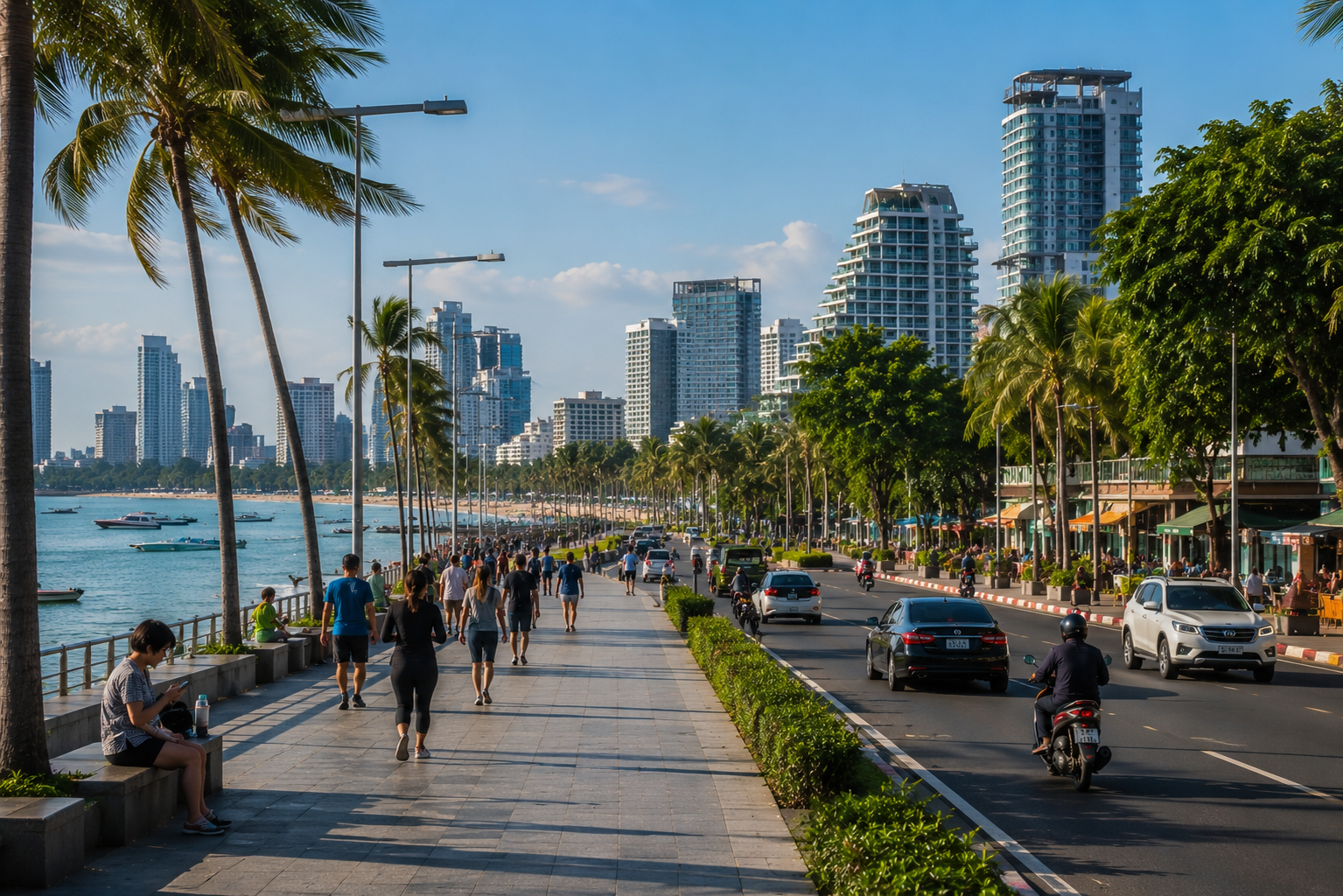
Retire in Pattaya at a Glance
Pattaya combines practical retirement costs, healthcare access, expat support, and a lifestyle profile suited to long-term retirement planning.
Best For
- Beach lifestyle
- Good healthcare access
- Large expat community
- Long-term retirement living
Monthly Condo Rent
US$400-600
US$600-900
US$1000-1500
Monthly Retirement Budget
US$1300-1800
US$1900-2700
US$3000-4500
Key Strengths
Healthcare: Good
Expat Community: Large
Best For: Beach lifestyle
Confidence:
Executive Overview
Pattaya is one of Thailand’s most practical and misunderstood retirement destinations. Its reputation is often shaped by tourism, nightlife, and entertainment, but that reputation does not fully describe how many long-term retirees actually experience the city. For retirees who look beyond the surface image, Pattaya offers affordable coastal living, strong expat infrastructure, accessible healthcare, broad dining options, and unusually easy day-to-day convenience.
Compared with Phuket, Pattaya is generally more practical and affordability-oriented. Compared with Bangkok, it is smaller, easier to manage, and less intense. Compared with Hua Hin, it is more energetic and internationally commercialized. That places Pattaya in a distinctive position: it is not the calmest retirement destination in Thailand, nor the most scenic, nor the most refined, but it may be one of the easiest places in the region for foreign retirees to settle into quickly.
Pattaya works best for retirees who value convenience, affordability, social accessibility, and coastal living more than polished aesthetics or traditional retirement atmosphere. The city is especially strong for retirees who want services, housing, restaurants, healthcare, transportation, and expat networks to be readily available without needing to solve too many daily-life problems from scratch.
Quick Snapshot
Cost of Living: Affordable to moderate, generally lower than Phuket and Bangkok
Healthcare Quality: Strong regional healthcare with good private hospital access
Lifestyle: Practical coastal city living with strong expat convenience
Climate: Tropical coastal climate with year-round warmth and humidity
Expat Community: Very large, mature, and highly visible
Best For: Practical, budget-conscious, socially adaptable retirees seeking coastal living
Lifestyle and Environment
Pattaya offers a retirement lifestyle built around convenience and accessibility rather than refinement or romantic atmosphere. The city is highly adapted to foreign residents, and that adaptation is one of its biggest long-term advantages. Retirees can usually find housing, restaurants, transportation, medical care, social groups, and everyday services with less friction than in many less developed retirement destinations.
The city’s environment is coastal, urban, and commercially active. It does not feel like a quiet beach town. It feels more like a compact international retirement-and-tourism city with strong practical infrastructure for foreigners. That can be either appealing or off-putting depending on personality and expectations.
For some retirees, Pattaya’s greatest strength is that daily life is easy. The city has a large supply of condominiums, many restaurants, accessible shopping, private hospitals, international grocery options, and a well-established foreign resident ecosystem. Retirees who want a relatively straightforward transition into life abroad may find Pattaya far easier to manage than more culturally immersive but less foreigner-oriented destinations.
At the same time, Pattaya’s atmosphere is not for everyone. Tourism, nightlife, and commercial entertainment are visible parts of the city’s identity, especially in central areas. Some retirees enjoy the energy and social availability. Others prefer to live in quieter districts such as Jomtien, Pratumnak, Wongamat, or Naklua, where the experience can feel more residential and less tourism-centered.
Long-term satisfaction in Pattaya depends heavily on choosing the right neighborhood and having realistic expectations. Retirees who expect a pristine coastal retirement environment may be disappointed. Retirees who value practicality, affordability, and social accessibility often understand why Pattaya has remained one of Thailand’s most durable retirement destinations.
Cost of Living
Pattaya offers strong affordability relative to the convenience and expat infrastructure available. It is not the cheapest city in Thailand, but compared with Phuket, Bangkok, or many Western coastal retirement markets, it remains highly competitive.
The city works especially well for retirees who want a practical balance between cost and comfort. Housing is widely available, dining options are broad, transportation is relatively accessible, and daily services are easy to find. This combination makes Pattaya attractive to retirees who want to preserve lifestyle flexibility without needing a very high retirement budget.
Housing is one of Pattaya’s strongest categories. The city has a large condominium market, ranging from modest units to higher-end beachfront or sea-view residences. Jomtien, Pratumnak, Wongamat, and Naklua each offer different levels of price, convenience, and atmosphere. Retirees who want affordability and access to services often find Pattaya easier than Phuket, where coastal housing can become significantly more expensive.
Food is another important advantage. Pattaya has extensive Thai food options, seafood, Western restaurants, cafés, bakeries, and international dining. Because of the size of the foreign resident population, retirees generally have better access to familiar foods than they would in many smaller retirement cities. Imported groceries, specialty products, and Western dining are not as deep as in Bangkok or Kuala Lumpur, but they are far stronger than in many secondary retirement destinations.
Over long retirement timelines, that matters. Many retirees are happy to adapt to local food early on, but after years abroad, access to familiar products and varied dining can become a meaningful contributor to comfort and emotional sustainability. Pattaya performs well in this area because it has been serving long-term foreign residents for decades.
Utilities are generally manageable, though air-conditioning can increase electricity costs in hotter months. Internet service is usually reliable in developed residential buildings. The overall cost profile is one of Pattaya’s main retirement advantages: it allows many retirees to maintain a comfortable lifestyle without the higher costs associated with major cities or premium resort destinations.
Healthcare
Healthcare is a significant strength for Pattaya compared with many coastal retirement destinations. The city has several private hospitals and clinics that serve both local residents and foreign retirees.
Major hospitals include Bangkok Hospital Pattaya, Pattaya International Hospital, and Memorial Hospital Pattaya. These facilities are generally suitable for routine care, diagnostics, emergency treatment, and many specialist needs. For retirees with typical age-related medical requirements, Pattaya often provides enough healthcare confidence for long-term living.
However, Pattaya does not match Bangkok’s depth of specialist care or advanced medical infrastructure. Retirees with complex health conditions may still prefer to travel to Bangkok for major procedures, second opinions, or more specialized treatment. Fortunately, Bangkok is close enough that this remains practical for many retirees.
Compared with smaller retirement destinations, Pattaya’s healthcare access is a major advantage. It provides a stronger medical safety net than many beach towns or small cities, while still offering a lower-stress coastal environment compared with Bangkok itself.
For many retirees, Pattaya’s healthcare position is part of its broader appeal: it may not be the best healthcare city in Thailand, but it offers enough medical access to make long-term retirement feel realistic and manageable.
Visa Options
Thailand has a long-established retirement visa ecosystem, and Pattaya benefits from decades of experience serving foreign retirees. Many long-term foreign residents use retirement visa pathways, and local legal, visa, and administrative services are widely available.
The process can still feel bureaucratic. Retirees should expect documentation requirements, renewals, reporting obligations, and occasional changes in administrative procedures. However, Pattaya’s large foreign resident population means there is a mature support ecosystem for managing these requirements.
Compared with Vietnam or Indonesia, Thailand generally feels more established as a retirement destination. Compared with Malaysia, Thailand may feel less administratively polished, but it remains highly familiar to long-term retirees and service providers.
For retirees who want a location where foreign retirement is normal rather than unusual, Pattaya performs strongly.
Infrastructure and Accessibility
Pattaya’s infrastructure is practical rather than elegant. The city is not as sophisticated as Bangkok or Kuala Lumpur, but it is well adapted to long-term foreign residents.
Daily needs are relatively easy to manage. Retirees have access to supermarkets, hospitals, shopping centers, restaurants, pharmacies, condominium developments, and transportation options. The city’s compact scale also makes it easier to understand than larger metropolitan environments.
Traffic exists, especially in central areas and during busy periods, but it is generally less overwhelming than Bangkok or Manila. Transportation options include taxis, baht buses, ride-hailing, motorbikes, and private vehicles. Many retirees organize their routines around proximity to their preferred neighborhood services, reducing the need for long daily travel.
Strengths
Pattaya’s strongest infrastructure advantages are practical convenience, housing availability, healthcare access, and mature foreigner-oriented services. The city is built around making daily life relatively easy for outsiders.
Limitations
The main limitations are uneven urban aesthetics, inconsistent walkability, tourism congestion in some districts, and infrastructure that can feel functional but not refined. Retirees seeking highly polished urban environments may find Pattaya too rough around the edges.
Neighborhoods and Housing
Jomtien
Jomtien is one of Pattaya’s most popular long-term retirement areas. It offers beach access, condominium living, restaurants, and a calmer atmosphere than central Pattaya. Many retirees prefer Jomtien because it provides convenience without the same level of nightlife intensity.
Pratumnak
Pratumnak sits between central Pattaya and Jomtien and often appeals to retirees seeking a quieter residential feel with good access to both areas. It has many condominiums and offers a more relaxed atmosphere than the busiest parts of Pattaya.
Wongamat
Wongamat is a more upscale coastal area with higher-end condominiums, sea views, and a quieter residential environment. It is often attractive to retirees who want comfort, beach proximity, and less exposure to central Pattaya’s entertainment areas.
Naklua
Naklua has a more local and residential feel. It can suit retirees who want a quieter environment while still remaining connected to Pattaya’s services and expat infrastructure.
Transportation
Common Transportation Options
Pattaya’s transportation options include baht buses, taxis, ride-hailing services, motorbikes, and private cars. The city is easier to navigate than Bangkok, but walkability varies significantly by district.
Many retirees eventually choose housing based on daily convenience rather than scenery alone. Living near supermarkets, restaurants, healthcare, and social activities can substantially improve quality of life. In Pattaya, a good location can reduce transportation stress more effectively than trying to rely on citywide transit systems.
Road safety is a consideration, especially for retirees using motorbikes. Some retirees adapt comfortably to motorbike transport, while others prefer taxis, drivers, or ride-hailing services.
Safety
Pattaya is generally manageable for long-term retirees using normal urban precautions. The city is active, commercially developed, and familiar with foreign residents, which helps many retirees feel comfortable once they understand the local environment.
The main safety issues are usually less about violent crime and more about road safety, petty theft, scams, nightlife-related risk, and situational awareness in tourism-heavy districts. Retirees who live in quieter residential neighborhoods and avoid high-risk environments often experience Pattaya as a comfortable and practical place to live.
Neighborhood selection matters. Jomtien, Pratumnak, Wongamat, and Naklua often provide a more stable long-term retirement feel than the busiest entertainment zones.
Climate and Environment
Pattaya has a tropical coastal climate with year-round warmth, humidity, and seasonal rainfall. The coastal setting helps moderate some of the heat compared with Bangkok, and the city can feel more open and less physically oppressive than Thailand’s capital.
Retirees who enjoy warm weather, outdoor dining, beach walks, and coastal routines may find the climate highly appealing. However, humidity remains a constant reality, and rainy-season weather can affect daily routines.
Compared with Chiang Mai, Pattaya is more humid and less seasonal. Compared with Phuket, it is somewhat less resort-like and more urban in feel. Compared with Hua Hin, it is busier and more commercially active.
The climate supports tropical retirement living, but long-term comfort depends on heat tolerance, housing quality, and daily routines. Retirees who build their lives around shaded areas, air-conditioning, coastal walking, and sensible scheduling usually adapt more successfully.
Expat Community
Pattaya has one of Thailand’s largest and most mature expat communities. This is one of its biggest retirement advantages.
Retirees can find social groups, restaurants, clubs, sports communities, hobby groups, and long-term foreign resident networks with relative ease. For retirees who worry about isolation, Pattaya offers a level of social accessibility that smaller or less international destinations may not provide.
The expat environment is diverse. It includes retirees on modest budgets, business owners, long-term residents, part-time residents, and people seeking highly social lifestyles. This diversity can be a strength, but it also means retirees need to choose social circles carefully.
For many retirees, Pattaya’s social ecosystem is one of the main reasons the city works long term. It is not difficult to meet people, find familiar services, or build routines around foreign resident communities.
Advantages of Retiring in Pattaya
Affordability
Pattaya offers strong value for retirees seeking coastal living without Phuket-level costs.
Expat Infrastructure
Few cities in Southeast Asia are as adapted to long-term foreign residents.
Convenience
Housing, restaurants, healthcare, shopping, and transportation are relatively easy to access.
Coastal Lifestyle
Pattaya provides beach access and tropical coastal living while remaining practical for everyday retirement.
Challenges of Retiring in Pattaya
Reputation and Atmosphere
Pattaya’s nightlife and tourism identity may be off-putting for some retirees, especially in central districts.
Urban Aesthetics
The city can feel uneven, commercial, and less refined than more polished retirement destinations.
Traffic and Road Safety
Traffic is manageable compared with major cities but still requires awareness, especially for motorbike users.
Climate
Humidity and heat are persistent and may become tiring over time for some retirees.
Who This City Is Best For
Strong Matches
- Budget-conscious retirees
- Coastal lifestyle retirees
- Socially active retirees
- Practical retirees
- Long-term expats seeking convenience
Less Suitable Matches
- Retirees seeking quiet luxury
- Retirees wanting highly refined urban environments
- Retirees uncomfortable with tourism-heavy areas
- Retirees seeking deeply traditional or secluded retirement living
Comparison With Other Cities
Pattaya vs Phuket
Pattaya is generally more affordable, more practical, and more convenience-oriented. Phuket offers stronger resort atmosphere, more scenic tropical lifestyle, and a more premium island environment.
Pattaya vs Hua Hin
Hua Hin is calmer, quieter, and more traditionally retirement-oriented. Pattaya is more energetic, more social, and more commercially developed.
Pattaya vs Bangkok
Bangkok offers deeper healthcare, transportation, and infrastructure. Pattaya offers slower coastal living, easier daily scale, and lower stress for retirees who do not need full metropolitan depth.
Pattaya vs Cebu
Both offer practical coastal retirement living with large expat communities. Pattaya generally has stronger infrastructure and a more mature foreign retiree ecosystem, while Cebu offers stronger English accessibility and Philippine cultural familiarity.
Final Assessment
Pattaya is not the most elegant retirement destination in Southeast Asia, but it is one of the most practical. Its strength lies in the way it makes long-term foreign retirement relatively easy. Housing is available, services are familiar, healthcare is accessible, restaurants are plentiful, and the expat ecosystem is mature.
The city’s drawbacks are real. Tourism, nightlife, uneven urban aesthetics, and humidity are all part of the long-term experience. But retirees who choose neighborhoods carefully and approach Pattaya realistically often find it highly livable.
For retirees seeking affordable coastal living, social accessibility, and practical day-to-day convenience, Pattaya remains one of Thailand’s strongest long-term retirement options.
Find Your Best Retirement Destination
Use the retirement questionnaire to compare destinations based on your own retirement priorities, preferences, and long-term retirement goals.