
Bali, Indonesia
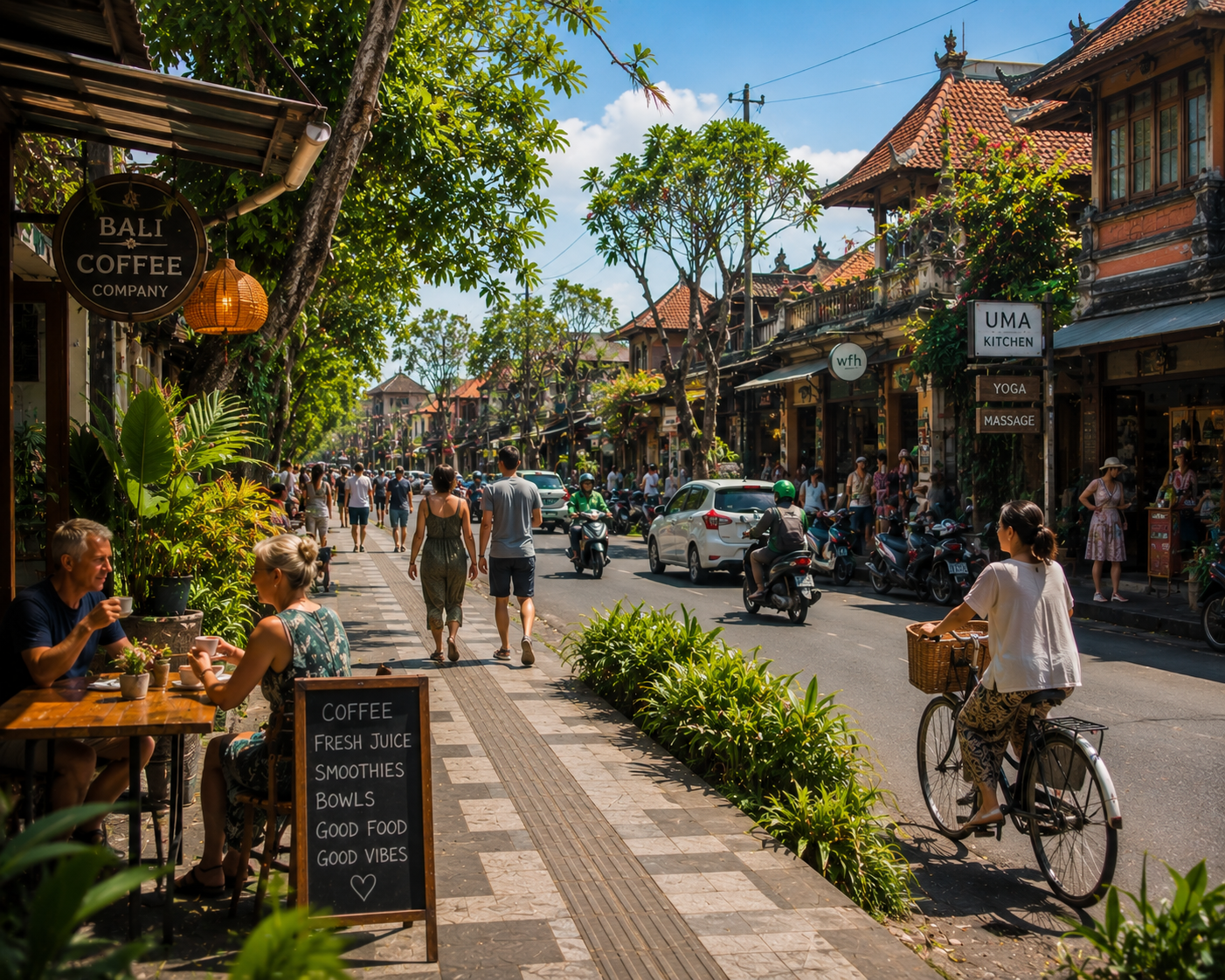
Retire in Bali at a Glance
Bali combines practical retirement costs, healthcare access, expat support, and a lifestyle profile suited to long-term retirement planning.
Best For
- Tropical lifestyle
- Good healthcare access
- International expat community
- Long-term retirement living
Monthly Condo Rent
US$500-800
US$800-1400
US$1500-2800
Monthly Retirement Budget
US$1400-2000
US$2200-3500
US$4000-6500
Key Strengths
Healthcare: Good
Expat Community: International
Best For: Tropical lifestyle
Confidence: Medium
Executive Overview
Bali occupies a unique position among retirement destinations in Southeast Asia because it combines tropical lifestyle appeal, strong international visibility, cultural depth, and emotional atmosphere in ways few other places can replicate. For many retirees, Bali represents an idealized version of retirement built around warm weather, villas, cafés, beach culture, wellness lifestyles, and highly visual surroundings that feel dramatically different from conventional urban living.
At its best, Bali can feel emotionally liberating. Daily life often revolves around outdoor routines, slower pacing, social cafés, wellness culture, and a lifestyle centered more around experience than productivity. Many retirees describe Bali not simply as a location, but as a complete lifestyle environment.
At the same time, Bali is often misunderstood because different parts of the island offer radically different retirement experiences. A retiree living in Sanur may experience a calm and mature beach-oriented lifestyle, while someone in Canggu may encounter heavy tourism density, traffic, and a much younger social environment. Ubud offers a more spiritual and artistic atmosphere, while Seminyak feels more commercial and internationally polished.
This is one of the most important realities of retirement in Bali:
neighborhood selection shapes almost everything.
Compared with Bangkok or Kuala Lumpur, Bali offers less infrastructure sophistication and less healthcare depth. Compared with Dumaguete or Hua Hin, however, it often feels more internationally lifestyle-oriented and visually immersive. Compared with Phuket, Bali generally feels more culturally expressive and emotionally distinctive, though also less operationally organized.
Bali works best for retirees who value:
- atmosphere,
- lifestyle,
- beauty,
- flexibility,
- and emotional quality of life
more than efficiency, precision, or infrastructure refinement.
Retirees seeking highly predictable systems, advanced healthcare ecosystems, or low tourism exposure may eventually find Bali frustrating over long periods.
Long-term retirement success in Bali depends heavily on balancing:
lifestyle romance with operational realism.
Quick Snapshot
Cost of Living: Moderate and highly variable depending on area and lifestyle
Healthcare Quality: Adequate for routine care, with limitations for advanced specialist treatment
Lifestyle: Tropical lifestyle-oriented living centered around cafés, villas, wellness culture, and outdoor routines
Climate: Tropical climate with heat, humidity, rainy seasons, and seasonal tourism fluctuations
Expat Community: Large, international, and highly diverse
Best For: Lifestyle-focused retirees, creative retirees, and retirees prioritizing atmosphere and tropical living
Lifestyle and Environment
Bali’s strongest retirement characteristic is atmosphere. The island often feels emotionally different from most retirement destinations in Southeast Asia because daily life is shaped by spirituality, ceremony, art, tropical nature, and highly visible lifestyle culture.
Many retirees are initially drawn to Bali because it feels immersive and emotionally engaging. Villas surrounded by greenery, open-air cafés, rice fields, beach sunsets, temples, wellness centers, and outdoor dining all contribute to a lifestyle that can feel unusually freeing compared with dense metropolitan environments.
Unlike large urban retirement destinations, Bali is rarely about efficiency. It is more about:
- pace,
- experience,
- environment,
- and emotional quality of life.
That distinction matters enormously over long retirement timelines.
Retirees who thrive in Bali are usually people who genuinely enjoy flexible routines and less structured living. The island strongly supports café culture, fitness, yoga, social outdoor lifestyles, creativity, and highly informal daily patterns.
At the same time, Bali can become emotionally and operationally tiring if expectations are unrealistic. Traffic congestion has increased significantly in many areas, tourism intensity fluctuates seasonally, and infrastructure standards vary widely depending on neighborhood and property quality.
Compared with Thailand or Malaysia, Bali often feels less operationally predictable. Administrative systems can require patience, infrastructure inconsistencies are common, and day-to-day life may involve more improvisation than some retirees initially expect.
For some retirees, that feels liberating and relaxed. Others eventually experience it as exhausting or inefficient.
Bali works best for retirees who prioritize:
atmosphere over precision and lifestyle over operational efficiency.
Cost of Living
Bali’s cost structure varies enormously depending on lifestyle expectations and neighborhood choice.
A retiree living modestly in a quieter local area can maintain a relatively affordable lifestyle by international standards. A retiree living in a luxury villa in Seminyak or a premium property in Canggu may spend far more than expected for Southeast Asia.
Housing is one of Bali’s biggest attractions. Many retirees are drawn to villas with tropical gardens, pools, open-air architecture, and indoor-outdoor living environments that feel dramatically different from conventional urban retirement housing.
However, housing quality varies significantly. Some villas are visually beautiful but operationally inconsistent over time regarding maintenance, drainage, internet reliability, electrical systems, and humidity-related wear. This is one reason Bali often works better for retirees who are adaptable and tolerant of occasional inconvenience.
Food and dining are major strengths. Bali has one of Southeast Asia’s strongest international café and restaurant cultures outside major global cities. Retirees can access Indonesian food, Western cafés, vegan restaurants, bakeries, imported groceries, organic dining, and highly international food ecosystems at a level that surprises many first-time visitors.
For many retirees, Bali’s café culture becomes central to daily life. Social routines naturally form around cafés, restaurants, wellness spaces, beach clubs, and outdoor gathering environments.
Compared with Dumaguete or Hua Hin, Bali offers significantly stronger international lifestyle infrastructure. Compared with Bangkok or Kuala Lumpur, however, imported products and large-scale urban convenience remain more limited and less operationally consistent.
Utilities and internet reliability depend heavily on area and property quality. Premium villas and modern developments generally perform far better than lower-cost housing.
Healthcare
Healthcare is one of Bali’s most important long-term retirement considerations.
The island has private hospitals and international clinics capable of handling routine medical care, diagnostics, outpatient treatment, and many common healthcare needs. Facilities such as BIMC Hospital and Siloam Hospitals provide relatively strong care by Indonesian standards.
However, retirees requiring advanced specialist treatment, highly complex surgery, or major long-term medical management often travel to Singapore, Bangkok, Kuala Lumpur, or Jakarta.
This distinction becomes increasingly important with age. Compared with Bangkok, Penang, or Manila, Bali’s healthcare ecosystem is significantly less comprehensive. Compared with smaller retirement islands globally, however, Bali performs reasonably well because of its large international resident and tourism population.
Many retirees accept the healthcare trade-off because Bali offers such a strong lifestyle environment. Others eventually transition toward retirement destinations with deeper medical infrastructure as healthcare priorities become more important later in life.
Visa Options
Indonesia’s visa and residency systems can feel more administratively complicated than the Philippines or Thailand for many retirees.
Rules evolve periodically, and many foreign residents rely heavily on visa agents, legal assistance, and local advisors to navigate residency structures. Administrative patience is important in Bali because systems may feel slower and less predictable than many retirees initially expect.
At the same time, Bali’s long-established foreign resident ecosystem means there are extensive services available to help retirees navigate housing, residency, legal structures, and practical daily logistics.
Retirees considering Bali should approach the island with flexibility, realistic expectations, and willingness to adapt to Indonesian administrative culture.
Infrastructure and Accessibility
Infrastructure quality in Bali varies dramatically by area.
Districts such as Sanur, Seminyak, Nusa Dua, and parts of Ubud offer relatively mature tourism and residential infrastructure, while other areas remain far more rural and less operationally developed.
Traffic congestion has become one of Bali’s biggest frustrations, particularly in Canggu, Seminyak, and busy tourism corridors. Unlike Bangkok or Kuala Lumpur, Bali does not have large-scale urban transportation systems. Most movement depends on private drivers, scooters, taxis, and ride-hailing services.
Retirees who structure life carefully around neighborhood proximity generally perform much better psychologically than those constantly crossing the island.
This becomes one of the most important retirement strategies in Bali:
localized living dramatically reduces stress.
Compared with Manila or Bangkok, Bali offers less infrastructure sophistication and less operational efficiency. Compared with many island retirement destinations globally, however, Bali provides surprisingly broad international services because of its tourism economy and long-established foreign resident population.
Key Retirement Areas
Sanur
Sanur is one of Bali’s strongest retirement districts because it offers a calmer, more mature, and more walkable environment than many tourism-heavy areas. The district appeals strongly to retirees seeking beach access, cafés, restaurants, and lower daily intensity.
Ubud
Ubud attracts retirees interested in wellness culture, spirituality, art, yoga, greenery, and inland living. The atmosphere is highly distinctive and emotionally appealing for retirees seeking a slower and more reflective environment.
Seminyak
Seminyak offers upscale dining, shopping, cafés, and beach access. It is more commercial and tourism-oriented than Sanur but remains highly attractive for retirees seeking lifestyle convenience and strong international infrastructure.
Canggu
Canggu has become heavily popular with younger expats, entrepreneurs, and digital nomads. Some retirees enjoy the energy and café culture, while others eventually find the district overcrowded, noisy, and overly commercialized.
Nusa Dua
Nusa Dua offers a more controlled and resort-oriented environment with cleaner surroundings and stronger infrastructure, though some retirees find it less culturally immersive than other parts of Bali.
Transportation
Transportation in Bali revolves around private drivers, scooters, taxis, ride-hailing services, and highly localized living patterns.
Most retirees eventually discover that minimizing unnecessary travel dramatically improves quality of life. Traffic can become psychologically draining over time, particularly in tourism-heavy districts.
Retirees who carefully choose neighborhoods near their preferred cafés, restaurants, beaches, and wellness centers generally experience Bali much more positively over long periods.
Unlike Bangkok or Kuala Lumpur, Bali is not an infrastructure-efficient retirement environment. Successful retirement on the island usually depends on reducing logistical friction through careful location choice rather than expecting the island itself to function efficiently.
Safety
Bali is generally viewed as relatively safe for long-term foreign residents.
Most retirees report feeling comfortable once they establish routines and understand local norms. The island’s tourism economy means many areas are highly accustomed to international visitors and foreign residents.
Normal precautions still apply regarding petty theft, scams, road safety, and tourism-related opportunism. Scooter and traffic safety are especially important long-term considerations.
Compared with major metropolitan environments, Bali often feels emotionally softer and less aggressive, though tourism-heavy districts can sometimes feel crowded and commercially intense.
Climate and Environment
Bali has a tropical climate with year-round warmth, humidity, rainy seasons, and strong seasonal tourism cycles.
For many retirees, the island’s environmental beauty is one of its strongest attractions. Beaches, rice fields, volcanic landscapes, tropical vegetation, and open-air architecture contribute heavily to daily quality of life.
Compared with Manila or Bangkok, Bali generally feels more visually relaxing and less urbanized. Compared with Hua Hin or Dumaguete, however, tourism intensity is significantly higher in many areas.
Climate adaptation still matters. Heat, humidity, and rainy-season flooding can become tiring over time, particularly in poorly designed housing or heavily congested districts.
Long-term comfort in Bali often depends heavily on:
- housing quality,
- neighborhood choice,
- traffic exposure,
- and lifestyle design.
Expat Community
Bali has one of Southeast Asia’s largest and most internationally diverse expat communities.
The foreign resident population includes:
- retirees,
- entrepreneurs,
- creatives,
- wellness-focused residents,
- digital nomads,
- and long-term lifestyle migrants.
This creates a social environment that often feels highly international and unusually open socially compared with many retirement destinations.
Some retirees thrive in Bali because it feels socially fluid, creative, and emotionally expressive. Others eventually find the community:
- transient,
- unstable,
- or overly tourism-oriented.
The island works especially well for retirees who enjoy:
- social flexibility,
- lifestyle experimentation,
- and highly informal social environments.
Advantages of Retiring in Bali
Lifestyle Atmosphere
Few retirement destinations offer Bali’s combination of visual beauty, tropical living, and emotional atmosphere.
International Café and Wellness Culture
Bali supports highly social and outdoor-oriented retirement lifestyles.
Housing Style
Villa living and tropical residential design create a retirement experience very different from conventional urban environments.
Cultural Identity
Balinese spirituality, art, and ritual contribute strongly to the island’s emotional distinctiveness.
Challenges of Retiring in Bali
Healthcare Limitations
Advanced specialist care often requires travel outside the island.
Traffic
Traffic congestion has become one of Bali’s biggest operational frustrations.
Infrastructure Inconsistency
Housing quality, roads, utilities, and internet reliability vary significantly.
Tourism Pressure
Some districts have become heavily commercialized and crowded over time.
Who This City Is Best For
Strong Matches
- Lifestyle-focused retirees
- Creative retirees
- Wellness-oriented retirees
- Socially flexible retirees
- Retirees prioritizing atmosphere and tropical living
Less Suitable Matches
- Infrastructure-priority retirees
- Retirees requiring advanced healthcare ecosystems
- Highly structured retirees
- Retirees uncomfortable with tourism-heavy environments
Comparison With Other Cities
Bali vs Phuket
Both offer tropical island retirement living, but Bali generally feels more culturally expressive and spiritually distinctive, while Phuket often feels more infrastructure-developed and operationally organized.
Bali vs Hua Hin
Hua Hin offers calmer and more operationally stable retirement living. Bali offers stronger lifestyle atmosphere, international café culture, and emotional intensity.
Bali vs Chiang Mai
Chiang Mai offers cooler seasons, mountain living, and lower operational complexity. Bali offers tropical coastal lifestyle, beach access, and stronger wellness-oriented living.
Bali vs Manila
Manila offers dramatically stronger healthcare, infrastructure, and metropolitan convenience. Bali offers significantly stronger atmosphere, environmental beauty, and lifestyle immersion.
Final Assessment
Bali remains one of Southeast Asia’s most emotionally compelling retirement destinations because it offers a lifestyle environment that feels visually immersive, socially open, and deeply connected to tropical outdoor living.
Its appeal is not built around efficiency, infrastructure sophistication, or operational predictability. Instead, Bali offers atmosphere, beauty, flexibility, café culture, wellness-oriented living, and highly expressive daily environments that many retirees find emotionally transformative.
The island rewards retirees who are:
- adaptable,
- lifestyle-oriented,
- and comfortable balancing beauty with occasional inconvenience.
For retirees seeking tropical retirement living centered around atmosphere, creativity, outdoor routines, and emotional quality of life, Bali remains one of Asia’s most distinctive long-term retirement environments.
Find Your Best Retirement Destination
Use the retirement questionnaire to compare destinations based on your own retirement priorities, preferences, and long-term retirement goals.