
Retire in the Philippines
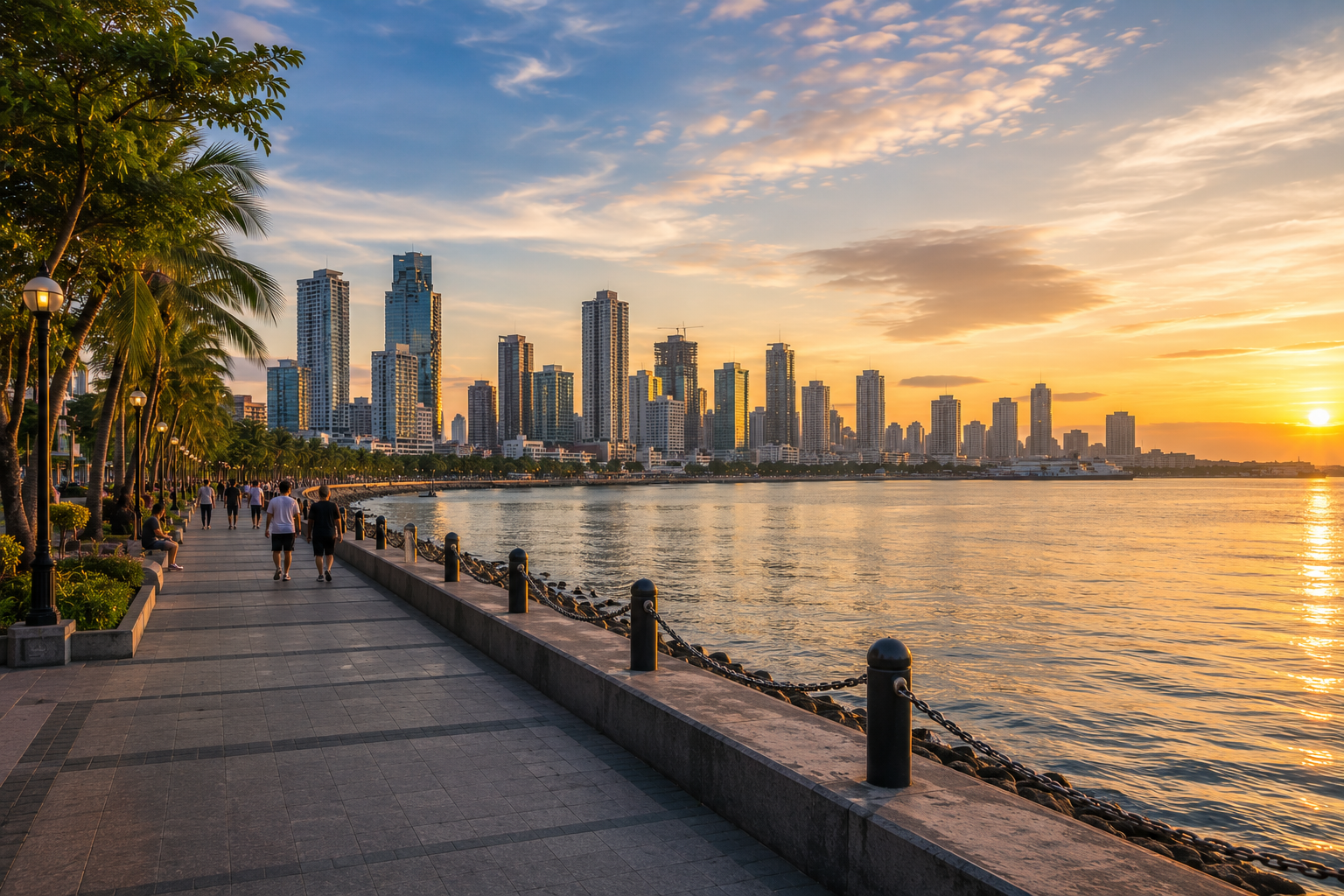
Executive Overview
Retirement Identity
The Philippines occupies a very different retirement position within Southeast Asia from countries such as Malaysia, Thailand, or Vietnam. While Malaysia often appeals through operational reliability and Thailand through retirement-system maturity, the Philippines tends to attract retirees through something more personal and immediately noticeable: the ease of daily interaction.
For many Western retirees, ordinary life begins feeling manageable very quickly.
Conversations happen naturally in English. Asking for directions, scheduling medical appointments, resolving banking issues, ordering food, or speaking with neighbors rarely requires the mental strain that retirees sometimes experience in countries where language barriers remain constant. Small interactions throughout the day often feel conversational instead of transactional.
That difference shapes retirement more deeply than many people initially expect.
The Philippines is not Southeast Asia’s most operationally polished retirement destination. Infrastructure inconsistencies, transportation congestion, and uneven institutional systems remain real considerations. Yet many retirees discover that the reduction in social friction changes how retirement itself feels over long periods.
The country’s strongest retirement advantage is often not perfection, but familiarity.
Core Strengths
The Philippines performs particularly well in English accessibility, expat integration, tropical livability, and long-term social sustainability.
Many retirees settle into routines that feel relatively approachable compared with more culturally distant environments. Medical consultations are easier to follow. Service interactions feel informal and direct. Neighbors often initiate conversation naturally. Restaurant staff remember repeat customers. Security guards, building staff, and local business owners frequently become recognizable parts of daily routine.
For retirees worried about loneliness later in life, these seemingly small patterns can become surprisingly important.
The country also offers broad retirement flexibility. Retirees can structure life around urban healthcare systems in Manila, balanced island-city living in Cebu, or slower provincial environments such as Dumaguete.
Primary Tradeoffs
The Philippines requires realistic expectations operationally.
Infrastructure quality varies heavily by city and neighborhood. Traffic congestion can become exhausting in larger urban areas. Utility consistency is uneven in some regions. Bureaucratic systems often move slowly, and healthcare quality declines substantially outside stronger urban centers.
Retirees who prioritize institutional efficiency above all else may eventually struggle with the country’s inconsistencies.
The Philippines generally rewards patience, flexibility, and interpersonal adaptability more than strict procedural expectations.
Best Retirement Fit
The Philippines works particularly well for retirees who value communication ease, social familiarity, relationship-oriented culture, and tropical daily living more than institutional precision.
It is especially attractive for retirees concerned about social isolation, retirees who prefer conversational environments, and retirees who want life abroad to feel psychologically approachable rather than culturally distant.
Quick Retirement Snapshot
| Category | Philippines Retirement Profile |
|---|---|
| Healthcare Quality | Strongest in major urban centers |
| Cost Structure | Moderately affordable with strong flexibility |
| Infrastructure | Variable by location |
| Visa Stability | Relatively retirement-oriented |
| English Accessibility | One of the strongest in Asia |
| Expat Ecosystem | Mature and socially active |
| Climate | Tropical year-round |
| Lifestyle Pace | Relaxed and socially driven |
Why Retire in the Philippines
Lifestyle Flexibility
The Philippines supports several distinct retirement structures despite its operational inconsistencies.
Metro Manila functions primarily as a healthcare and infrastructure hub. Cebu offers a more balanced combination of healthcare access, international connectivity, island atmosphere, and manageable urban scale. Dumaguete attracts retirees seeking slower pacing, lower-density living, and stronger neighborhood familiarity.
These differences matter because retirees often discover that retirement satisfaction depends less on national identity and more on the specific rhythm of daily life within a chosen city.
Some retirees prefer condominium living near major hospitals and shopping centers. Others prefer smaller neighborhoods where daily errands happen slowly and familiar faces become part of ordinary routine. The Philippines accommodates both patterns reasonably well.
Affordability and Daily Living
The Philippines remains substantially more affordable than most Western countries, particularly for retirees willing to adapt gradually to local pricing structures and daily habits.
Housing, dining, transportation, household help, and routine services can remain manageable even on moderate retirement income. Costs rise significantly when retirees pursue heavily imported lifestyles or premium urban developments, but many long-term residents eventually settle into hybrid routines that combine local affordability with selected Western comforts.
For example, retirees may regularly eat at local cafés and neighborhood restaurants while still maintaining imported grocery staples or occasional international dining. Domestic assistance, laundry services, and delivery systems are often accessible financially in ways that would be difficult for many retirees to sustain in North America.
The strongest financial advantage usually comes less from extreme cheapness and more from long-term flexibility.
Healthcare Confidence
Healthcare confidence depends heavily on geography.
Manila and Cebu provide the country’s strongest concentration of private hospitals, specialists, diagnostics, and modern healthcare infrastructure. Communication during medical consultations is often straightforward for English-speaking retirees, which reduces anxiety substantially during treatment decisions or ongoing chronic-care management.
Outside larger urban ecosystems, healthcare depth declines more rapidly.
Many retirees eventually organize housing decisions around hospital proximity once aging considerations become more important than scenery or lifestyle aesthetics alone.
International Accessibility
The Philippines maintains strong international connectivity through Manila and Cebu, though domestic travel logistics can become more complicated than retirees initially expect.
Because the country is geographically fragmented across islands, transportation planning becomes part of retirement realism. Flights between islands, ferry schedules, weather disruption, and airport congestion can all affect mobility.
Retirees who expect highly seamless domestic movement may eventually feel frustrated. Retirees who build more localized routines around one primary city usually adapt more comfortably.
Long-Term Retirement Appeal
The Philippines’ strongest long-term retirement advantage is often cumulative rather than dramatic.
Retirees frequently discover that ordinary life requires less social effort than expected. Conversations feel natural. Humor translates easily. Casual daily interaction happens regularly. Service environments often feel personal rather than highly procedural.
Over long retirement timelines, this can reduce the emotional fatigue that some retirees experience in more linguistically or culturally distant environments.
Long-Term Retirement Reality
Adaptation Requirements
The Philippines generally requires less social adaptation than many Southeast Asian countries for English-speaking retirees.
Many retirees quickly establish workable daily systems because communication barriers are relatively limited. Asking questions, resolving misunderstandings, speaking with contractors, communicating with healthcare providers, or navigating ordinary errands often feels psychologically manageable even early in the transition process.
At the same time, operational adaptation remains necessary.
Traffic patterns, inconsistent scheduling, utility interruptions, slower administrative systems, and infrastructure variability all require realistic expectations and flexibility.
The country often feels easier socially than operationally.
Bureaucratic Environment
Administrative systems in the Philippines can feel inconsistent and heavily dependent on persistence.
Processes may take longer than expected. Documentation requirements occasionally shift. Outcomes sometimes depend as much on follow-up communication and patience as on formal procedural clarity.
Retirees who adapt most comfortably are usually those who avoid turning every administrative inconvenience into a larger emotional frustration.
The conversational nature of Filipino culture often softens bureaucratic interactions socially, even when systems themselves remain inefficient.
Aging and Long-Term Sustainability
Long-term retirement sustainability depends heavily on city selection.
Retirees living near stronger healthcare systems in Manila or Cebu often maintain significantly greater medical confidence later in life than retirees in smaller provincial environments. Specialist access, diagnostics, emergency care, and advanced treatment remain concentrated primarily within larger urban ecosystems.
Many retirees initially prioritize scenery or slower pacing, then gradually begin prioritizing healthcare access, elevator-equipped housing, transportation convenience, and infrastructure reliability as aging realities become more important.
The Philippines works best long term for retirees who anticipate these transitions early instead of assuming lifestyle priorities remain static forever.
Daily Routine and Livability
Daily life in the Philippines often feels socially interactive in ways retirees notice quickly.
Routine errands frequently involve conversation rather than silent transactional exchange. Building staff greet residents personally. Restaurant servers remember repeat customers. Neighbors initiate casual discussion. Small talk occurs naturally throughout the day.
Some retirees find this deeply comforting over long retirement timelines, particularly after leaving more socially isolated urban environments.
Others may eventually prefer greater privacy or more structured systems.
The social tone of ordinary life becomes one of the country’s defining retirement characteristics.
Emotional Sustainability
Many retirees remain in the Philippines long term because daily life feels psychologically manageable.
The ability to communicate easily during healthcare appointments, banking discussions, housing issues, or ordinary errands reduces chronic low-level stress significantly over time. Retirees who struggled with loneliness or cultural distance elsewhere often find it easier to build stable routines and recurring relationships.
The country’s retirement appeal becomes strongest when these small interactions accumulate over many years rather than during short exploratory visits.
Cost of Living and Retirement Sustainability
Housing Costs
Housing costs vary substantially depending on city, infrastructure quality, and neighborhood selection.
Modern condominiums in Cebu and Manila often remain affordable relative to Western metropolitan housing, though premium developments can become expensive quickly. Smaller cities such as Dumaguete typically provide lower housing costs alongside slower pacing and lower-density living.
Retirees frequently discover that reliable utilities, healthcare proximity, transportation access, and neighborhood convenience matter more long term than simply minimizing rent.
The strongest housing decisions usually balance affordability with practical livability.
Food and Daily Expenses
The Philippines supports flexible retirement spending across multiple lifestyle levels.
Local dining, transportation, household help, and day-to-day services often remain financially manageable. Imported groceries, premium housing, and heavily Westernized consumption habits raise costs substantially.
Many retirees eventually settle into blended routines where local services form the foundation of daily life while selected Western conveniences remain occasional comforts rather than constant expectations.
This flexibility helps many retirees maintain long-term financial sustainability without feeling deprived.
Healthcare Affordability
Healthcare affordability remains one of the Philippines’ stronger practical advantages.
Consultations, diagnostics, medications, dental treatment, imaging, and many outpatient procedures often cost dramatically less than equivalent services in North America.
At the same time, retirees must separate affordability from consistency.
Hospital quality, specialist depth, and emergency capability vary substantially by city. Retirees who structure housing around stronger healthcare ecosystems generally experience significantly greater confidence later in retirement.
Lifestyle Scaling Across Budgets
The Philippines accommodates a wide range of retirement budgets effectively.
Some retirees maintain relatively simple lifestyles in provincial cities with modest housing, local dining, and slower routines. Others build highly comfortable urban lifestyles involving modern condominiums, private healthcare access, domestic assistance, and regular regional travel.
The country’s flexibility allows retirees to adjust spending patterns gradually as retirement priorities evolve.
Long-Term Financial Sustainability
The Philippines performs well financially for retirees prioritizing moderate affordability and long-term lifestyle flexibility.
The strongest financial advantage often comes from how approachable daily life feels rather than from extreme cost savings alone. Many retirees discover that stable social routine, manageable communication, and adaptable spending patterns create more sustainable retirement structures over time.
Healthcare and Aging Confidence
Quality of Private Healthcare
Private healthcare in the Philippines is strongest in Manila and Cebu.
Major hospitals continue modernizing and increasingly provide capable specialists, advanced diagnostics, private facilities, and English-speaking physicians. Many retirees feel immediately more comfortable medically because conversations with doctors, nurses, and hospital staff occur naturally without interpreters or language uncertainty.
Still, the overall healthcare system remains less consistently advanced than Malaysia’s and less mature overall than Thailand’s strongest private hospital networks.
Healthcare Access Outside Major Cities
Healthcare depth declines significantly outside stronger urban centers.
Retirees living in smaller provincial areas frequently need to travel for advanced diagnostics, specialist consultations, or major procedures. This becomes increasingly important later in retirement when medical needs become less predictable.
Many retirees eventually realize that proximity to healthcare systems matters more than initially expected during early retirement years.
Specialist and Long-Term Care Access
Specialist concentration remains centered primarily around Manila and Cebu.
Long-term elder-care systems are improving gradually but remain uneven compared with more mature retirement destinations. Retirees managing complex chronic conditions often structure housing decisions carefully around hospital proximity and transportation convenience.
The country currently works best for retirees who remain relatively active and independent while still planning realistically for future medical evolution.
Healthcare Costs Relative to the West
Healthcare affordability remains highly attractive for many retirees.
Routine consultations, medications, imaging, dental care, and outpatient procedures often remain accessible financially even for retirees managing moderate retirement income.
This reduces long-term financial pressure significantly for retirees concerned about rising healthcare costs later in life.
Aging Confidence and Medical Security
The Philippines provides moderate aging confidence overall.
Retirees near stronger medical ecosystems often feel reasonably secure, particularly when combining private healthcare with realistic long-term planning. Outside larger urban systems, confidence declines more rapidly because of specialist concentration and infrastructure limitations.
The country works best for retirees balancing social sustainability with practical medical planning.
Visa Stability and Bureaucratic Reality
Long-Term Residency Options
The Philippines has historically maintained relatively retirement-friendly residency pathways.
Foreign retirees are a recognized part of the country’s long-term demographic landscape, and residency structures generally remain workable compared with several neighboring countries.
Many retirees perceive the broader institutional tone toward foreign retirement as welcoming even when administrative systems themselves feel inconsistent.
Administrative Complexity
Administrative systems can feel slow and occasionally unpredictable.
Procedures often involve follow-up communication, persistence, repeated documentation, and flexibility regarding timelines. Retirees who become emotionally invested in procedural efficiency may eventually experience unnecessary frustration.
Those who adapt best usually learn to approach bureaucracy patiently and practically rather than expecting highly polished institutional systems.
Stability of Immigration Policies
The Philippines generally maintains workable long-term residency structures, though policy adjustments and procedural changes still occur periodically.
Retirees should remain realistic about evolving requirements while recognizing that the country historically remains relatively open toward foreign retirement communities.
Reporting and Renewal Requirements
Retirees should expect recurring administrative involvement over time.
Visa renewals, reporting requirements, and documentation procedures still require attention, but English-language communication reduces much of the stress that retirees sometimes experience elsewhere during administrative interaction.
Retirement Confidence and Predictability
The Philippines provides moderate institutional predictability but relatively approachable day-to-day navigation.
Retirees prioritizing flawless systems may eventually feel frustrated. Retirees prioritizing adaptability, communication ease, and social familiarity often remain highly satisfied despite procedural inconsistency.
Property Ownership and Financial Security
Foreign Ownership Rules
Foreign ownership restrictions remain an important retirement consideration.
Foreigners generally cannot directly own land, though condominium ownership structures and long-term lease arrangements remain common. Retirees should prioritize legal clarity and conservative planning over informal arrangements.
Practical simplicity usually produces more stable long-term outcomes.
Renting vs Ownership
Renting remains highly practical for many retirees.
The flexibility allows retirees to evaluate neighborhoods, infrastructure quality, transportation convenience, healthcare proximity, and daily livability before making larger commitments.
Because operational quality varies heavily between locations, flexibility often becomes more valuable than ownership itself.
Long-Term Housing Security
Housing comfort depends heavily on development quality and infrastructure reliability.
Modern condominiums in stronger urban areas can provide highly comfortable retirement environments with stable utilities, security, healthcare access, and delivery infrastructure. Lower-cost environments sometimes involve meaningful tradeoffs involving maintenance quality, flooding risk, transportation convenience, or utility consistency.
Careful neighborhood selection matters substantially.
Legal Simplicity and Retirement Planning
Retirees generally benefit from maintaining straightforward financial and housing structures.
The Philippines works best operationally when retirees avoid unnecessary complexity and prioritize flexibility, legal clarity, and long-term practicality.
Infrastructure and Daily Convenience
Transportation Infrastructure
Transportation infrastructure varies dramatically by city.
Metro Manila can become physically exhausting because of congestion and commute times. Cebu often feels more manageable emotionally while still maintaining important healthcare and infrastructure systems. Smaller provincial cities provide calmer pacing but may lack transportation depth or broader connectivity.
Retirees should evaluate transportation not merely as inconvenience but as a long-term quality-of-life factor.
Internet and Utilities Reliability
Internet infrastructure has improved substantially over the past decade, particularly in stronger urban developments.
However, utilities and infrastructure consistency still remain uneven compared with Malaysia or Thailand. Power interruptions, slower repair timelines, and varying service standards remain part of retirement realism in some areas.
Retirees who approach infrastructure expectations realistically usually adapt more comfortably.
Banking and Financial Access
Banking systems are generally functional and relatively approachable for English-speaking retirees.
International transfers, digital banking, ATMs, and financial services remain widely available in major urban areas, though administrative inefficiency can still occur periodically.
The overall experience typically feels manageable rather than highly polished.
Airport Connectivity and Regional Travel
International connectivity centers primarily around Manila and Cebu.
Domestic travel sometimes becomes more complicated because of island geography, weather disruption, and transportation infrastructure limitations. Retirees planning highly mobile lifestyles should evaluate these realities carefully.
At the same time, regional Asian connectivity remains relatively strong.
Convenience of Daily Life
Convenience depends heavily on neighborhood and city selection.
Modern urban developments can support highly comfortable lifestyles involving delivery systems, healthcare access, shopping centers, restaurants, and domestic support services. Outside stronger urban ecosystems, convenience may decline substantially.
The Philippines rewards retirees who choose locations carefully rather than assuming national consistency.
Climate and Environmental Considerations
Heat and Humidity
The Philippines maintains tropical conditions throughout the year.
Warm temperatures, coastal environments, and year-round greenery attract many retirees escaping colder climates. Over time, however, retirees should realistically evaluate how heat and humidity affect mobility, sleep quality, exercise habits, and energy levels as they age.
Climate suitability remains deeply individual.
Seasonal Variation
Seasonal variation remains relatively limited compared with countries such as Vietnam.
The country generally maintains a stable tropical pattern year-round, though rainfall cycles and typhoon seasons influence travel and infrastructure reliability depending on region.
Retirees seeking climate consistency often appreciate this stability.
Air Quality and Pollution
Air quality varies significantly between major urban centers and smaller provincial environments.
Metro Manila experiences substantial congestion and pollution pressure, while coastal cities such as Dumaguete often feel physically calmer and environmentally lighter.
Retirees with respiratory sensitivity should evaluate neighborhoods carefully before making long-term housing decisions.
Coastal vs Inland Living
The Philippines strongly supports coastal and island-oriented retirement lifestyles.
Cebu and Dumaguete provide ocean-centered daily living patterns, slower pacing, and stronger tropical identity, while Manila functions primarily as a healthcare and infrastructure hub.
This creates meaningful retirement variation within the country.
Environmental Comfort Over Time
Environmental comfort depends heavily on balancing tropical appeal against infrastructure realities.
Many retirees remain deeply attached to ocean access, open-air daily living, and slower pacing despite operational imperfections. Others eventually find storm cycles, humidity, or infrastructure inconsistency tiring over very long timelines.
The correct city selection matters enormously.
Best Cities for Retirement in the Philippines
Cebu
Cebu offers one of the strongest overall retirement balances in the country.
The city combines relatively strong healthcare infrastructure, international connectivity, island accessibility, modern residential developments, and mature expat communities. Cebu often feels more manageable psychologically than Manila while still maintaining meaningful urban capability.
For many retirees, it represents the Philippines’ strongest long-term balance between infrastructure and lifestyle.
Dumaguete
Dumaguete appeals strongly to retirees seeking slower pacing, recurring social interaction, and lower-pressure daily routine.
The city has developed a longstanding foreign-retiree ecosystem where many residents quickly establish recognizable social patterns through cafés, restaurants, walking routes, and neighborhood interaction.
Healthcare depth remains more limited than Cebu or Manila, but many retirees find the slower pace and social familiarity highly sustainable emotionally over long retirement periods.
Manila
Metro Manila provides the country’s deepest healthcare systems, strongest institutional infrastructure, and broadest international connectivity.
At the same time, traffic congestion, density, environmental pressure, and commuting fatigue can become exhausting over time.
Manila works best for retirees prioritizing healthcare depth, specialist access, and infrastructure capability over calmness or simplicity.
Expat Community and Social Integration
Size of the Expat Ecosystem
The Philippines maintains one of Southeast Asia’s more socially active expat ecosystems.
Foreign retirees are highly visible throughout Cebu, Dumaguete, and Manila, and many cities have longstanding support systems involving healthcare providers, housing services, restaurants, cafés, legal assistance, and social communities oriented toward foreign residents.
This often makes long-term adaptation feel less isolating.
English Usage in Daily Life
English accessibility remains one of the country’s defining retirement advantages.
Retirees can usually navigate healthcare appointments, banking, transportation, shopping, government interaction, and ordinary conversation without major language barriers. Over long retirement timelines, this significantly reduces adaptation fatigue.
The practical effect becomes especially noticeable during stressful situations involving healthcare, housing, or administrative problems.
Ease of Social Integration
The Philippines performs exceptionally well socially for many retirees.
Local culture is generally conversational, informal, and approachable. Many retirees naturally develop recurring relationships through cafés, condominium communities, restaurants, walking routines, churches, or neighborhood interaction.
The process of building social familiarity often feels faster and less emotionally demanding than in more culturally distant environments.
Community Support and Services
Expat-oriented businesses, healthcare providers, legal services, housing support systems, and social groups remain widely available in stronger retirement centers.
While systems may feel less polished than Malaysia’s operationally, many retirees find the support environment flexible and approachable.
Long-Term Belonging
Many retirees eventually develop strong attachment to ordinary life in the Philippines.
The combination of conversational daily interaction, recognizable neighborhood routine, English accessibility, and relationship-oriented culture often creates a feeling of familiarity that becomes more important over time than infrastructure perfection alone.
Advantages of Retiring in the Philippines
Strongest Advantages
The Philippines’ strongest retirement advantages include English accessibility, conversational daily life, tropical livability, adaptable retirement costs, and relatively approachable social integration.
For many retirees, the country’s greatest advantage is not operational efficiency but the reduction of social distance in ordinary life. Daily interaction often feels natural quickly, and retirees who value recurring human connection frequently adapt more comfortably here than in more institution-driven environments.
Challenges of Retiring in the Philippines
Most Significant Tradeoffs
The Philippines’ greatest retirement tradeoffs involve infrastructure inconsistency, transportation congestion, bureaucratic inefficiency, and uneven institutional reliability.
Healthcare quality also varies significantly by location, and retirees expecting highly polished systems may eventually experience frustration.
The country rewards realistic expectations, flexibility, and thoughtful city selection.
Who the Philippines Is Best Suited For
Strong Matches
The Philippines is especially well suited for retirees who prioritize conversational daily life, English-language accessibility, recurring social interaction, tropical climate, and relationship-oriented culture.
Retirees who value community familiarity, approachable service interaction, and psychologically manageable adaptation often integrate comfortably over long retirement timelines.
Less Suitable Matches
The Philippines may be less suitable for retirees requiring highly reliable infrastructure, institution-level efficiency, seamless transportation systems, or maximum healthcare confidence across all regions.
Retirees highly sensitive to bureaucratic inconsistency or operational unpredictability may eventually prefer more structured retirement environments.
Philippines Compared With Other Asian Retirement Destinations
Philippines vs Thailand
The Philippines generally feels easier linguistically and more conversational socially than Thailand. Thailand offers stronger infrastructure, broader lifestyle diversity, and more mature retirement systems overall.
Retirees prioritizing communication ease may prefer the Philippines, while retirees prioritizing operational balance may prefer Thailand.
Philippines vs Vietnam
The Philippines provides much stronger English accessibility and easier social adaptation than Vietnam. Vietnam generally offers stronger infrastructure momentum, denser urban energy, and lower costs in some categories.
The decision often depends on whether retirees prioritize social familiarity or operational intensity.
Philippines vs Malaysia
Malaysia is substantially more infrastructure-reliable, healthcare-confident, and operationally polished than the Philippines.
The Philippines often feels more conversational, socially approachable, and psychologically easier for retirees who value recurring interpersonal interaction.
Philippines vs Indonesia
Both countries support tropical retirement lifestyles, but the Philippines generally offers stronger English accessibility and easier day-to-day communication.
Indonesia may appeal more strongly to retirees seeking slower outdoor-oriented living structures, while the Philippines often feels more socially approachable operationally.
Final Assessment
Overall Retirement Positioning
The Philippines occupies a distinct retirement position within Southeast Asia.
Its strongest advantages are not institutional precision or infrastructure polish. Instead, the country’s retirement appeal comes from conversational accessibility, social familiarity, tropical living, and relationship-oriented daily routine.
For many retirees, those qualities become increasingly important over time.
Long-Term Retirement Outlook
The Philippines’ long-term retirement outlook remains strongest for retirees who approach the country realistically.
Healthcare systems continue improving gradually in major urban centers, infrastructure develops unevenly, and expat ecosystems remain highly active. At the same time, operational inconsistency is unlikely to disappear completely.
Retirees who prioritize flexibility, communication ease, and social familiarity often remain highly satisfied despite those imperfections.
Final Retirement Fit Assessment
The Philippines works best for retirees seeking tropical living environments where daily interaction feels approachable and socially natural.
It is not Southeast Asia’s most operationally polished retirement destination, but for retirees who prioritize people, familiarity, conversation, and long-term social comfort, it can become one of the easiest places in the region to build a sustainable feeling of home.
Compare the Philippines to Other Retirement Destinations in Asia
The Philippines is frequently compared with Thailand, Malaysia, Vietnam, and Indonesia for retirees seeking English accessibility, healthcare affordability, tropical environments, and long-term retirement livability.
Bangkok vs Manila
Compare Thailand’s largest retirement metropolis with the Philippines’ primary urban and healthcare center.
Kuala Lumpur vs Manila
Compare highly developed Malaysian metropolitan retirement infrastructure with English-friendly Philippine urban living.
Penang vs Cebu
Compare Malaysia’s highly organized retirement infrastructure with Cebu’s more relaxed island-city retirement environment.
Chiang Mai vs Cebu
Compare lower-stress northern Thailand retirement living with English-accessible Cebu island-city retirement life.
Jakarta vs Manila
Compare Indonesia’s largest metropolitan retirement environment with the Philippines’ primary urban infrastructure center.
Dumaguete vs Chiang Mai
Compare approachable Philippine provincial retirement living with northern Thailand’s established retiree environment.
Dumaguete vs Penang
Compare simpler Philippine retirement living with Malaysia’s highly developed healthcare and infrastructure environment.
Find Your Best Retirement Destination in Asia
Use the retirement questionnaire to compare destinations based on your own priorities, retirement goals, healthcare needs, budget, and lifestyle preferences.