
Retire in Indonesia
Executive Overview
Retirement Identity
Indonesia occupies a very different retirement position from Malaysia, Thailand, or the Philippines. Retirees are usually not drawn there because of institutional efficiency, advanced retirement infrastructure, or frictionless systems. They are drawn there because daily life often feels physically and psychologically different from highly structured urban living in the West.
For many retirees, Indonesia changes the way ordinary time is organized.
Daily life often begins earlier because of heat and humidity. Errands are planned around traffic patterns rather than fixed schedules. Open-air cafés, shaded restaurant terraces, short local trips, and familiar neighborhood businesses become more important than large-scale urban efficiency. Instead of structuring retirement around seamless systems, many retirees structure daily life around manageable local routines.
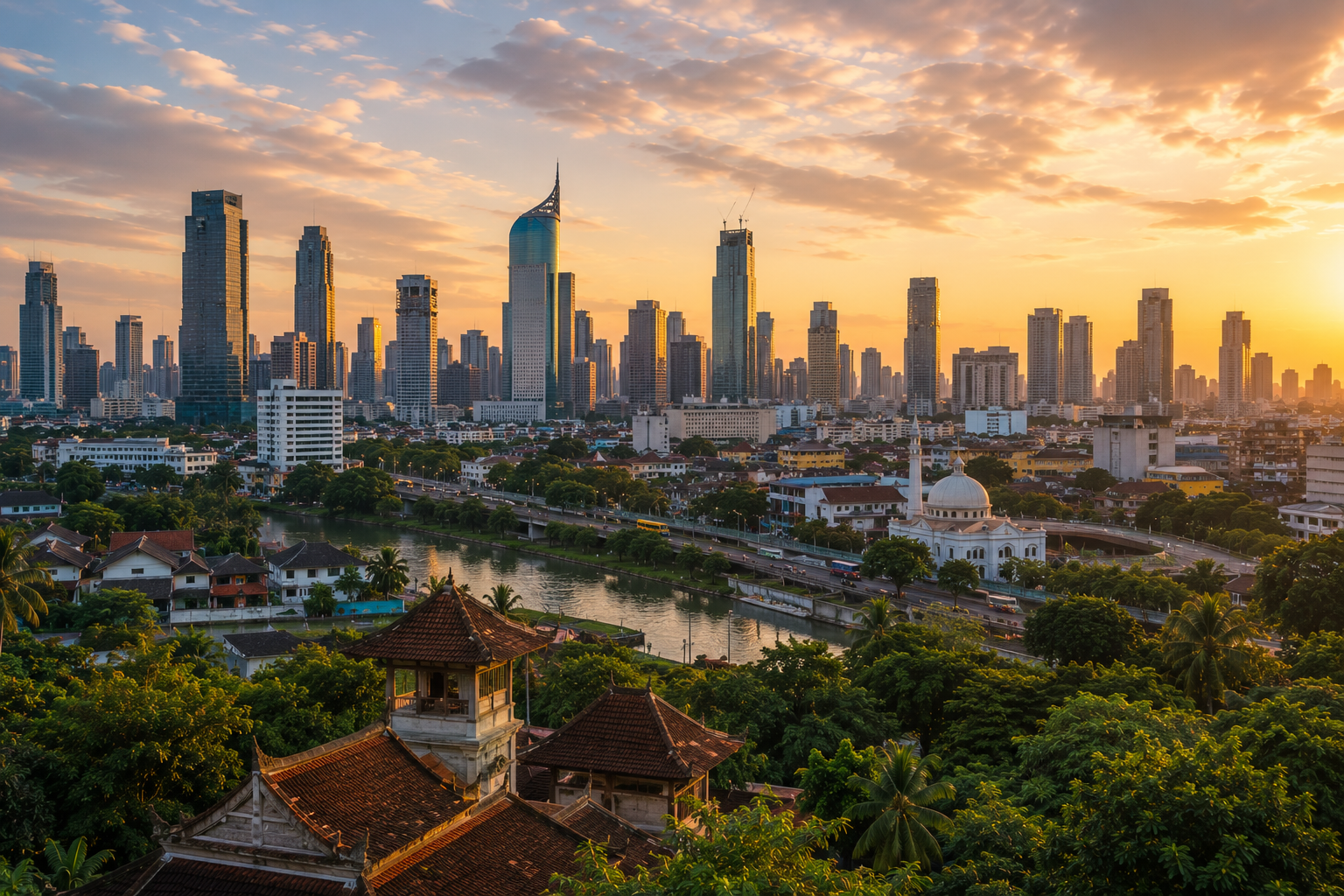
This becomes particularly noticeable in Bali, where retirees often settle into highly localized patterns built around home compounds, nearby cafés, food delivery, short-distance transport, and repeat interaction with the same service providers. Jakarta creates a very different experience, built more around metropolitan infrastructure, healthcare access, financial systems, and large-city convenience.
Indonesia is not Southeast Asia’s easiest retirement destination operationally. It requires adaptation. But for retirees who want retirement to feel physically different from a Western urban life, the country offers a distinctive form of long-term appeal.
Core Strengths
Indonesia performs particularly well for retirees seeking tropical living, outdoor-oriented daily routines, distinctive housing environments, and a more locally structured retirement life than they may have experienced in their working years.
Many retirees are drawn to homes built around courtyards, terraces, gardens, shaded seating areas, and indoor-outdoor movement. In Bali especially, a normal retirement day may involve breakfast in an open-air café, local errands by scooter or driver, afternoon rest during the hotter hours, and evening meals in familiar neighborhood restaurants.
This is not simply a scenic preference. Housing design, climate, transport, and neighborhood structure shape how retirees actually spend their days.
For retirees who spent decades inside heavily scheduled corporate or suburban routines, that shift can become one of Indonesia’s strongest long-term advantages.
Primary Tradeoffs
Indonesia requires significantly more adaptation than Malaysia and usually more than Thailand or the Philippines.
Infrastructure quality varies heavily by location. Traffic can become exhausting in larger cities and in congested parts of Bali. Healthcare systems remain strongest in Jakarta rather than evenly distributed nationally. English accessibility drops substantially outside major expat areas, and administrative systems often require patience, repetition, and local support.
Retirees who require highly predictable systems, advanced aging infrastructure, streamlined transportation networks, or heavily institutional retirement environments may eventually struggle with long-term sustainability.
Indonesia works best when approached realistically rather than romantically.
Best Retirement Fit
Indonesia is best suited for retirees who are comfortable building life around local routines, tropical climate, neighborhood familiarity, flexible scheduling, and practical adaptation.
It is generally less suitable for retirees seeking maximum institutional ease, strong English accessibility everywhere, or highly polished retirement systems.
Quick Retirement Snapshot
| Category | Indonesia Retirement Profile |
|---|---|
| Healthcare Quality | Strongest in Jakarta |
| Cost Structure | Affordable tropical living |
| Infrastructure | Uneven by location |
| Visa Stability | Moderately workable |
| English Accessibility | Moderate to limited |
| Expat Ecosystem | Strongest in Bali |
| Climate | Tropical year-round |
| Lifestyle Pace | Slower and locally structured |
Why Retire in Indonesia
Lifestyle Flexibility
Indonesia supports several very different retirement experiences depending on location.
Jakarta functions as a major urban center with stronger healthcare systems, modern condominium developments, large commercial infrastructure, financial services, and international-standard facilities. Bali operates almost like a separate retirement category, built around lower-density living, cafés, villa housing, private transport, outdoor dining, and a more localized daily structure.
This distinction matters because retirees are often choosing between two very different retirement operating systems.
In Jakarta, retirement tends to revolve around practical systems and institutional access. In Bali, retirement often revolves around neighborhood routine, home environment, local service relationships, and climate-adjusted scheduling.
Retirees who understand that difference usually make better long-term decisions. Bali may feel more attractive emotionally during an exploratory visit, but Jakarta may become more practical for certain healthcare or aging needs. Indonesia works best when retirees view location choice as a long-term operating decision rather than a simple lifestyle preference.
Affordability and Daily Living
Indonesia remains relatively affordable compared with most Western countries, though actual retirement costs vary substantially depending on location and expectations.
Retirees living in Bali-style villa environments often spend more than expected on imported groceries, premium rentals, private transportation, pool and garden maintenance, international dining, and household support. At the same time, local restaurants, laundry services, housekeeping assistance, delivery systems, and neighborhood cafés can remain significantly cheaper than equivalent Western services.
Over time, many retirees settle into mixed spending patterns that feel both comfortable and sustainable. Local cafés and restaurants become routine, while imported goods and higher-end dining become selective rather than constant. The financial advantage is strongest when retirees build their lives around local habits instead of trying to recreate a fully Western lifestyle in a tropical setting.
Indonesia’s affordability is real, but it works best when paired with adaptation.
Healthcare Confidence
Healthcare confidence in Indonesia depends heavily on where retirees choose to live.
Jakarta offers the country’s strongest concentration of private hospitals, specialists, diagnostics, and advanced medical care. Bali provides workable healthcare for many routine and moderate medical situations, though retirees managing serious chronic conditions often prefer easier access to Jakarta or regional medical hubs such as Singapore.
This becomes increasingly important with age.
Many retirees initially choose Indonesia because of climate, housing, or daily lifestyle. Later, some restructure their housing decisions around hospital access, emergency transport, specialist availability, and ease of medical follow-up. A location that feels ideal during early retirement may require adjustment later if healthcare access becomes more important.
International Accessibility
Indonesia’s international access remains concentrated around Jakarta and Bali.
Jakarta serves as the country’s primary institutional and commercial transportation hub, while Bali benefits from extensive tourism-driven flight networks. This makes both locations workable for retirees maintaining family ties abroad or planning regional travel.
Domestic travel across the archipelago can be more tiring. Airport congestion, weather disruption, inter-island routing, and long transfer patterns can make internal mobility less simple than it appears on a map.
Retirees planning a highly mobile retirement should treat Indonesia as a collection of local living systems rather than a seamlessly connected national environment.
Long-Term Retirement Appeal
Indonesia’s long-term appeal is strongest for retirees who want daily life to become less compressed.
The country often encourages retirees to slow decision-making, reduce excessive scheduling, spend more time outdoors, and organize ordinary tasks around climate and local distance. Meals stretch longer. Errands become more local. Social interaction often develops through repeated contact with cafés, drivers, house staff, landlords, clinics, and neighborhood businesses.
For retirees leaving behind intense corporate careers or highly structured urban routines, this can create a healthier transition into retirement than simply moving to another efficient but emotionally similar metropolitan environment.
Long-Term Retirement Reality
Adaptation Requirements
Indonesia requires more adaptation than many retirees initially expect.
Simple daily tasks may take longer than anticipated. Traffic conditions can dramatically affect scheduling. Government procedures often involve repetition or unclear timelines. English communication varies substantially outside established expat ecosystems. Housing maintenance may require more attention than retirees expect, particularly in humid, tropical environments.
The retirees who adapt best are usually those willing to simplify routines, reduce scheduling pressure, choose housing carefully, and build reliable local support systems.
Indonesia generally rewards flexibility more than precision.
Bureaucratic Environment
Indonesia’s bureaucracy can feel uneven and occasionally opaque.
Processes may shift depending on office, location, or administrative interpretation. Documentation requirements can change unexpectedly, and long procedural timelines are not unusual. Many successful long-term retirees reduce stress by relying on local visa agents, property managers, legal advisors, or established expat support networks rather than attempting to manage every process independently.
The key is not to assume that every procedure will be transparent or fast.
Trying to force highly structured Western administrative expectations onto Indonesian systems often creates unnecessary frustration. Retirees who accept the need for local assistance usually experience less stress over time.
Aging and Long-Term Sustainability
Indonesia can support long-term retirement effectively, but aging sustainability depends heavily on realistic planning.
Younger retirees in their 50s or early 60s may adapt comfortably to villa-style housing, uneven walking surfaces, scooter-based movement, outdoor routines, and decentralized services. Later-stage retirement can change the equation. Elevator access, hospital proximity, reliable transport, lower-maintenance housing, stable utilities, and reduced exposure to traffic become more important.
A villa that feels charming early in retirement may become harder to manage later if it requires frequent maintenance, difficult road access, or too much dependence on scooters or stairs.
Indonesia works best long term for retirees who expect their needs to evolve.
Daily Routine and Livability
Daily life in Indonesia often becomes highly localized.
In stronger expat areas, retirees may build routines around morning cafés, nearby markets, local restaurants, delivery services, fitness studios, beach access, and recurring interaction with drivers, house staff, clinic staff, and shop owners. Instead of moving constantly across large urban systems, much of life may happen within a limited set of familiar places.
This can be very satisfying when the neighborhood is chosen well.
It can also become frustrating when housing is beautiful but poorly located. A home that looks ideal online may become inconvenient if every grocery trip, clinic visit, or restaurant outing requires long traffic exposure.
Livability in Indonesia depends heavily on matching housing location to actual daily behavior.
Emotional Sustainability
Indonesia can be deeply sustainable for retirees who want distance from highly compressed Western urban routines.
The appeal is not that the country is effortless. It is not. Infrastructure inconsistency, bureaucracy, traffic, and healthcare limitations remain real. The appeal is that daily life can become physically calmer when retirees organize it well.
Less time may be spent commuting. More time may be spent outdoors. Routine businesses become familiar. The home environment often becomes more central to daily satisfaction. Retirees who align with this structure often find Indonesia psychologically lighter over time.
Those who require efficiency in every interaction may feel the opposite.
Cost of Living and Retirement Sustainability
Housing Costs
Housing in Indonesia varies dramatically depending on location and lifestyle expectations.
Jakarta supports more conventional condominium retirement patterns, while Bali’s housing market revolves heavily around villas, guesthouse compounds, low-rise residences, and indoor-outdoor living arrangements. Many retirees are initially drawn to shaded courtyards, garden seating areas, open-air kitchens, covered patios, and private pools.
Over time, housing evaluation usually becomes more practical.
Humidity management, drainage, road access, neighborhood noise, internet reliability, security, maintenance quality, and proximity to healthcare begin to matter more than visual charm alone. Pool and garden upkeep can add recurring costs. Open-air design may feel attractive but can also bring insects, heat, dampness, and maintenance issues.
The strongest retirement housing decisions balance tropical appeal with long-term practicality.
Food and Daily Expenses
Daily expenses can remain manageable once local routines become established.
Local restaurants, neighborhood cafés, produce markets, household assistance, laundry services, and delivery systems often cost far less than equivalent services in Western countries. Imported groceries, premium alcohol, luxury housing, and heavily internationalized lifestyles increase costs substantially.
Many retirees naturally settle into blended consumption patterns over time. Local cafés become routine gathering places, while imported products become selective comforts rather than everyday necessities.
This usually creates more sustainable long-term spending than attempting to recreate a fully Western consumption model overseas.
Healthcare Affordability
Healthcare remains significantly cheaper than in many Western countries.
Routine consultations, diagnostics, prescriptions, dental treatment, imaging, and outpatient procedures are often financially accessible even for retirees with moderate retirement income. Retirees are frequently surprised by the affordability of routine care and household caregiving assistance compared with North America or parts of Europe.
At the same time, affordability should not be confused with medical depth.
Serious conditions may still require Jakarta-based specialists, international-standard hospitals, or regional medical travel to Singapore. Healthcare affordability helps substantially, but realistic planning remains essential.
Lifestyle Scaling Across Budgets
Indonesia supports multiple retirement spending tiers effectively.
Some retirees maintain modest lifestyles built around local dining, neighborhood cafés, simple villa housing, and limited transport needs. Others pursue more comfortable retirement structures involving private drivers, premium villas, imported goods, household staff, regular maintenance support, and frequent regional travel.
The country remains flexible financially as long as retirees avoid turning retirement into a luxury-tourism simulation.
Retirees who integrate gradually into local living patterns generally build more stable and sustainable financial structures over time.
Long-Term Financial Sustainability
Indonesia’s strongest financial advantage is often indirect rather than dramatic.
Many retirees naturally spend less because daily life itself changes. Social activity becomes more local. Transportation patterns shorten when housing is chosen well. Outdoor living reduces entertainment spending. Home routines become more important. The pressure to consume constantly often decreases.
This can create sustainable retirement structures even when headline pricing is not exceptionally low by regional standards.
The strongest financial outcomes usually come from practical lifestyle design, not from chasing the cheapest possible location.
Healthcare and Aging Confidence
Quality of Private Healthcare
Jakarta provides Indonesia’s strongest healthcare infrastructure.
Major hospitals offer advanced diagnostics, specialist networks, private care systems, and increasingly modern medical facilities. Bali’s healthcare systems continue improving steadily, particularly in areas serving long-term foreign residents, though more complex conditions still often push retirees toward Jakarta or overseas treatment.
Retirees should evaluate healthcare based on realistic aging expectations rather than current health alone.
A retirement environment that feels ideal at age 58 may require adjustment by age 75 if hospital access, mobility, and emergency planning were not considered seriously from the beginning.
Healthcare Access Outside Major Cities
Healthcare depth declines quickly outside stronger urban systems.
Retirees living in quieter or more remote areas may eventually encounter specialist shortages, emergency transport limitations, inconsistent diagnostics, or the need to travel for advanced procedures. This becomes increasingly important later in retirement when healthcare access matters more frequently and with less preparation time.
Indonesia works best for retirees who build healthcare access into retirement planning early rather than treating it as a future problem.
Specialist and Long-Term Care Access
Long-term elder-care infrastructure remains less mature than Malaysia’s or Thailand’s.
Retirees managing mobility decline, neurological conditions, complex cardiac care, or advanced chronic illness may eventually require more centralized medical environments than Bali or smaller lifestyle-oriented regions comfortably provide.
Indonesia currently works best for retirees who remain physically active, operationally flexible, and reasonably independent.
That does not mean aging in Indonesia is impossible. It means retirees should think carefully about how their priorities may evolve over twenty or thirty years rather than assuming retirement preferences remain static forever.
Healthcare Costs Relative to the West
Healthcare affordability remains one of Indonesia’s stronger practical advantages.
Consultations, prescriptions, dental care, imaging, outpatient treatment, and household assistance often cost far less than comparable services in many Western countries. This can reduce financial anxiety for retirees who want more proactive routine care.
Still, affordable healthcare does not eliminate the need for serious emergency planning.
Retirees who approach medical planning conservatively usually experience significantly lower stress later in retirement.
Aging Confidence and Medical Security
Indonesia provides moderate aging confidence overall.
Retirees living near Jakarta or stronger hospital systems often feel reasonably secure, while retirees prioritizing slower coastal or villa-centered lifestyles may eventually feel less medically confident over time.
Indonesia works best when retirees continually balance daily-life satisfaction with aging practicality instead of assuming those priorities never change.
Visa Stability and Bureaucratic Reality
Long-Term Residency Options
Indonesia maintains workable long-term residency structures, though the system feels less retirement-focused than Malaysia’s.
Requirements and procedures may evolve periodically, and retirees should expect ongoing administrative involvement throughout long-term residency. The country generally welcomes foreign retirees economically, but systems still require active management rather than passive permanence.
Indonesia’s retirement environment is more lifestyle-driven than institutionally retirement-oriented.
Administrative Complexity
Administrative systems can feel fragmented and inconsistent.
Retirees may encounter repeated document requests, procedural variation, long timelines, or office-to-office inconsistency. Most successful long-term retirees simplify the process through visa consultants, local agents, legal advisors, or property management networks familiar with local systems.
Trying to independently control every process often becomes exhausting unnecessarily.
The retirees who adapt most comfortably usually learn where flexibility matters more than procedural perfection.
Stability of Immigration Policies
Indonesia’s immigration environment remains workable but moderately fluid.
Retirees should remain prepared for changing requirements, revised procedures, and evolving documentation standards. Long-term retirement planning should always include flexibility rather than assuming permanent institutional stability.
Indonesia rewards retirees who remain adaptable operationally instead of highly rigid administratively.
Reporting and Renewal Requirements
Visa renewals and reporting remain recurring retirement tasks.
Unlike highly passive retirement residency systems, Indonesia generally requires retirees to remain administratively engaged over time. Retirees who accept this reality early usually adapt more comfortably than retirees expecting frictionless long-term residency.
Preparation and local support systems matter enormously.
Retirement Confidence and Predictability
Indonesia provides moderate predictability overall.
The country generally rewards retirees who simplify routines, avoid overcomplication, and maintain realistic expectations regarding bureaucracy and infrastructure. Retirees requiring highly frictionless systems may eventually struggle with long-term sustainability.
Indonesia works best for retirees who care more about daily-life fit than institutional polish.
Property Ownership and Financial Security
Foreign Ownership Rules
Foreign ownership restrictions remain one of Indonesia’s most important retirement considerations.
Direct land ownership structures for foreigners remain limited, and retirees should approach property arrangements carefully and conservatively. Many successful long-term retirees avoid overly complicated ownership structures entirely and prioritize flexibility instead.
Retirement stability in Indonesia usually comes more from livability and legal clarity than ownership itself.
Renting vs Ownership
Renting remains extremely practical in Indonesia.
Many retirees prefer the flexibility to test neighborhoods gradually, relocate later if priorities change, adjust to healthcare realities, or reduce maintenance responsibilities as they age. This flexibility becomes increasingly valuable over long retirement timelines.
Retirees who rush into ownership decisions may later discover that transportation needs, healthcare priorities, or daily routines changed substantially over time.
Long-Term Housing Security
Indonesia’s strongest housing appeal often comes from how housing functions physically rather than from ownership itself.
Retirees are frequently drawn to natural airflow, tropical landscaping, outdoor seating areas, low-rise architecture, and visually softer environments than highly urbanized Western housing patterns. Over time, however, utility stability, flood management, transportation access, maintenance simplicity, and medical proximity often become more important.
The strongest retirement housing decisions balance aesthetic appeal with practical livability.
Legal Simplicity and Retirement Planning
Indonesia rewards conservative retirement planning.
Retirees who keep ownership structures simple, maintain liquidity, avoid speculative assumptions, and prioritize flexibility usually create more stable long-term retirement environments.
The country works best when approached pragmatically rather than romantically.
Infrastructure and Daily Convenience
Transportation Infrastructure
Transportation infrastructure varies dramatically depending on city and region.
Jakarta’s traffic can become exhausting over long periods, while Bali’s transportation systems are slower, narrower, and often dependent on scooters, drivers, or short-distance vehicle movement. Retirees frequently underestimate how much transportation friction shapes retirement satisfaction over time.
Housing location matters enormously in Indonesia.
A beautifully designed villa can become psychologically draining if every routine errand requires long traffic exposure or difficult road conditions.
Internet and Utilities Reliability
Internet quality continues improving steadily, particularly in stronger urban and expat-centered areas.
However, retirees should still expect occasional utility interruptions, inconsistent service standards, drainage limitations, weather-related disruption, and uneven road quality depending on region. These issues are manageable for many retirees, but they should be expected rather than treated as rare surprises.
Indonesia is workable operationally, but it is not a highly polished infrastructure environment.
Banking and Financial Access
Banking systems are generally functional but can feel administratively inconsistent.
Many retirees adapt by simplifying account structures, maintaining backup payment systems, using international banking combinations, and relying heavily on digital payments where practical. Documentation requirements and procedural delays can still arise.
Procedural patience remains important.
Retirees expecting highly streamlined institutional interaction may eventually find even routine administrative tasks more tiring than anticipated.
Airport Connectivity and Regional Travel
Jakarta and Bali provide Indonesia’s strongest international connectivity.
Domestic travel across the archipelago can still feel operationally tiring because of airport congestion, weather disruption, inter-island routing complexity, and long transfer patterns. Retirees planning frequent movement between islands should approach travel logistics conservatively.
Indonesia is large, fragmented, and locally varied.
Convenience of Daily Life
Daily convenience depends heavily on neighborhood selection.
Well-positioned areas can support comfortable routines involving walkable cafés, grocery delivery, local dining, fitness studios, beach access, clinics, and routine services within relatively short travel distance. Poorly positioned housing can create constant transportation stress and excessive dependence on vehicle movement.
Indonesia rewards retirees who structure life locally rather than regionally.
Climate and Environmental Considerations
Heat and Humidity
Indonesia remains tropical year-round.
Many retirees enjoy morning outdoor routines, open-air dining, reduced seasonal disruption, lighter clothing patterns, and outdoor social environments. At the same time, humidity and heat require adaptation, especially later in life.
Retirees often shift activity earlier into mornings, reduce midday movement, prioritize airflow and shade in housing selection, and structure routines around climate realities rather than resisting them.
Climate shapes daily scheduling heavily in Indonesia.
Seasonal Variation
Indonesia maintains relatively stable tropical conditions throughout the year.
Rather than strong seasonal shifts, retirees adapt more to rainfall cycles, humidity changes, tourism fluctuations, and regional weather patterns. Many retirees appreciate the consistency after decades of colder seasonal climates.
The weather often becomes part of the daily structure retirees find appealing long term, but it also requires practical housing and transportation choices.
Air Quality and Pollution
Air quality varies heavily by location.
Jakarta experiences major congestion and pollution pressure, while Bali and slower coastal regions often feel substantially cleaner and physically calmer. Environmental comfort depends heavily on local geography and density rather than national averages.
Retirees sensitive to pollution or traffic exposure should evaluate neighborhoods carefully before committing long term.
Coastal vs Inland Living
Indonesia strongly supports coastal retirement identities.
Many retirees eventually prioritize ocean access, lower-density neighborhoods, outdoor dining, greenery, and local movement patterns over highly urbanized living. This transition can become one of the strongest changes retirees experience after relocation.
The practical question is whether coastal living also provides enough healthcare access, transport convenience, and infrastructure reliability for the retiree’s stage of life.
Environmental Comfort Over Time
Environmental comfort depends on how well retirees adapt housing, transportation, and daily scheduling to the climate.
Spending more time outdoors can be one of Indonesia’s great retirement advantages, but only when heat, humidity, traffic, and access to services are managed realistically. A well-located home, shaded outdoor space, reliable transport, and practical healthcare access matter more than scenery alone.
For retirees aligned with this structure, Indonesia can remain highly satisfying over long timelines.
Best Cities for Retirement in Indonesia
Bali
Bali remains Indonesia’s strongest retirement destination for retirees seeking tropical daily living, villa housing, café routines, and established foreign-resident support systems.
The island supports recurring neighborhood patterns involving familiar cafés, nearby restaurants, exercise spaces, delivery systems, private transport, and social communities. Many retirees eventually settle into local routines that have little to do with tourism itself.
At the same time, Bali involves traffic congestion, healthcare limitations, infrastructure inconsistency, and tourism pressure.
Retirees who remain happiest long term are usually those who stop approaching Bali as a vacation destination and instead build practical, localized daily systems.
Jakarta
Jakarta provides Indonesia’s strongest healthcare systems, financial infrastructure, institutional access, and transportation connectivity.
The city works best for retirees prioritizing medical access, operational practicality, large-scale urban services, and stronger institutional support. It is less physically relaxing than Bali but significantly stronger operationally.
Jakarta often works better for later-stage retirement or medically cautious retirees than for retirees seeking slower early-retirement lifestyle change.
Expat Community and Social Integration
Size of the Expat Ecosystem
Indonesia’s expat ecosystem is concentrated heavily in Bali.
Foreign retirees, business owners, remote workers, and long-term residents have created mature support systems involving cafés, fitness spaces, housing networks, visa assistance, clinics, transport services, and recurring social communities.
Outside major expat zones, foreign-retiree visibility declines substantially.
The retirement experience becomes more locally dependent outside Bali-centered ecosystems.
English Usage in Daily Life
English accessibility is noticeably lower than Malaysia or the Philippines.
Retirees often need more adaptation during government procedures, banking interaction, healthcare coordination, contractor communication, and transportation organization. Bali’s international environment helps, but English should not be assumed everywhere.
Retirees comfortable building routines gradually generally adapt much better than retirees expecting immediate frictionless communication.
Ease of Social Integration
Indonesia can feel socially warm, though integration usually happens more gradually than in English-dominant environments.
Many retirees build social structure through neighborhood cafés, exercise routines, recurring restaurant visits, housing compounds, local staff relationships, and smaller expat circles rather than through large formal retirement communities.
The country rewards consistency more than aggressive social networking.
Community Support and Services
Bali especially offers highly developed support systems for long-term foreign residents.
Retirees can access visa support, transport assistance, imported goods, international clinics, wellness businesses, housing networks, and established social communities relatively easily within stronger expat zones.
This makes long-term adaptation easier than many retirees initially expect, although the support structure remains highly location-dependent.
Long-Term Belonging
Many retirees eventually develop attachment to Indonesia through ordinary repetition rather than formal integration.
The same café, the same local shop, the same driver, the same walking route, and the same neighborhood routines gradually create familiarity. For some retirees, this becomes deeply satisfying because life feels smaller, more local, and less institutionally managed.
That form of belonging works best for retirees who are patient enough to let it develop gradually.
Advantages of Retiring in Indonesia
Strongest Advantages
Indonesia’s strongest retirement advantages include tropical daily living, distinctive housing environments, localized routines, flexible spending patterns, and strong neighborhood-based lifestyle potential.
The country’s greatest retirement value often comes from the structure of daily life itself. Retirees who choose locations carefully may spend more time outdoors, reduce long-distance commuting, simplify consumption habits, and build routines around familiar local places.
Indonesia is strongest for retirees who want retirement to feel materially different from the life they left behind.
Challenges of Retiring in Indonesia
Most Significant Tradeoffs
Indonesia’s greatest retirement tradeoffs involve infrastructure inconsistency, transportation friction, healthcare concentration, bureaucratic complexity, lower English accessibility, and aging logistics.
These challenges become more important over time rather than less. A retiree may tolerate traffic, maintenance issues, or limited healthcare access easily at 60, then feel very differently at 75.
Indonesia rewards realistic expectations, local support systems, and careful planning.
Who Indonesia Is Best Suited For
Strong Matches
Indonesia is especially suitable for retirees seeking tropical daily living, localized routines, villa or low-rise housing environments, flexible scheduling, and a retirement life shaped around neighborhood familiarity rather than large institutional systems.
It works particularly well for retirees comfortable adapting gradually, using local support, and accepting that practical convenience depends heavily on location selection.
Less Suitable Matches
Indonesia may be less suitable for retirees requiring highly polished systems, advanced healthcare confidence, strong institutional efficiency, seamless infrastructure, or heavily English-oriented environments.
Retirees uncomfortable with operational inconsistency may eventually find long-term sustainability difficult.
Indonesia Compared With Other Asian Retirement Destinations
Indonesia vs Thailand
Indonesia generally feels less systemized and more locally structured than Thailand. Thailand offers stronger healthcare depth, transportation systems, and retirement infrastructure.
Retirees prioritizing operational balance may prefer Thailand, while retirees prioritizing tropical daily living and more localized routines may prefer Indonesia.
Indonesia vs Vietnam
Indonesia generally feels less urban-intense than Vietnam. Vietnam provides denser metropolitan energy, stronger urban momentum, and more compressed city living.
Indonesia appeals more strongly to retirees seeking lower-pressure daily structure, while Vietnam appeals more strongly to retirees seeking affordability, energy, and rapid modernization.
Indonesia vs Malaysia
Malaysia is substantially more operationally polished than Indonesia. Healthcare, infrastructure, transportation, and institutional systems are stronger and more predictable.
Indonesia offers more outdoor-centered housing patterns and less structured daily life, but requires more flexibility and stronger local adaptation.
Indonesia vs Philippines
The Philippines generally provides easier communication and stronger English accessibility than Indonesia.
Indonesia often feels more physically distinct through climate, housing structure, and neighborhood-centered routines, while the Philippines often feels socially easier and more conversational for English-speaking retirees.
The choice often depends on whether retirees prioritize communication ease or tropical lifestyle structure.
Final Assessment
Overall Retirement Positioning
Indonesia occupies one of Southeast Asia’s most distinctive lifestyle-centered retirement positions.
Its appeal comes less from institutional efficiency and more from how daily life can be reorganized around tropical housing, local routines, neighborhood familiarity, outdoor time, and flexible scheduling.
For many retirees, Indonesia represents a major lifestyle shift rather than simply geographic relocation.
Long-Term Retirement Outlook
Indonesia’s long-term retirement outlook remains strongest for retirees who adapt gradually, simplify routines, build local systems, and remain realistic about infrastructure and aging realities.
The country continues improving operationally, but institutional inconsistency, healthcare concentration, and infrastructure variability will likely remain part of long-term retirement reality for the foreseeable future.
Retirees who plan around those realities often build much stronger retirement structures than those who rely only on lifestyle appeal.
Final Retirement Fit Assessment
Indonesia works best for retirees seeking tropical retirement living built around local routines, flexible scheduling, distinctive housing environments, and practical neighborhood familiarity.
It is not Southeast Asia’s easiest retirement destination operationally, but for retirees aligned with its structure and willing to adapt, it can become one of the region’s most satisfying long-term lifestyle transitions.
Find Your Best Retirement Destination in Asia
Use the retirement questionnaire to compare destinations based on your own priorities, retirement goals, healthcare needs, budget, and lifestyle preferences.