
Ho Chi Minh City, Vietnam
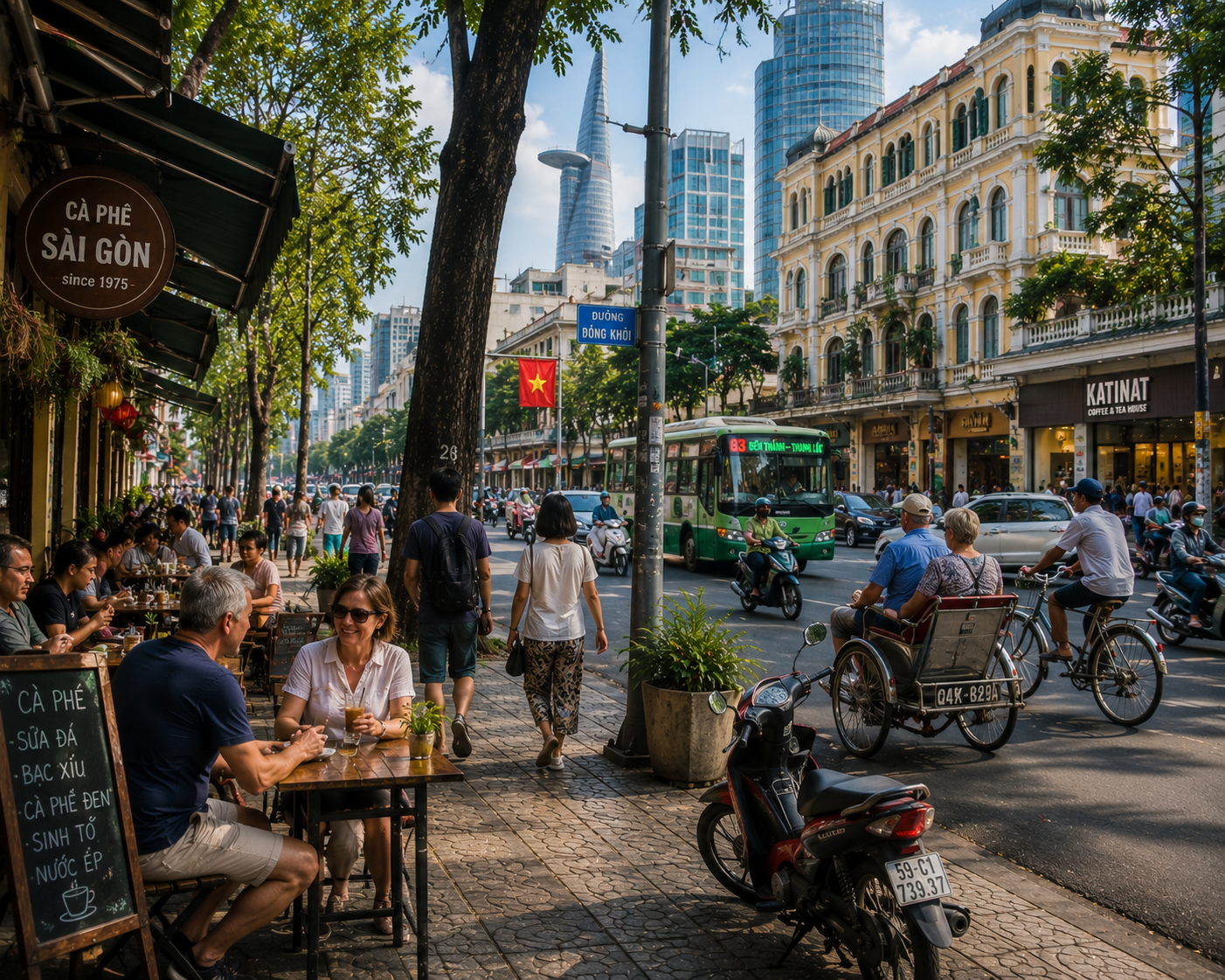
Retire in Ho Chi Minh City at a Glance
Ho Chi Minh City combines practical retirement costs, healthcare access, expat support, and a lifestyle profile suited to long-term retirement planning.
Best For
- Urban living
- Good healthcare access
- Large expat community
- Long-term retirement living
Monthly Condo Rent
US$450-650
US$700-1100
US$1300-2000
Monthly Retirement Budget
US$1300-1800
US$2000-2900
US$3200-4800
Key Strengths
Healthcare: Good
Expat Community: Large
Best For: Urban living
Confidence: Medium
Executive Overview
Ho Chi Minh City is one of Southeast Asia’s most energetic and economically dynamic urban environments. Formerly known as Saigon, the city combines rapid development, strong food culture, expanding modern infrastructure, and relatively affordable living into a retirement destination that appeals strongly to retirees who enjoy active metropolitan lifestyles and can adapt comfortably to fast-moving urban environments.
Unlike calmer retirement destinations such as Da Nang or Hua Hin, Ho Chi Minh City is intense. The city is crowded, noisy, entrepreneurial, and constantly evolving. For some retirees, that energy feels exhausting. For others, it creates a sense of vitality and engagement that makes retirement feel active rather than slow or isolated.
Ho Chi Minh City works especially well for retirees who enjoy city living, appreciate food and café culture, value affordability, and remain mentally stimulated by active urban environments.
Compared with Bangkok, Ho Chi Minh City generally feels less infrastructure-developed, less polished, and more chaotic operationally. At the same time, many retirees find the city more authentic, more economically energetic, and emotionally more alive.
Compared with Kuala Lumpur or Singapore, Ho Chi Minh City is noticeably less refined, but it also feels less corporate and more organic. Daily life often feels improvisational in a way that some retirees find frustrating and others find deeply engaging.
The city’s long-term retirement appeal comes from its combination of affordability, urban energy, food culture, and lifestyle vitality.
Quick Snapshot
Cost of Living: Affordable relative to most major Asian metropolitan cities
Healthcare Quality: Improving private healthcare with growing international-standard facilities
Lifestyle: Fast-paced urban living with strong café and food culture
Climate: Tropical climate with year-round heat and seasonal rains
Expat Community: Large and steadily growing
Best For: Urban-oriented retirees, active retirees, and retirees seeking affordable metropolitan living
Lifestyle and Environment
Ho Chi Minh City is fundamentally a city of movement and activity. The streets are dense with scooters, cafés, markets, restaurants, small businesses, and constant social interaction. Retirees who thrive here are usually people who enjoy stimulation, unpredictability, and active daily environments.
Compared with many Southeast Asian capitals, Ho Chi Minh City often feels less bureaucratic and less formal. The city has a distinctly entrepreneurial atmosphere that shapes the way daily life feels. Small businesses operate everywhere, neighborhoods evolve quickly, and there is a strong sense of ongoing economic momentum.
This creates a retirement environment that feels very different from slower and more retirement-focused cities such as Hua Hin or Penang. Ho Chi Minh City is not designed around retirees. It is a working city first. Retirees who adapt successfully usually embrace that reality rather than expecting the city to function like a traditional retirement enclave.
At the same time, the city has become increasingly comfortable for long-term foreign residents. Modern apartment towers, international cafés, imported grocery stores, coworking environments, and growing international infrastructure have expanded significantly over the past decade.
One of Ho Chi Minh City’s strongest emotional characteristics is that it rarely feels stagnant. Many retirees who dislike overly quiet retirement destinations appreciate the city’s sense of movement, change, and social energy.
However, retirees seeking tranquility, low stimulation, or highly organized infrastructure may eventually find the city emotionally exhausting over long periods.
Long-term success in Ho Chi Minh City often depends heavily on personality fit, neighborhood selection, and adaptability. Retirees who try to force the city into a slower and more predictable rhythm often struggle. Those who learn to work with the city’s energy frequently become deeply attached to it.
The city rewards retirees who remain curious, socially active, and mentally engaged. It is less suitable for retirees seeking retreat-style retirement environments or emotionally quiet daily routines.
Cost of Living
Ho Chi Minh City remains relatively affordable compared with major metropolitan cities elsewhere in Asia. Retirees can still access modern apartments, extensive dining, transportation, domestic services, and active urban lifestyles at costs significantly below Singapore, Hong Kong, Tokyo, or major Western cities.
Compared with Bangkok or Kuala Lumpur, Ho Chi Minh City is often slightly less expensive overall, though the gap has narrowed as development and foreign demand have increased.
Housing costs vary widely depending on district, building quality, and proximity to expat-oriented areas. District 1, District 2 (especially Thao Dien), and District 7 are among the most popular foreign resident areas because they offer modern apartments, international restaurants, imported groceries, cafés, and relatively strong infrastructure.
Thao Dien has become especially popular among expats and retirees seeking a more internationally oriented residential environment with walkability, cafés, and lifestyle convenience. Compared with Bangkok, housing quality can feel more inconsistent at similar price levels, but many retirees still find strong value relative to overall affordability.
Food is one of the city’s defining strengths. Vietnamese cuisine is fresh, varied, affordable, and deeply integrated into everyday life. Retirees can comfortably eat local street food, café meals, or higher-end international dining without extreme cost pressure.
The city’s café culture is also unusually strong. Many retirees structure daily life around cafés, walking, social routines, and neighborhood food culture. This becomes one of Ho Chi Minh City’s strongest long-term lifestyle advantages because it creates daily rhythms that feel active and socially connected rather than isolated.
Over long retirement timelines, access to international dining and imported groceries becomes increasingly important. Ho Chi Minh City has improved substantially in this area over the past decade. While it still does not match Kuala Lumpur or Bangkok in imported product depth, retirees can increasingly access Western groceries, wines, cheeses, bakeries, and international cuisine.
Utilities and internet costs are generally affordable, though infrastructure consistency can vary significantly depending on building quality and district.
One of the city’s most important long-term strengths is that retirees can maintain active lifestyles without feeling financially compressed. Dining out regularly, participating socially, hiring assistance, and enjoying metropolitan life remain financially realistic for many retirees living on moderate retirement income.
Healthcare
Healthcare in Ho Chi Minh City has improved rapidly over the past decade, though it still does not match the specialist depth or international sophistication available in Bangkok, Kuala Lumpur, or Singapore.
The city now has several modern international-standard hospitals and clinics, including FV Hospital, Vinmec Central Park International Hospital, and Family Medical Practice.
For routine care, diagnostics, and many specialist needs, the city is increasingly practical for long-term retirees. Many foreign residents report positive experiences with private healthcare systems, especially compared with expectations of Vietnam’s development level.
However, retirees with highly complex medical conditions, advanced specialist needs, or major long-term healthcare concerns sometimes prefer Bangkok or Singapore for deeper medical ecosystems.
Healthcare quality in Ho Chi Minh City often depends heavily on provider selection, hospital choice, and expectations. Retirees who understand the limits of the local healthcare ecosystem while using high-quality private providers often report significantly better experiences than retirees expecting globally elite systems across all levels of care.
Compared with Da Nang, Ho Chi Minh City offers significantly deeper healthcare infrastructure. Compared with Bangkok, however, the system still feels less internationally mature and less comprehensive overall.
For many retirees, the healthcare trade-off is acceptable because of the city’s affordability, energy, and overall lifestyle appeal. Many retirees view Ho Chi Minh City as offering healthcare that is sufficiently good for long-term living while remaining financially manageable.
Visa Options
Vietnam’s visa and residency environment remains one of the country’s biggest long-term retirement uncertainties.
Unlike Thailand or Malaysia, Vietnam does not yet have a deeply mature retirement residency structure specifically designed around foreign retirees. Policies have changed periodically over time, and long-term administrative predictability is still less developed than in some neighboring countries.
For some retirees, this uncertainty is manageable because affordability, lifestyle, and quality of life remain highly attractive. Others may prefer countries with more established long-term retirement systems.
Retirees considering Ho Chi Minh City should approach Vietnam with flexibility and realistic expectations regarding paperwork, renewals, and administrative evolution.
At the same time, many long-term residents remain highly satisfied because the city itself offers enough energy, affordability, and engagement to outweigh some of the administrative ambiguity.
The visa environment therefore becomes part of the broader retirement trade-off. Retirees seeking maximum predictability may eventually prefer Malaysia or Thailand. Retirees prioritizing cultural experience, affordability, and urban vitality often remain comfortable despite the evolving regulatory environment.
Infrastructure and Accessibility
Infrastructure in Ho Chi Minh City has improved dramatically in recent years, but the city still feels operationally less organized than Bangkok or Kuala Lumpur.
Traffic is one of the defining realities of daily life. Scooters dominate transportation, and crossing streets can initially feel intimidating to new retirees. Over time, many long-term residents adapt psychologically and operationally to the rhythm of the city.
Compared with Hanoi, Ho Chi Minh City generally feels more open, more internationally integrated, and somewhat easier for foreigners operationally.
The city offers shopping centers, international schools, private hospitals, modern residential towers, and increasingly sophisticated commercial infrastructure. Ride-hailing services such as Grab are widely used and relatively inexpensive. Many retirees rely heavily on ride-hailing, walking within districts, and neighborhood-based routines rather than owning vehicles.
Ho Chi Minh City’s strongest infrastructure strengths include affordability, café and dining ecosystems, increasing modern development, and active urban convenience.
The city still struggles with congestion, noise, pollution, inconsistent infrastructure, and heavy traffic intensity. Retirees seeking calmness or highly polished urban systems may find the city frustrating long term.
At the same time, many retirees find the city easier emotionally than expected once they stop trying to operate across the entire metropolitan area. Long-term success often comes from building highly localized routines around selected neighborhoods, cafés, clinics, and social infrastructure.
The city rewards retirees who simplify their operational patterns rather than constantly fighting its density and movement.
Neighborhoods and Housing
Thao Dien (District 2)
One of the city’s strongest expat-oriented districts. Thao Dien is popular because of its international cafés, imported groceries, modern apartments, and relatively walkable lifestyle patterns.
Many retirees prefer the district because it offers a balance between international convenience and manageable urban intensity. Compared with central districts, it often feels greener and slightly calmer.
District 1
District 1 is the commercial and lifestyle center of the city. It offers restaurants, nightlife, cafés, shopping, and constant urban energy.
This area works best for retirees who genuinely enjoy dense metropolitan environments and highly active daily routines.
District 7
District 7 feels more planned and residential, with modern developments, wider streets, and strong expat infrastructure.
Many retirees who prefer cleaner and more structured residential environments eventually gravitate toward District 7 because it feels somewhat less chaotic than the older urban core.
Binh Thanh District
Binh Thanh is a rapidly developing area offering newer apartments, improving infrastructure, and somewhat lower housing costs relative to central districts.
The district appeals to retirees seeking urban convenience without paying premium central-city prices.
Housing quality in Ho Chi Minh City varies significantly depending on developer standards, management quality, flood exposure, traffic patterns, and neighborhood design. Retirees who spend time evaluating districts carefully usually experience much higher long-term satisfaction.
Transportation
Transportation in Ho Chi Minh City revolves around scooters, Grab ride-hailing, taxis, and increasingly modern urban infrastructure.
Most retirees do not drive themselves. Instead, they typically structure life around neighborhood convenience, walking, and ride-hailing systems.
Traffic intensity remains one of the city’s biggest long-term adjustment factors. Retirees who adapt successfully usually stop expecting Western-style transportation order and instead learn to operate within the city’s rhythm.
For many long-term residents, retirement success depends heavily on reducing unnecessary movement across the city. Those who live near cafés, healthcare, shopping, and social infrastructure often experience dramatically lower daily stress levels.
Compared with Bangkok, Ho Chi Minh City has less transportation sophistication and less organized public transit. Compared with many emerging urban centers, however, the city remains highly functional once retirees understand how to structure daily routines effectively.
Safety
Ho Chi Minh City is generally considered relatively safe regarding violent crime, though retirees should remain aware of petty theft, phone snatching, scams, and traffic-related risks.
For many retirees, traffic represents the single biggest practical safety issue rather than crime itself.
The city’s high level of street activity and constant public movement often contributes to a sense of social visibility and urban energy, though it can also feel overwhelming for retirees seeking quieter environments.
Many retirees report feeling relatively comfortable walking in active districts because the city remains socially engaged and highly populated throughout much of the day and evening.
At the same time, retirees who are uncomfortable with noise, congestion, aggressive traffic flow, or operational unpredictability may eventually find the environment emotionally tiring.
Long-term comfort in Ho Chi Minh City often depends less on crime itself and more on whether a retiree psychologically adapts to the city’s pace and density.
Climate and Environment
Ho Chi Minh City has a tropical climate with year-round warmth, humidity, and rainy seasons.
The city can feel physically intense because of the combination of heat, traffic, urban density, and pollution.
Compared with Da Nang, Ho Chi Minh City generally feels denser, noisier, and more environmentally demanding. Compared with Bangkok, it often feels less infrastructure-managed but somewhat more open and less claustrophobic in certain districts.
Retirees who enjoy active city life often adapt well to the climate because daily routines naturally evolve around cafés, indoor environments, and flexible scheduling.
Those seeking cooler temperatures, beach integration, or environmental calmness may eventually prefer Da Nang or other coastal retirement destinations.
One of the city’s long-term realities is that climate comfort depends heavily on housing quality, air-conditioning, neighborhood selection, and daily pacing. Retirees who build routines intelligently often adapt much better than those expecting a naturally relaxed tropical environment.
Expat Community
Ho Chi Minh City has one of Vietnam’s largest and fastest-growing expat communities. Retirees can increasingly find social groups, cafés, hobby communities, churches, and international social circles.
The expat population tends to be younger, more entrepreneurial, and more professionally active than in traditional retirement destinations such as Hua Hin or Pattaya.
Some retirees enjoy this energy and diversity. Others eventually prefer environments with more mature retirement-oriented communities.
Ho Chi Minh City tends to attract retirees who remain curious, adaptable, socially active, and comfortable with ongoing change.
Compared with Chiang Mai or Penang, the city often feels less retirement-centered and more professionally dynamic. For some retirees this creates a highly stimulating social environment. Others may eventually seek calmer and more retirement-oriented communities elsewhere.
The city rewards participation. Retirees who engage socially, build routines, and explore neighborhoods often experience much higher long-term satisfaction than retirees who remain isolated within purely foreign-oriented environments.
Advantages of Retiring in Ho Chi Minh City
Affordability
The city offers relatively affordable metropolitan living compared with major Asian capitals.
Food and Café Culture
Ho Chi Minh City has one of Asia’s strongest urban food cultures with extensive daily variety and deeply integrated café life.
Energy and Vitality
The city feels dynamic, active, and constantly evolving, which many retirees find emotionally engaging.
Urban Lifestyle
Modern apartments, cafés, restaurants, and growing infrastructure support highly active retirement living.
Social Activity
The city provides constant opportunities for interaction, exploration, and engagement with both local and international communities.
Challenges of Retiring in Ho Chi Minh City
Traffic
Traffic intensity and scooter congestion are major long-term adjustment factors.
Infrastructure Inconsistency
The city remains less polished and less organized than Bangkok or Kuala Lumpur.
Climate
Heat, humidity, and urban pollution can become tiring over time.
Visa Uncertainty
Vietnam’s long-term retirement structures remain less mature than Thailand or Malaysia.
Operational Intensity
The city’s pace, noise, and density can eventually become emotionally exhausting for retirees seeking calmness or simplicity.
Who This City Is Best For
Strong Matches
- Urban-oriented retirees
- Food-focused retirees
- Socially active retirees
- Adaptable retirees
- Retirees seeking affordable metropolitan living
Less Suitable Matches
- Low-stimulation retirees
- Retirees seeking tranquility
- Retirees requiring highly polished infrastructure
- Retirees uncomfortable with dense urban environments
Comparison With Other Cities
Ho Chi Minh City vs Bangkok
Bangkok offers stronger infrastructure, deeper healthcare, and more mature transportation systems.
Ho Chi Minh City generally feels more raw, more entrepreneurial, and more economically energetic.
Bangkok is operationally easier. Ho Chi Minh City often feels more improvisational and emotionally alive.
Ho Chi Minh City vs Da Nang
Da Nang offers calmer living, beach integration, and lower stress.
Ho Chi Minh City offers deeper urban infrastructure, greater food and café culture, and more metropolitan energy.
Retirees seeking stimulation often prefer Ho Chi Minh City. Retirees seeking emotional calmness often prefer Da Nang.
Ho Chi Minh City vs Kuala Lumpur
Kuala Lumpur is cleaner, calmer, and more infrastructure-refined.
Ho Chi Minh City feels more organic, more dynamic, and more economically alive.
Kuala Lumpur generally offers easier long-term operational living. Ho Chi Minh City often feels more emotionally engaging and culturally energetic.
Ho Chi Minh City vs Hanoi
Hanoi feels more traditional, more historical, and more culturally layered.
Ho Chi Minh City feels faster, more commercially dynamic, and more economically driven.
Retirees who prioritize energy and movement often prefer Ho Chi Minh City. Retirees who prioritize atmosphere and historical immersion may prefer Hanoi.
Final Assessment
Ho Chi Minh City is one of Southeast Asia’s most dynamic urban retirement environments. Its appeal comes not from tranquility or refinement, but from energy, affordability, food culture, and active metropolitan living.
The city is not for retirees seeking calm routines, low stimulation, or highly predictable infrastructure.
It rewards retirees who adapt well, enjoy movement and activity, and remain curious and engaged with urban life.
For retirees seeking affordable city living with strong café culture, growing infrastructure, and constant social and economic energy, Ho Chi Minh City remains one of Asia’s most compelling metropolitan retirement destinations.
The city succeeds not because it is easy, but because it feels alive.
Find Your Best Retirement Destination
Use the retirement questionnaire to compare destinations based on your own retirement priorities, preferences, and long-term retirement goals.